 EN-US
EN-US  ZH
ZH 
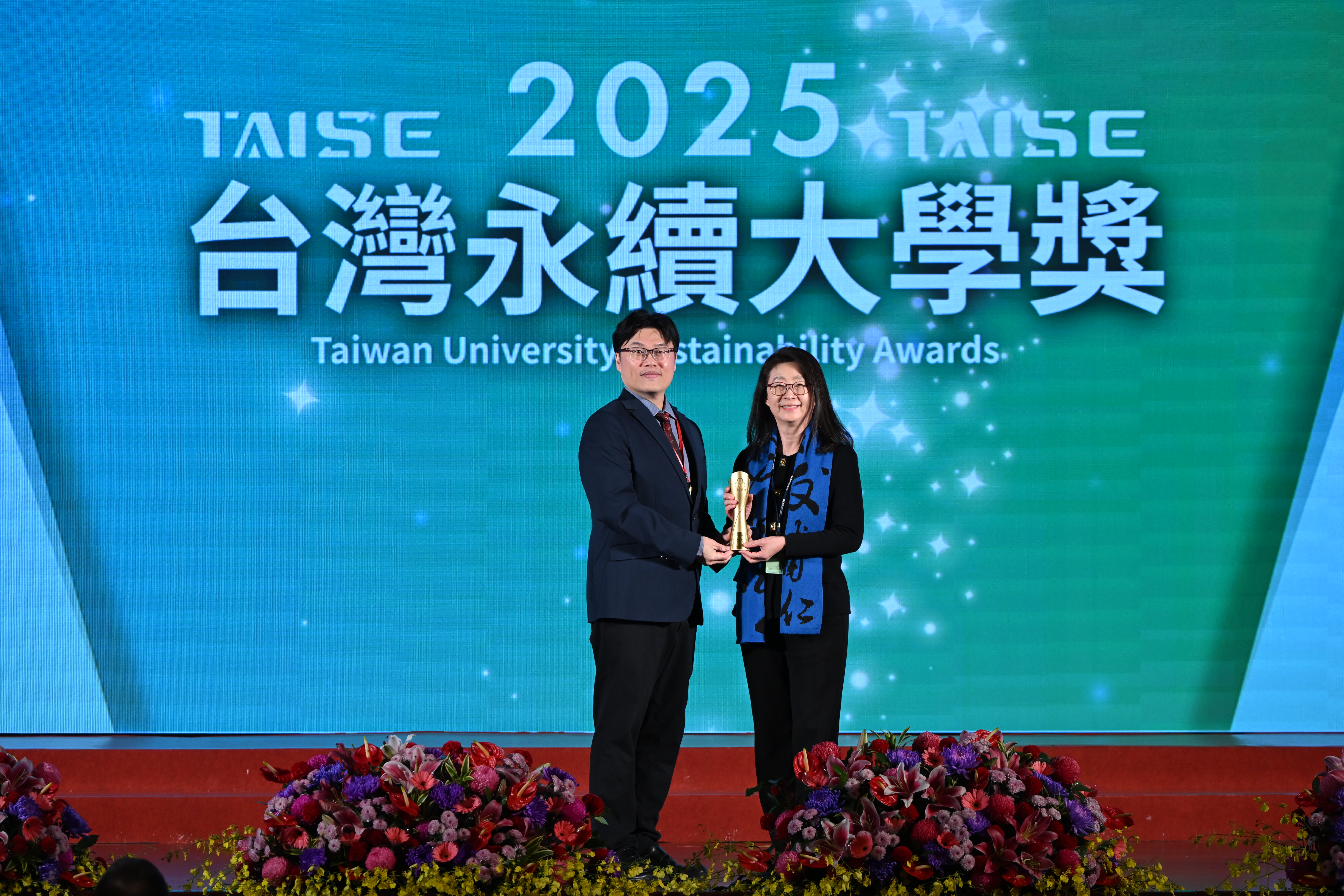
Amid the global wave of innovation driven by artificial intelligence, Yuan Ze University has comprehensively launched its “AI University” strategy in recent years. From frontier research and cross-college integration to industry partnerships and AI education for the general public, the university gradually built an AI ecosystem rarely seen in Taiwan’s higher education.
Whether in AI research outcomes, smart application demonstrations, industry co-creation models, or the integration of sustainable governance, Yuan Ze University consistently demonstrated strong integrative capabilities. Research outputs were no longer confined to laboratories but were implemented in production lines, service settings, and the smart campus, establishing the university as a key hub for AI industry–academia collaboration in Taiwan.
Yuan Ze University’s AI R&D capacity had grown rapidly, spanning cybersecurity, image analysis, smart manufacturing, language models, intelligent agents, and materials AI, reflecting a highly diverse and application-oriented profile. The College of Informatics focused on AI-driven cybersecurity research in areas such as API security, zero-trust architecture, and intelligent threat detection, assisting enterprises in building next-generation information defense systems. Meanwhile, the College of Electrical Engineering and Communication devoted substantial effort to image recognition, AI agents, and automatic control. Through technologies such as visual detection, formula prediction, and finite-state machine models for social platforms, these initiatives helped companies improve quality management, content services, and customer engagement efficiency.
Yuan Ze University’s AI technologies also achieved repeated success on the international stage. A team from the College of Electrical Engineering and Communication won the gold medal at the NeurIPS “Open Polymer Prediction 2025” global machine learning competition, demonstrating cross-disciplinary R&D strength by applying graph neural networks (GNNs) and materials feature engineering to predict polymer properties. The Department of Computer Science and Engineering also captured two awards at TANET 2025 with AI-enhanced 6G communications and satellite network technologies, highlighting the university’s forward-looking strategic positioning in future networks, satellite edge computing, and deep reinforcement learning.
From materials AI and intelligent communications to cybersecurity and automation, Yuan Ze University has established visibility across multiple research domains. Through cross-college collaboration, industry partnership projects, and international competitions, it steadily strengthened both the depth and breadth of its AI research portfolio.
Beyond research achievements, the university actively promoted AI accessibility by developing “e.yzu,” one of Taiwan’s few comprehensive online AI learning platforms open to the public. Designed around the principles of “instant understanding, immediate application, and problem-solving,” the platform offered courses in administrative automation, generative AI, data analytics, multimedia creation, and professional competencies, helping students, professionals, and the broader public master AI tools and enhance workplace efficiency.
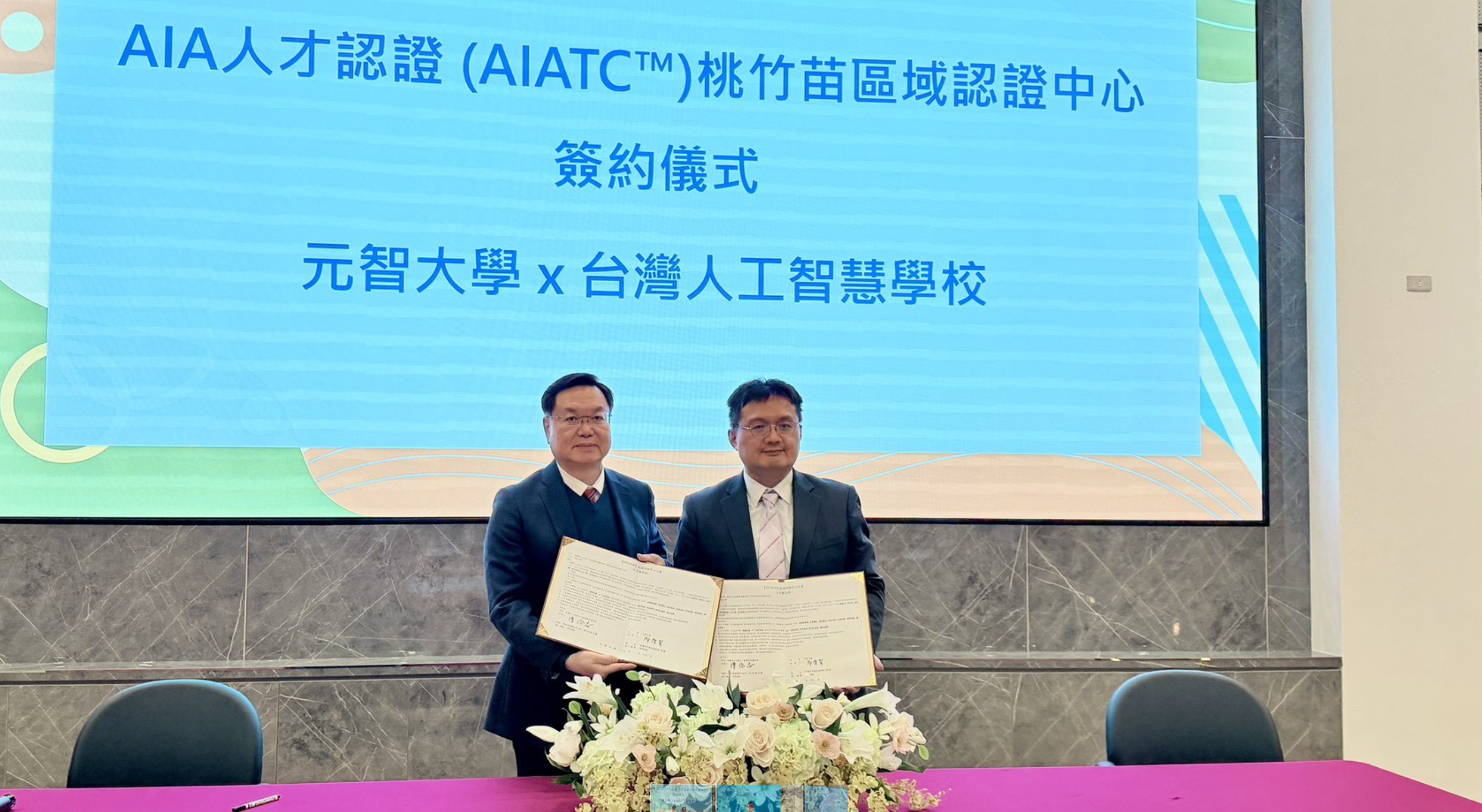
The platform’s AI modules received positive feedback from users, featuring content such as large language model (LLM) applications, retrieval-augmented generation (RAG), AI project management, and automated workflows. These courses transformed AI from an abstract technology into a practical, accessible capability. Yuan Ze University also collaborated with the Taoyuan City Government and Microsoft to promote online AI and cybersecurity courses, enhancing the digital literacy of government agencies and enterprises and becoming a key partner in AI talent development in the Taoyuan region. Looking ahead, the university planned to curate four thematic series—“AI University,” “Smart Living,” “Cross-Disciplinary Creativity,” and “Digital Professional Skills”—to further expand its institutional reach and impact.
In the field of smart agriculture, Yuan Ze University partnered with Original Strong and Zhaoqiang Technology to introduce AI autonomous agricultural vehicles, integrating AI sensing, automatic control, engineering design, and field validation. This initiative established the university as a major collaborative base for agricultural machinery innovation. The cross-college integration model engaged the AI Center, the College of Engineering, the College of Electrical Engineering and Communication, and the College of Management, enabling students to validate AI and automation technologies in real agricultural settings and accelerating the advancement of Agriculture 4.0.
In sustainable governance, Yuan Ze University applied AI technologies to strengthen energy monitoring, administrative processes, and sustainability performance tracking. The university received dual awards in the “Taiwan Sustainable Model University” evaluation. At the same time, multiple AI-driven social innovation projects—covering intergenerational AI health companionship, cultural preservation, and circular agriculture—won two silver awards and one bronze award at the TSAA Sustainable Action Awards, demonstrating a deep integration of AI with local society.
Yuan Ze University also led in financial technology by introducing the enterprise-level AI accounting system GCRS. This system enabled students to conduct consolidated reporting simulations, auditing, and financial analysis using real data and workflows, cultivating a new generation of AI-enabled accounting professionals. The collaboration further facilitated co-developed courses, case database construction, and joint research, ensuring that education remained closely aligned with industry needs.
The university had established an Artificial Intelligence Center to support various operational functions. The center implemented an AI-based intelligent voice guide service featuring multilingual capabilities, real-time positioning, and interactive content, and promoted smart campus safety systems, making AI a core tool for advancing internationalization and enhancing safety management. By enhancing computational capacity, the university not only strengthened teaching and learning outcomes but also provided technical support and consulting services to industry.
From frontier research and cross-disciplinary teaching to AI platforms, industry collaboration, and sustainable governance, Yuan Ze University has gradually formed a comprehensive AI ecosystem. Its distinctive strength lies not only in technological innovation but also in its ability to rapidly translate research outputs into practical solutions for education, industry, and society.
Yuan Ze University’s AI integration model demonstrated three core values:
1. Advancing research and application in parallel: From international competitions and industry partnerships to cross-disciplinary AI model development, the university built a robust foundation for AI research.
2. A complete talent pipeline: Through AI literacy for all, cross-disciplinary curricula, industry–academia co-creation, and corporate internships, the university cultivated job-ready AI talent.
3. Deep industry linkage: By assisting enterprises in adopting AI, the university advanced diverse applications in smart agriculture, smart manufacturing, financial technology, and sustainable governance.
As competition in the AI era intensified, Yuan Ze University, with its strong integrative capabilities and forward-looking strategic deployment, had become a key driver of AI industry–academia collaboration in Taiwan. Through cross-disciplinary innovation, it continued to link enterprises and strengthen national competitiveness.