 EN-US
 ZH
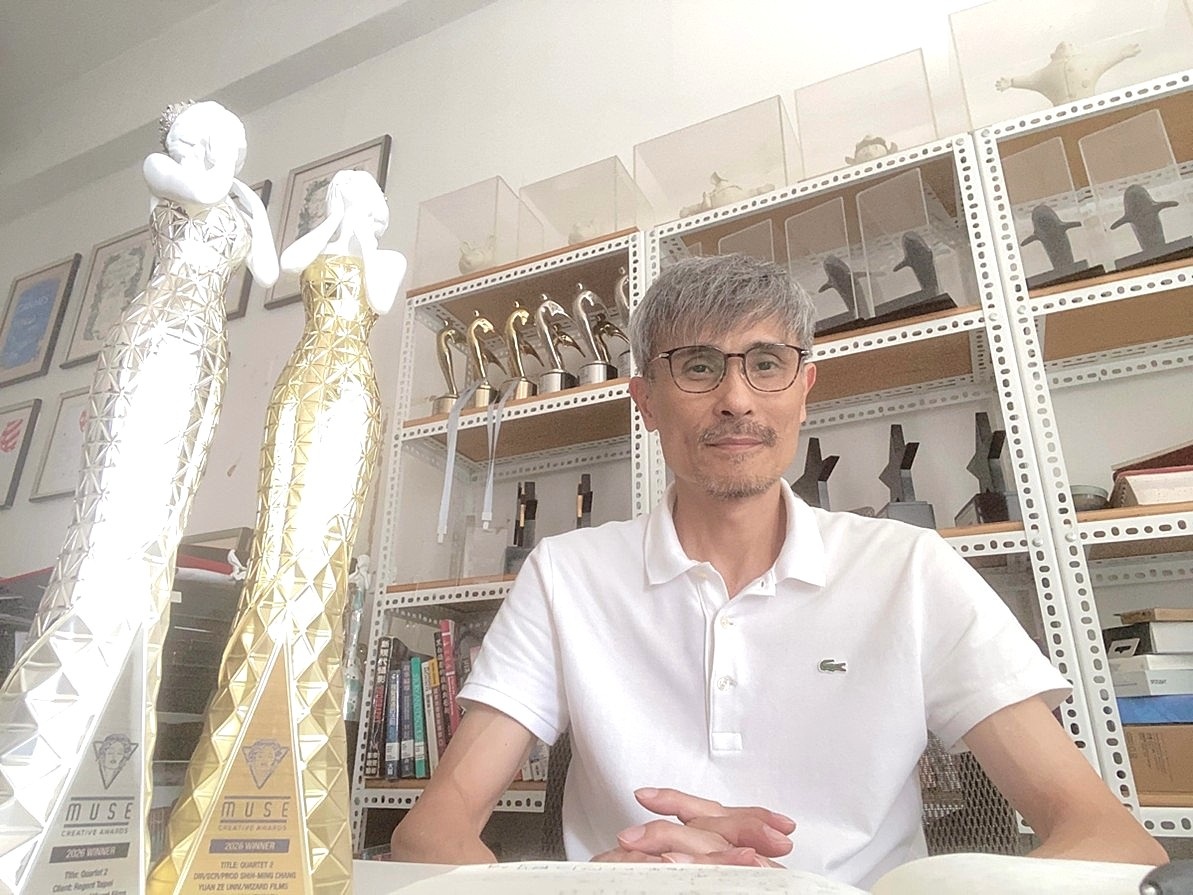
As generative AI continued to reshape the film and television industry, faculty and students from the Department of Information Communication at Yuan Ze University embraced emerging technologies while strengthening their focus on visual storytelling. Their recent achievements spanned international film festivals, documentary filmmaking, and local revitalization competitions, highlighting the Department’s strengths in both AI-powered visual innovation and documentary storytelling.
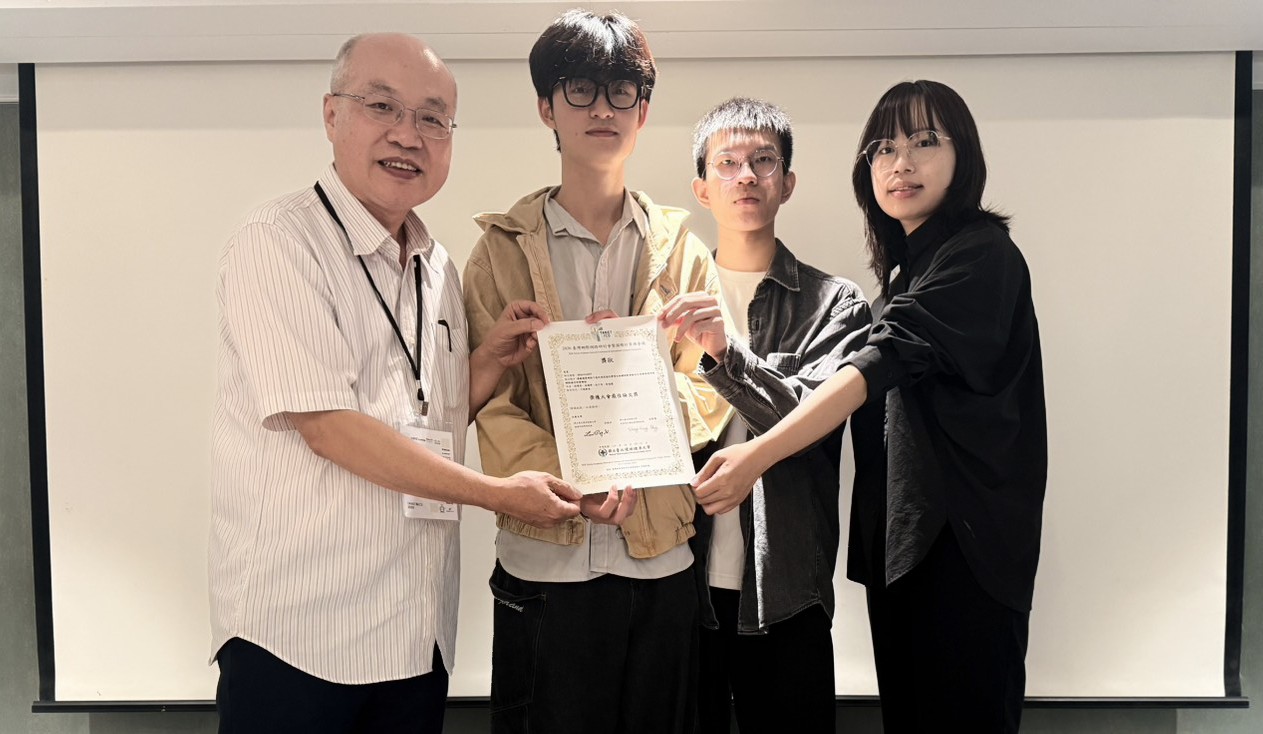
Student Ting-Chun Wu took part in the production of the AI science-fiction series The Lagranged Shade, which received recognition at seven international film festivals and competitions. Meanwhile, Quartet 2, a documentary short film written and directed by Associate Professor Shih-Ming Chang, won both Gold and Silver honors at the 2026 MUSE Creative Awards. Our Dream, produced by students under Chang’s guidance, also received an Excellence Award in a local revitalization microfilm competition.
Adapted from the science-fiction novel of the same name by Christopher F. P. Chen, The Lagranged Shade was a hard science-fiction series built around orbital mechanics. Taiwan-based virtual production company Zukunft Works Ltd. produced the series using its independently developed AI virtual production workflow, “AI-Vis,” and its production tool, “S2PWorkbench,” exploring how generative AI could be integrated with professional visual storytelling.
Ting-Chun Wu, a member of “I SEE TV,” the Department of Information Communication’s student-run campus television team, participated in the production under the guidance of Shih-Ming Chang. Serving as an AI production assistant, Wu was responsible for editing and refining AI-generated footage. The experience provided an opportunity to apply classroom knowledge in a professional production setting while developing the judgment and editing skills needed to transform AI-generated materials into visually polished stories with coherent narrative pacing.
In 2026, The Lagranged Shade received recognition in the AI Film category at The IndieFest Film Festival, an Award of Excellence at the Accolade Global Film Competition, and an award at the VertiStar Vertical Film Festival. The series was also selected for the Neu Wave AI Film Festival in the United States and Altavilla Film Fest in Italy, advanced to the semifinals of the Vigloo Short Drama Festival in South Korea, and reached the finals of the Illusion·SHOW AI Competition in Beijing. Altogether, the production earned recognition from seven international film festivals and competitions.
While exploring the creative potential of AI, YZU’s Information Communication faculty and students also continued to use documentary filmmaking to address sustainability and social issues. Quartet 2, written and directed by Shih-Ming Chang, followed a cross-disciplinary collaboration among four chefs from leading sustainable restaurants in Asia. Moving beyond the dining table, the documentary traced ingredients back to their sources, visiting an organic farm in Hualien, a fishing port in Taitung, a traditional salt-making site in Changbin, and animal-friendly livestock farms. Through these stories, the film captured the connections among food, land, producers, and social responsibility. It received a Gold Award in the documentary category and a Silver Award in the environmental sustainability branded-content category at the 2026 MUSE Creative Awards.
The Department’s documentary work also extended to local cultural preservation. Graduates Shih-Ying Feng, Yu-Chen Chen, and Tzu-Yu Hsu jointly produced Our Dream, set against the backdrop of the Zhongzhen New Village Cultural Park in Taoyuan. The documentary followed Cultural Director Fu-Ying Li and Chief Operating Officer En-Ning Wang in their efforts to preserve the history and cultural heritage of the ROC Armed Forces personnel who remained in the Yunnan-Burma border region and to promote this distinctive cultural heritage.
Our Dream received an Excellence Award in the “Youth Returning Home” local revitalization microfilm competition. Told through the perspectives of the three filmmakers, the documentary portrayed the dedication of local cultural workers and the transmission of cultural heritage across generations. The recognition also marked the team’s second consecutive year of success following the previous year’s award for Grandma Lu’s Rice Cake.
In addition, two teams comprising eight third-year students from the Department of Information Communication produced the public-interest documentary shorts Flying with a Glimmer of Light and Together with You, focusing respectively on Slow-Fly Sheltered Workshop and the Spinal Cord Injury Potential Development Center. Both productions received Merit Awards in the preliminary round of the 8th Public Welfare Communication Awards and qualified for the final-round public voting in the 17th “Your Vote Decides the Power of Love” campaign. Through interviews and authentic documentation, the students brought greater visibility to social issues and the people behind them.
Shih-Ming Chang said that although generative AI had significantly lowered the barriers to audiovisual production, creative ideas, visual language, and storytelling remained essential to producing work that resonated with audiences. As technology continued to evolve, Chang emphasized, the heart of visual creation remained the ability to tell a compelling story.
Whether creators used AI to explore new possibilities in visual production or entered communities to document real-life stories, Chang noted that independent thinking, professional judgment, and humanistic awareness remained indispensable. These qualities allowed creative works to achieve both artistic expression and social value.
Looking ahead, Chang said the Department would continue to encourage students to integrate AI technologies, creative thinking, and visual storytelling while gaining hands-on experience through industry collaboration, fieldwork, and social engagement. Through this approach, the Department aimed to cultivate interdisciplinary talent equipped with both technological capabilities and humanistic literacy, enabling visual media to serve not only as a creative tool but also as a powerful medium for connecting with society and communicating public values.