 EN-US
 ZH

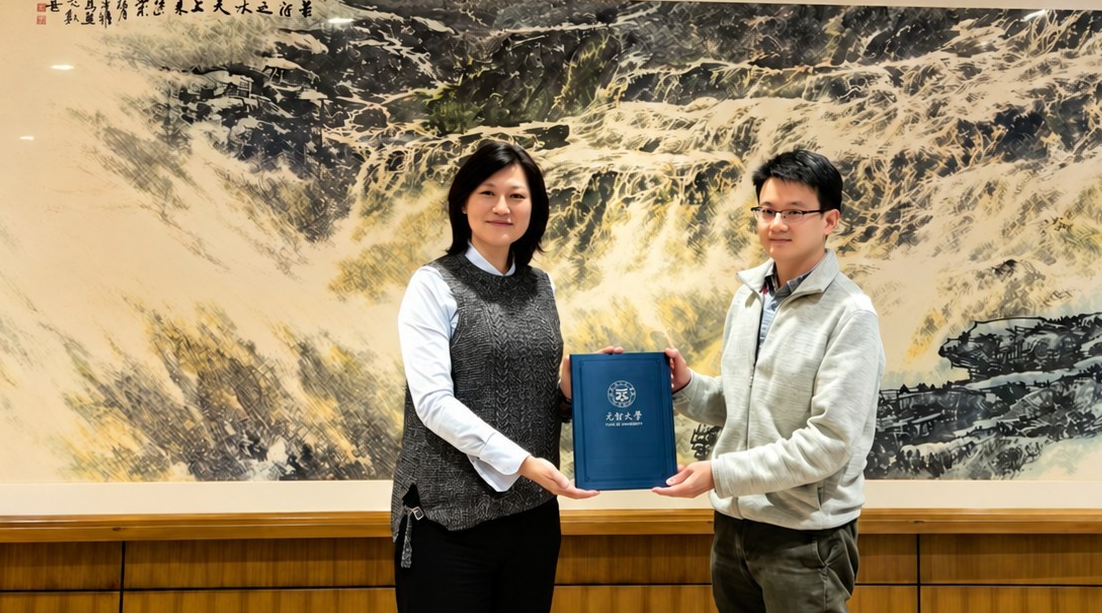
Wei-Hsuan Ho, Distinguished Professor and Chair of Yuan Ze University’s Department of Chinese Linguistics and Literature, recently visited the Institute of Ancient Books at the School of History, Beijing Normal University, where she signed a Memorandum of Understanding (MOU) on academic cooperation with Professor Rui-Fang Mao, Director of the Institute. The MOU established a foundation for collaboration in academic research, faculty and student exchanges, and talent development. The two sides also discussed plans for a future student exchange program, with the aim of creating more diverse cross-institutional learning opportunities for students.
Beijing Normal University traced its history to the Normal School of the Imperial University of Peking, established in 1902, and had a long-standing tradition of scholarship in history and philology. Its Institute of Ancient Books at the School of History was established in 1981 and was among the earlier academic institutions in mainland China dedicated to the organization and study of ancient Chinese texts. The Institute had long been committed to the compilation and study of classical Chinese texts, research on historical documents, and the cultivation of professionals in related fields, establishing a strong academic foundation in the study of ancient texts.
Ho said that the rapid development of artificial intelligence and digital technologies had created new opportunities for the transformation of traditional humanities research. In recent years, Beijing Normal University’s Institute of Ancient Books had actively engaged in digital humanities and the digitization of ancient texts, combining traditional philological scholarship with modern information technologies to explore new approaches to textual organization and digital analysis. This research direction closely aligned with Yuan Ze University’s Department of Chinese Linguistics and Literature, which had promoted digital humanities, AI applications, and interdisciplinary teaching innovation in recent years. Ho noted that the two institutions could expand collaborative research and teaching exchanges in areas such as the digitization of ancient texts, digital textual analysis, and AI-assisted research on classical Chinese texts.
As artificial intelligence continued to reshape research and education, the use of digital technologies to expand research methods and teaching models had become an important direction for traditional humanities disciplines. Ho said that the new partnership with Beijing Normal University’s Institute of Ancient Books was expected to combine the two institutions’ respective strengths in classical literature research and digital technology applications. She hoped the collaboration would promote academic exchanges among faculty members, facilitate the sharing of research resources, and gradually integrate relevant outcomes into teaching, helping students develop humanities literacy, proficiency in digital tools, and interdisciplinary skills.
In addition to academic research collaboration, the two institutions held in-depth discussions on a potential student exchange program and reached a preliminary consensus. They planned to continue exploring specific forms of cooperation. If successfully implemented, the program could help students broaden their academic perspectives, deepen their professional learning, and gain experience in cross-institutional and cross-cultural exchange.
Ho said that Yuan Ze University’s Department of Chinese Linguistics and Literature had continued to integrate traditional humanities with digital and AI technologies and interdisciplinary learning while actively advancing innovation in teaching and research. The signing of the MOU not only brought new momentum to cross-strait academic exchange but also created new possibilities for integrating classical literature research with artificial intelligence. She added that the Department would continue to deepen collaboration with academic institutions worldwide, expand research and learning resources for faculty members and students, and enable traditional humanities disciplines to demonstrate renewed value in the digital age.