 EN-US
EN-US  ZH
ZH 
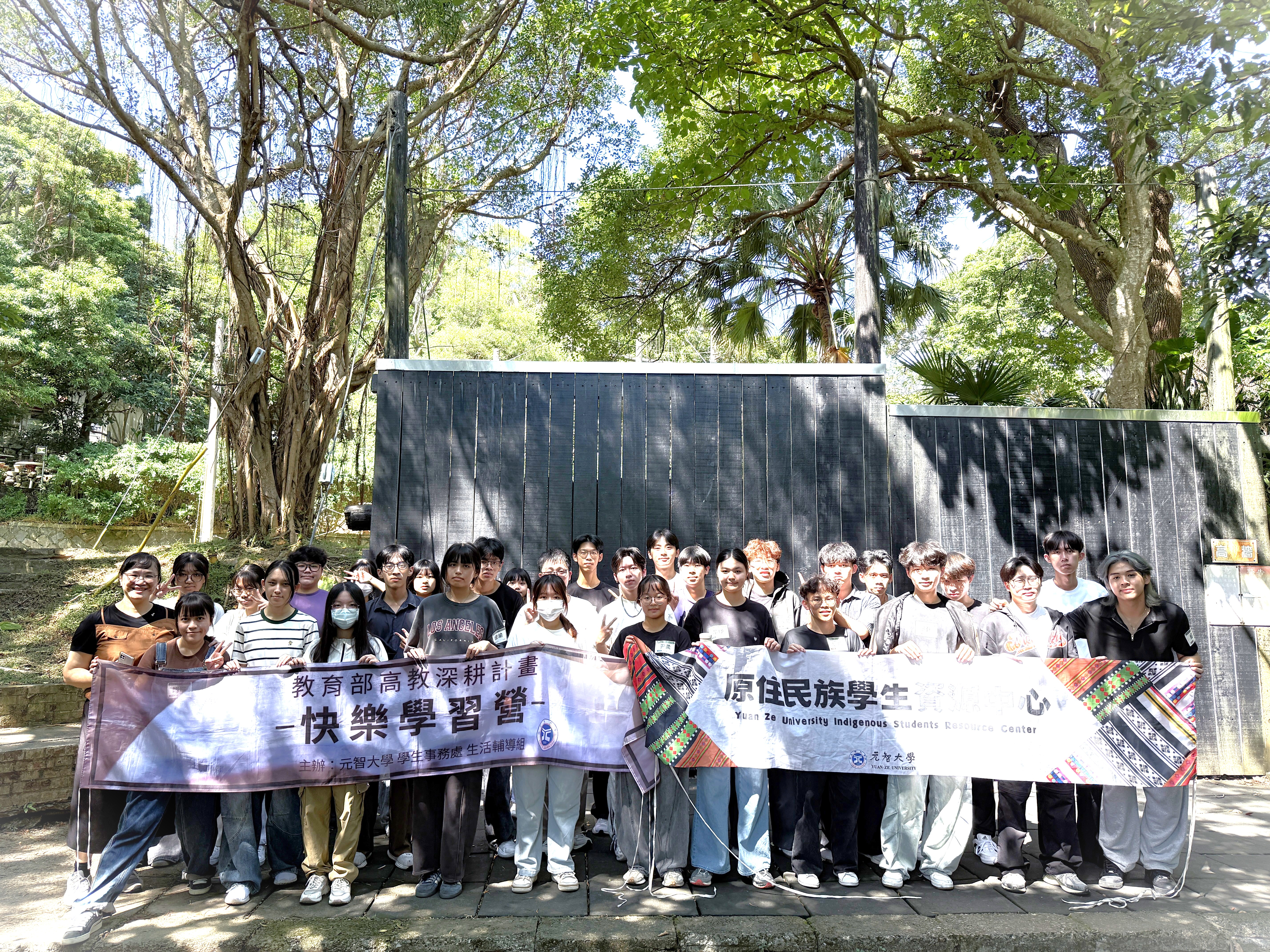
To strengthen students’ teamwork skills and sense of responsibility, Yuan Ze University’s Indigenous Students Resource Center and the Happy Learning Camp team held the “Indigenous Students Resource Center and Happy Learning Camp Team Kickoff Workshop” at Wesley Gospel Garden in Yangmingshan from October 3 to 4. Centered on the core concepts of “Awareness, Accountability, and Action,” the two-day, one-night workshop featured outdoor exploration, situational challenges, and team discussions. Through these activities, new and returning members built trust, developed a shared understanding, and learned communication, coordination, role allocation, and responsibility through hands-on experiences, laying a foundation for future teamwork.
The workshop began with “Awareness.” Through creative interactions and group tasks, participants broke down barriers and developed a sense of belonging. Using an interactive webpage, they created their own “guilds,” selected roles based on their individual characteristics, and worked together to design team flags and chants. Through interaction and creative collaboration, they got to know one another and recognized the importance of supporting teammates with different strengths and qualities.
To further strengthen team coordination, the workshop featured experiential challenges such as the “Sulfuric Acid River,” “V-shaped Path,” “High Wall Challenge,” and “Balance Beam.” These activities helped participants develop strategic planning, communication, coordination, and problem-solving skills. The “Sulfuric Acid River,” in particular, tested the teams’ ability to respond under limited conditions. Members contributed their individual strengths throughout the process, from developing strategies to putting them into practice. Through discussion and mutual encouragement, they overcame difficulties and demonstrated the power of teamwork.
The “High Wall Challenge,” the most demanding activity, further tested trust and the sharing of responsibilities among team members. Participants had to support one another and work together to overcome the obstacle. Some provided support and protection, while others reached down from above to assist their teammates. Every role was indispensable to completing the task. Throughout the process, participants not only learned to trust their teammates but also gained a deeper understanding of the importance of taking initiative and contributing toward a shared goal.
In addition, the situational simulation activity “The Wizard of Oz” featured 20 puzzle-based challenges. Participants carried out tasks according to their assigned roles and sought solutions through information sharing and cross-group collaboration. When faced with challenges such as unclear routes or obstacles that prevented tasks from progressing, teams had to communicate promptly and support one another. The activity helped participants understand that “Accountability” meant more than simply accepting assigned responsibilities; it also meant taking the initiative to complete tasks and being accountable for shared goals.
A participating student surnamed Kuo shared that the members had initially been unfamiliar with one another and that their interactions had felt somewhat awkward. However, as the group activities and outdoor challenges progressed, they gradually developed greater rapport. The “High Wall Challenge” was particularly memorable for him. Although the experience was intense, the participants ultimately completed the task together through mutual encouragement and support, giving him a profound appreciation of the power of teamwork and trust. He said that everyone played a different role within the team, yet each person was indispensable. Although the two-day, one-night workshop had been physically demanding, he found the experience highly rewarding. He not only made new friends but also gained a clearer understanding of his role within the team and looked forward to continuing to learn and grow together with his teammates.
At the conclusion of the workshop, participants reflected on and discussed their collaborative experiences in small groups, reinforcing the team’s core values and shared commitment. Yuan Ze University stated that the workshop had used experiential learning to strengthen students’ communication, coordination, teamwork, and problem-solving skills while also reinforcing the connection between the Indigenous Students Resource Center and the Happy Learning Camp team. The University expressed the hope that participants would carry the spirit of “Awareness, Accountability, and Action” into future service initiatives and activities, transforming individual growth into collective progress and continuing to make a positive impact.