 EN-US
EN-US  ZH
ZH 
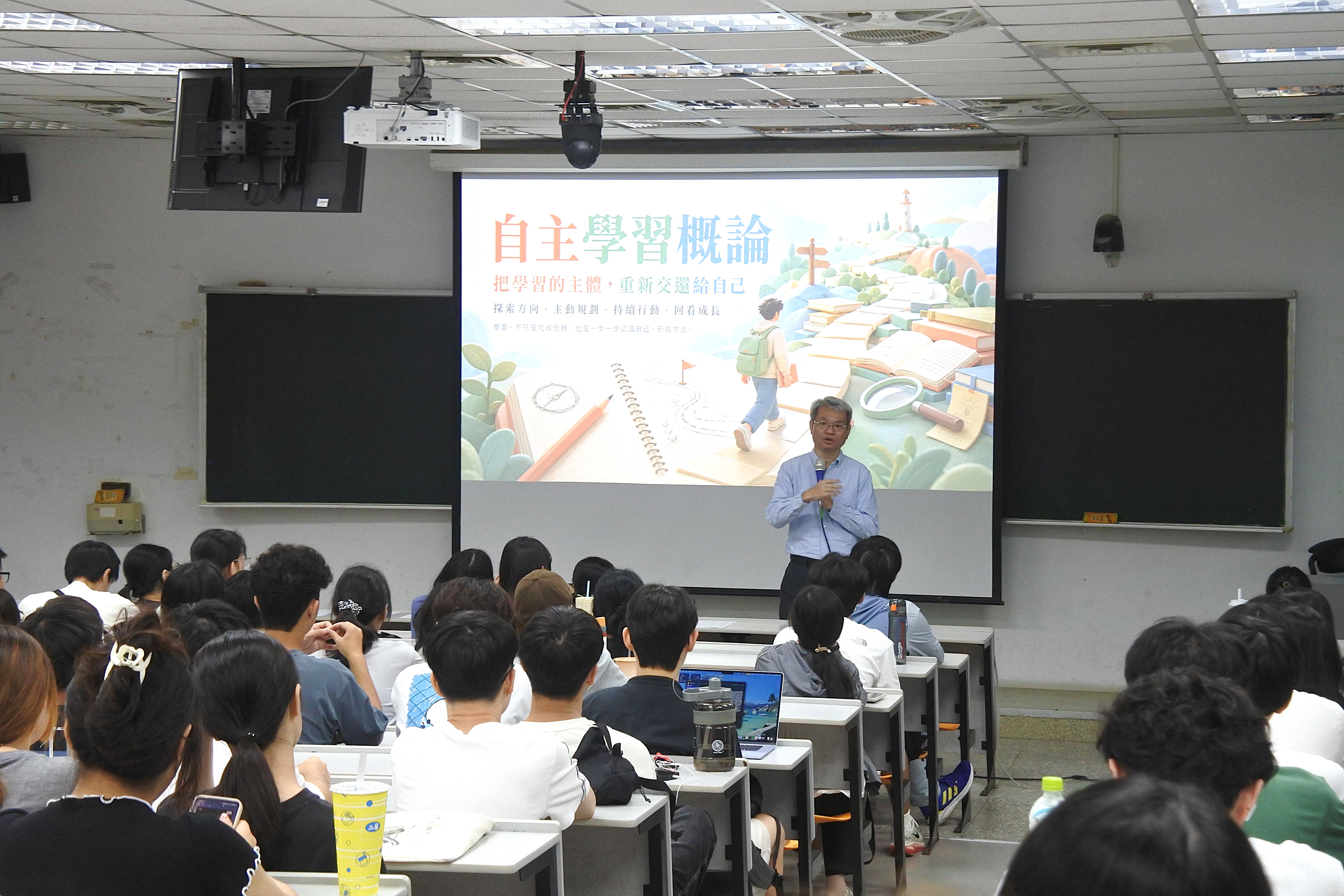
Entering university is no longer simply about following a prescribed curriculum. More importantly, students must discover the areas they genuinely wish to explore. As part of Yuan Ze University's Freshman Launch Program, a series of orientation activities, the College of General Studies offered three “Introduction to Self-Directed Learning” micro-courses that concluded on September 4. The courses guided freshmen through self-discovery, goal setting, and action planning, encouraging them to become the architects of their own learning journeys and take the first step toward independent exploration during their university years.
The three micro-courses were taught by Feng-Ying Hu, Yi-Yun Wang, and Chih-Ming Huang. Through themes including self-exploration, innovative thinking, and project implementation, the instructors helped students understand the true meaning of self-directed learning from different perspectives. Rather than simply telling students what to learn, the courses aimed to cultivate students’ ability to identify problems, integrate resources, and turn ideas into action.
Chih-Ming Huang began by discussing the importance of critical thinking. Using the well-known story of Li Bai and the iron rod ground into a needle, he humorously reminded students that the key lesson was not merely perseverance, but how Li Bai reflected on the experience and transformed inspiration into action. Huang further incorporated the parable of “Grinding a Giant Stone” from The Sutra of One Hundred Parables to encourage students to break through conventional thinking and develop the capacity for innovation and transformation.
Huang noted that university life differed significantly from previous stages of education, where students were often told the “correct answer.” At the university level, students needed to develop independent thinking and the ability to make their own choices. Self-directed learning provided opportunities for students to identify topics that genuinely interested them beyond the formal curriculum and establish their own learning directions through exploration and practice.
Feng-Ying Hu focused on the core concepts of self-directed learning. She explained that self-directed learning was far more than studying independently. Rather, it was a comprehensive process involving self-understanding, goal setting, action taking, outcome evaluation, and continuous improvement. Students learned how to use tools such as learning-style assessments, SWOT analysis, and learning journals to identify their strengths, weaknesses, and needs. By applying the SMART framework, they could transform vague interests into specific, measurable, and time-bound learning goals.
Helping students turn ideas into action was the focus of Yi-Yun Wang’s course. Emphasizing practical application and execution, she guided students in converting topics they wished to explore into feasible learning projects. Through step-by-step planning that included goal setting, scheduling, and outcome presentation, students developed project management skills that enabled creative ideas to become concrete actions rather than remaining concepts.
During the courses, the instructors also shared examples of self-directed learning projects completed by previous students, including survey research, picture-book creation, and board game design. These diverse projects demonstrated to freshmen that self-directed learning was not restricted by disciplinary boundaries or specific formats. Once students identified topics of interest, they could actively seek guidance from faculty members and utilize campus resources to gradually develop their own learning plans.
Yuan Ze University encouraged students to make full use of resources provided by the College of General Studies and the university’s interdisciplinary faculty network. Students were encouraged to learn about faculty expertise proactively and submit proposals for self-directed learning projects. The three instructors also encouraged freshmen to remember that the richness of their university experience would largely depend on how far they were willing to explore and how much effort they invested in practice. By thinking boldly, making effective use of available resources, and taking concrete action, students could transform curiosity into action and interests into tangible achievements, gradually crafting their own unique university learning roadmaps.