 EN-US
EN-US  ZH
ZH 
Yuan Ze University once again received recognition for its international academic competitiveness. In the 2026 Times Higher Education (THE) World University Rankings by Subject, Yuan Ze University ranked fourth in Taiwan and first among private universities in Physical Sciences, while Engineering ranked seventh in Taiwan, demonstrating the University’s research strength in fundamental sciences and engineering technology. In particular, Division C of the Department of Electrical Engineering had long focused on optoelectronics and semiconductor technologies. In recent years, it had continued to promote advanced materials research and development, student research projects, and industry collaboration, integrating academic research with industrial practice to cultivate professionals equipped to meet the needs of the technology sector.
In optoelectronics research, Division C of Yuan Ze University’s Department of Electrical Engineering focused on two major areas: semiconductor and green energy technologies, and optomechatronic systems and optical information. Its research covered semiconductor device fabrication, organic optoelectronic materials, thin-film transistors, solar cells, and smart optoelectronic applications. Professor Chih-Hao Chang’s research team had long been engaged in organic optoelectronic semiconductors, emerging display technologies, and medical light-source research, while establishing international research collaborations. His official Yuan Ze University faculty profile lists his research areas as organic compounds, organic optoelectronic and electronic devices, flat-panel displays, solid-state lighting, and flexible optoelectronics.
In 2026, Professor Chih-Hao Chang’s team published research on high-efficiency devices fabricated using green-chemistry synthesis in Journal of Materials Chemistry C, and the research was selected for a journal cover. The journal’s 2026 issues included dedicated cover features. The team also published a paper in Communications Materials, a Nature Portfolio journal, in collaboration with researchers from Ukraine and Lithuania, as well as a paper in Advanced Materials Interfaces through collaboration with researchers from Ukraine and Lithuania. Both studies were featured by OLED-Info. These research achievements demonstrated the team’s capabilities in advanced optoelectronic device applications.
In addition to organic optoelectronic technologies, the compound semiconductor research team in Division C was actively engaged in advanced technologies such as gallium nitride optoelectronic devices, oxide thin-film transistors, quantum-dot lasers, and infrared detectors. Its research spanned semiconductor materials, device fabrication, and optoelectronic applications, closely aligning with technological developments in the semiconductor, green energy, and smart sensing industries. By integrating diverse research areas, the team continued to expand the potential applications of optoelectronic technologies.
In student research development, Division C emphasized both theoretical knowledge and hands-on practice, encouraging students to participate in laboratory research at an early stage and guiding them to take part in international conferences and project competitions. In 2026, Fu Shan-Ju and Chang Chia-Chen, two students supervised by Professor Chih-Hao Chang, had their undergraduate research projects approved under the National Science and Technology Council’s 2026 Undergraduate Student Research Program. Through research training in experimental design, materials analysis, and device testing, students developed problem-solving and independent research capabilities, laying a foundation for further education and future careers in the technology industry.
To bridge the gap between academic learning and industrial practice, Division C of Yuan Ze University’s Department of Electrical Engineering actively incorporated industry resources into semiconductor and optoelectronics talent development. In collaboration with Taiwan Semiconductor Manufacturing Company (TSMC), the University developed the “Semiconductor Device Integration Program.” Through company visits and professional courses, students gained a better understanding of semiconductor technologies and practical industry requirements. In 2026, semiconductor practice courses designed by TSMC’s new employee training center were also announced, providing students with opportunities to gain exposure to professional knowledge and technologies used in industry and to prepare for their future careers.
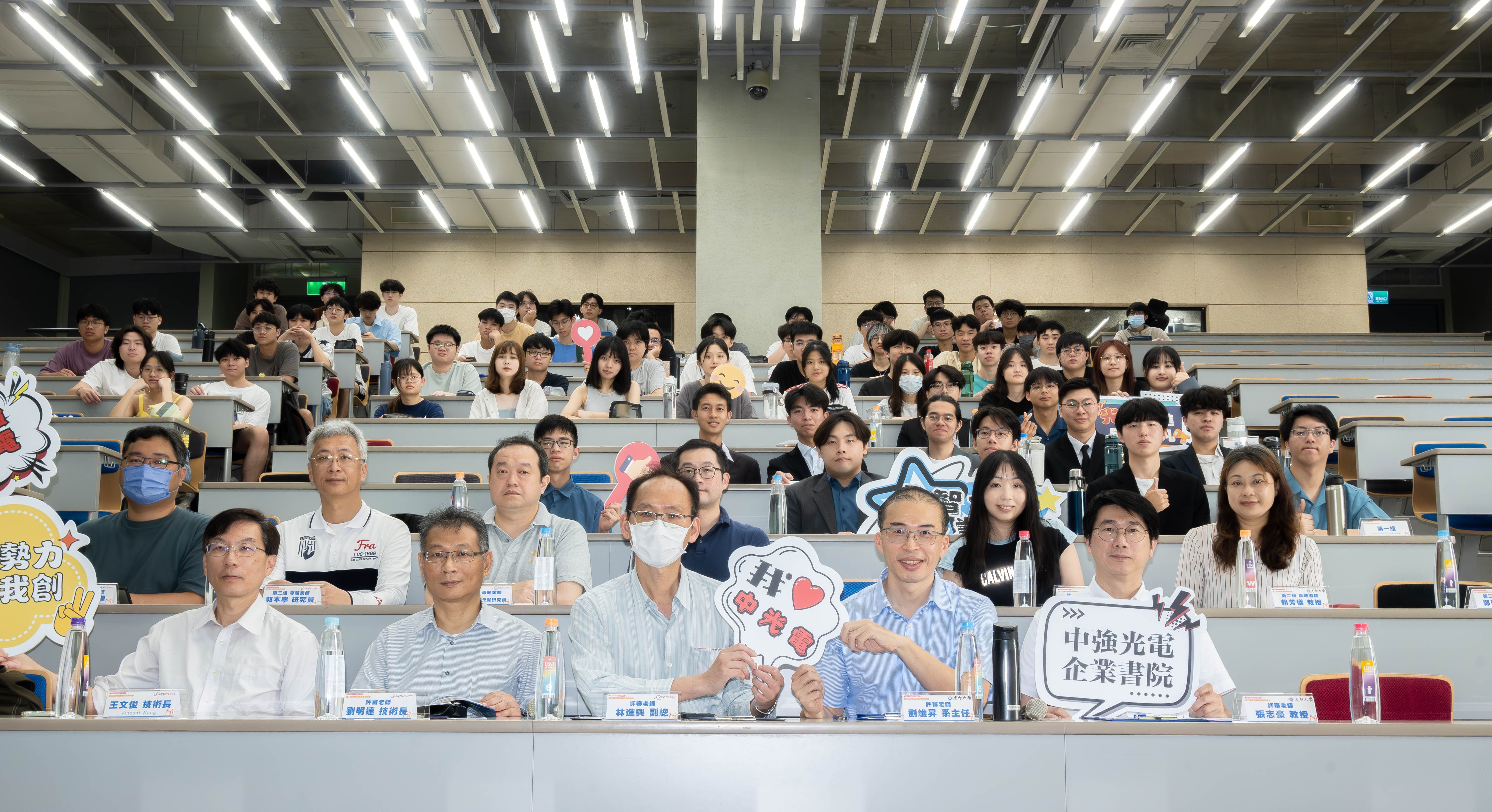
In its collaboration with the optoelectronics industry, Division C also worked with Coretronic Corporation to promote the “Industrial Academy Optoelectronics Program,” which combined industry projects with practical learning and enabled students to apply classroom knowledge to industry-related challenges. A presentation of industry project outcomes held with Coretronic Corporation in 2025 provided students with an opportunity to showcase their project results. Through industry-academia exchange, students deepened their practical experience and strengthened their teamwork, technology integration, and presentation skills.
Yuan Ze University stated that amid the rapid global development of the semiconductor, optoelectronics, and artificial intelligence industries, interdisciplinary integration and practical innovation had become increasingly important competitive strengths for technology professionals. The University would continue to deepen research in fundamental sciences and engineering, integrate industry resources with innovative teaching, and align academic research outcomes with industry needs. Through these efforts, Yuan Ze University aimed to cultivate a new generation of technology professionals equipped with professional knowledge, practical capabilities, and an international perspective, while continuing to enhance its influence in international higher education and technological research.