 EN-US
EN-US  ZH
ZH 
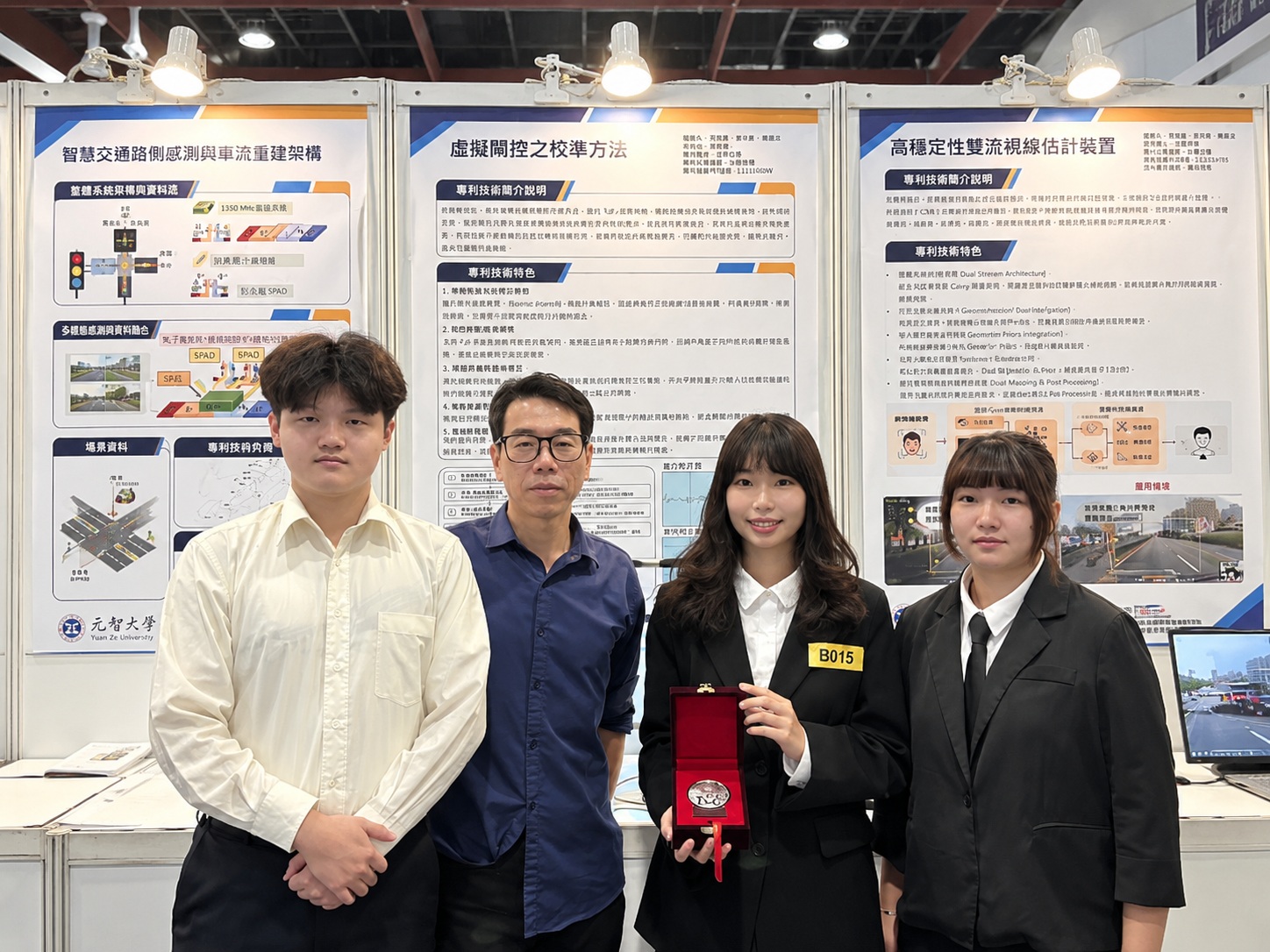
Artificial intelligence can now accurately determine where a person is looking in real time. Ming-Yi Lin, Professor of the Department of Computer Science and Engineering, together with students Chen-Pei Hsu and Yu-Ru Chen, combined artificial intelligence, embedded vision, and intelligent sensing technologies to develop the “High-Stability Dual-Stream Gaze Estimation Device.” The innovation overcame limitations commonly encountered in conventional eye-tracking systems, which were often affected by lighting conditions, head-pose variations, and hardware performance constraints.
The technology enabled accurate and real-time gaze tracking even on low-power edge devices and was expected to be applied to smart learning, accessible human-machine interaction, and driver safety monitoring. Department of Computer Science and Engineering is the official English name of the unit.
Eye-tracking technology identifies where users focus by analyzing eye movements and gaze direction, making it an important component of human-machine interaction and intelligent sensing applications. However, conventional systems often experienced reduced accuracy under complex lighting conditions or when users changed their head positions. Furthermore, deploying such systems on low-power devices required balancing computational efficiency with real-time performance, creating a significant challenge for practical implementation.
To address these issues, the research team led by Ming-Yi Lin proposed a dual-stream gaze estimation architecture. The system simultaneously utilized RGB images and edge information and incorporated dual-stream feature fusion, cross-attention mechanisms, and head-pose information to enhance the accuracy and stability of gaze estimation. Combined with GPU hardware acceleration, the system maintained real-time gaze-tracking performance even when operating on low-power edge devices.
Ming-Yi Lin explained that the students devoted significant effort to every stage of the project, including embedded vision development, gaze estimation, real-time eye-movement calibration, system design, and implementation. More importantly, the project involved not only building AI models but also deploying algorithms onto hardware platforms and completing application validation. The continuous process of testing, refinement, and system integration also strengthened the students’ problem-solving abilities and interdisciplinary integration skills.
Chen-Pei Hsu and Yu-Ru Chen noted that the project underwent numerous rounds of testing and adjustment, from designing the dual-stream gaze estimation model and integrating the system to deploying it on embedded devices and conducting practical application validation. They added that future efforts would focus on further improving accuracy, stability, and real-time performance across different environments. The team also hoped to integrate gaze analysis with fatigue indicators to enhance driver safety monitoring and expand applications into smart learning and accessibility control, enabling the technology to move from the laboratory into real-world applications.
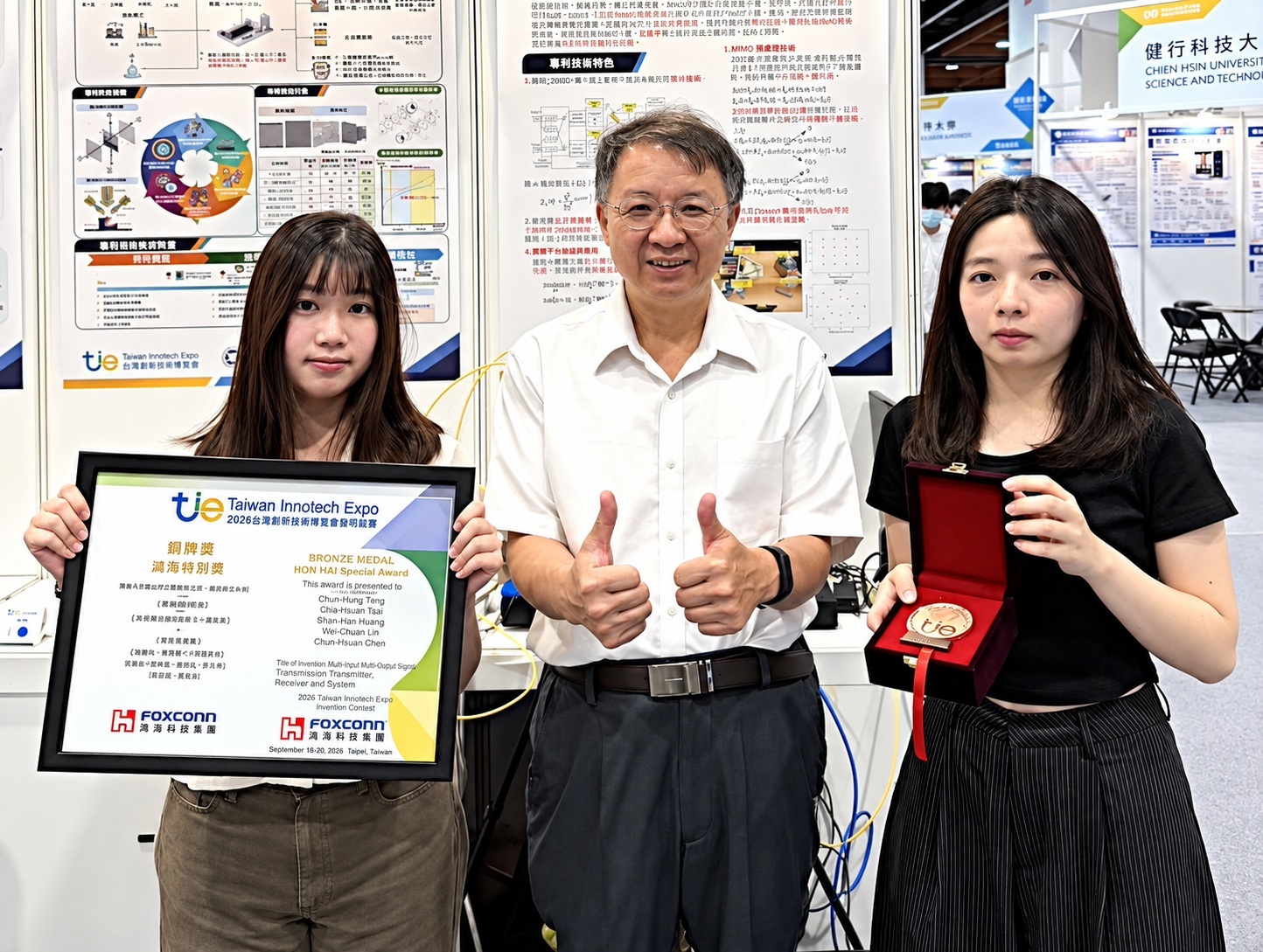
The faculty-student collaboration received significant recognition for its research achievements. The “High-Stability Dual-Stream Gaze Estimation Device” participated in the invention competition at the 2026 Taiwan Innotech Expo and stood out among numerous innovative technologies and patented inventions. The project was awarded a Silver Medal, demonstrating Yuan Ze University’s strength in integrating artificial intelligence research, embedded systems, and intelligent sensing technologies while advancing their practical application.