 EN-US
EN-US  ZH
ZH 
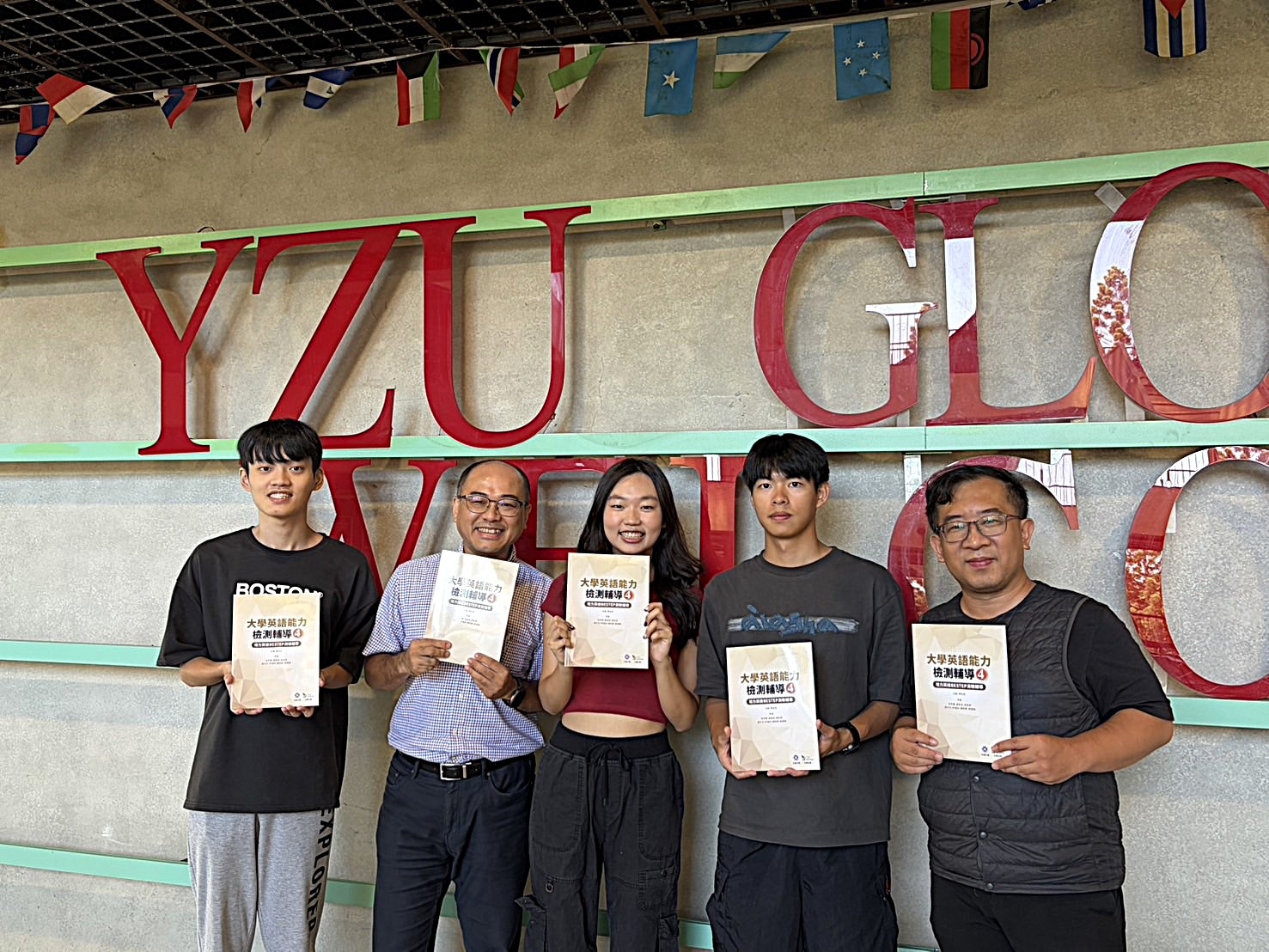
From building a strong foundation in English proficiency during the freshman year to preparing students for English as a Medium of Instruction (EMI) courses in their sophomore year, Yuan Ze University had continued to establish an English-learning environment that strengthened students’ international competitiveness. To further enhance students’ English proficiency, the International Language and Culture Center (ILCC) published University English Proficiency Test Preparation 4: BESTEP Preparation Guide in September 2026 by drawing upon the extensive teaching experience of its English faculty.
The publication became Taiwan’s first dedicated preparation textbook for BESTEP (Business English and English for Specific Purposes Proficiency Test) and was officially incorporated into the University’s freshman English curriculum, demonstrating the University’s achievements in promoting bilingual education through policy development, curriculum design, and instructional material innovation.
Yuan Ze University had long emphasized students’ English proficiency and global mobility. In recent years, the University had actively fostered a bilingual learning environment by integrating English-language learning with professional education. During the freshman year, English courses strengthened students’ listening, speaking, reading, writing, and academic English skills. Beginning in the sophomore year, selected professional courses were gradually delivered through EMI, enabling English to serve not only as a proficiency assessment tool but also as an essential medium for acquiring disciplinary knowledge and connecting with the international community.
The textbook was edited by Hsin-Hung Chen, Director of the International Language and Culture Center, and co-authored by Chien-Wen Kao, together with English instructors Yu-Sheng Chu, An-Chen Chiang, Yi-Chieh Kuo, Jui-Wen Hsu, Ming-Hsien Yang, and Yung Ou-Yang. Drawing upon years of frontline teaching experience, the structure of the BESTEP examination, and the demands of academic English, the team integrated these elements into a comprehensive resource. Through multiple rounds of editorial and review meetings and revisions, the faculty transformed accumulated teaching expertise into a systematic textbook that could be effectively implemented in the classroom.
Hsin-Hung Chen stated that Yuan Ze University had actively promoted BESTEP in accordance with the Ministry of Education’s policies. In the past, instructors often needed to gather fragmented preparation materials independently. Therefore, the team decided to develop its own textbook based on practical instructional needs. The textbook not only helped students improve their English proficiency in a systematic manner but also provided instructors with a clearer framework for curriculum planning and classroom instruction.
Chien-Wen Kao noted that the textbook had already been introduced into freshman English courses, enabling students to become familiar with BESTEP question formats and academic English contexts at an early stage. This preparation helped students transition more smoothly into EMI professional courses during their sophomore year. At the same time, the initiative encouraged students to obtain recognized English proficiency credentials during their studies, enhancing their competitiveness for exchange programs, graduate studies, internships, and future career development.
Hsin-Hung Chen further explained that Yuan Ze University had gradually established a comprehensive and systematic bilingual learning pathway, beginning with freshman English proficiency development, progressing through BESTEP assessment and preparation, and ultimately connecting with EMI professional courses. The University would continue to strengthen English and EMI instruction, enhance students’ ability to learn professional knowledge and engage in interdisciplinary communication through English, and ensure that language served not merely as a testing tool but as an essential foundation for professional learning, international exchange, and future career development.