 EN-US
EN-US  ZH
ZH 
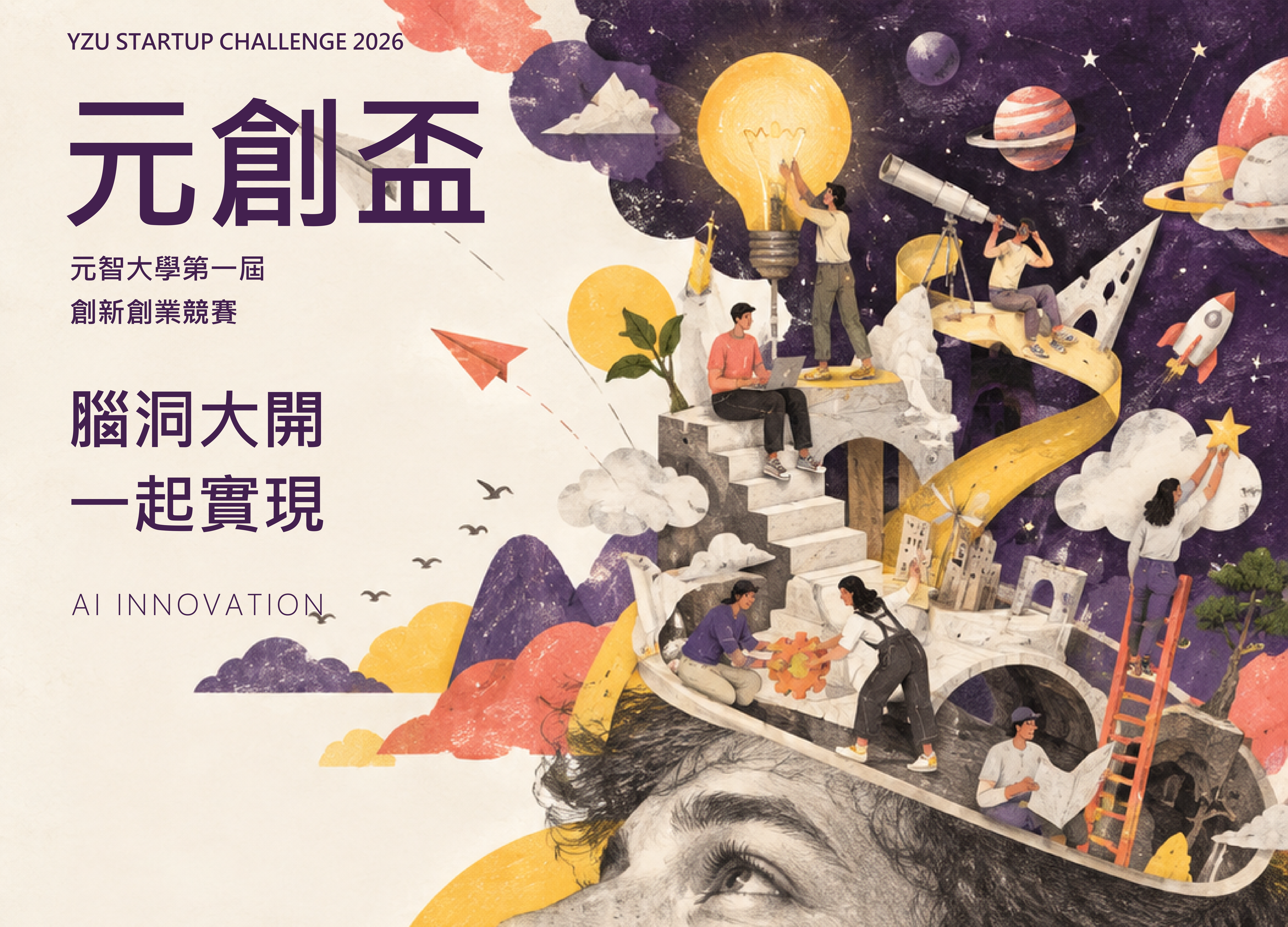
As the wave of generative artificial intelligence continued to transform industries, a key question emerged: how could creative ideas move beyond the classroom and into the marketplace, and how could AI become a powerful tool for turning entrepreneurial visions into reality? The Innovation & Entrepreneurship Center at Yuan Ze University organized the inaugural “YZU Innovation Cup” Innovation and Entrepreneurship Competition under the theme of “AI Innovative Applications.”
The competition encouraged students to utilize Generative AI (GenAI) tools to develop product prototypes, innovative services, and business models, transforming creative ideas into entrepreneurial proposals with market potential. Registration opened immediately and continued through 5:00 p.m. on October 16, welcoming interdisciplinary teams from colleges and universities throughout Taoyuan to participate in the challenge.
The inaugural “YZU Innovation Cup” was guided by the Office of Research and Development and organized by the Innovation & Entrepreneurship Center, with support from the Taoyuan Youth Affairs Bureau. The competition reflected Yuan Ze University’s commitment to advancing GenAI literacy and was integrated with the “YZU Crowdfunding Platform,” alumni resources, and angel investor networks. The initiative aimed to provide students with a practical platform for validating ideas, developing business models, and connecting with market resources.
To accommodate students at different stages of entrepreneurial development, the competition was divided into two categories: the “AI Creative Concept Division” and the “AI Venture Division.” The AI Creative Concept Division was designed for students who had developed innovative ideas but had not yet created specific products or services. Freshmen, sophomores, and international students were particularly encouraged to participate. The AI Venture Division targeted teams that already possessed product prototypes, were conducting entrepreneurial projects, or wished to pursue national-level entrepreneurship programs. Graduation projects, laboratory technologies, and other innovative developments could also be transformed into entrepreneurial proposals through this category.
The competition focused not only on creativity but also on entrepreneurial development. A series of training activities were arranged, including workshops such as “Using GenAI for Market Validation and Business Model Design” and “Using GenAI to Create Business Proposals and Presentations.” Teams advancing to later stages would receive mentorship matching and participate in one-on-one proposal consultation sessions. Finalists would present their projects during Demo Day on December 11, where industry mentors, investors, entrepreneurial alumni, and external experts would jointly evaluate the proposals. Through this process, participants would gain firsthand experience of the entrepreneurial journey from idea development to practical implementation.
In terms of awards, both the AI Creative Concept Division and the AI Venture Division featured the “Gold Yuan Award,” “Silver Yuan Award,” and “Bronze Yuan Award,” with a total prize pool of NT$70,000 for the main awards. Additional category awards included the “AI Innovative Application Award,” “Smart Symbiosis Award,” and “Sustainability and Shared Prosperity Award,” with a combined prize amount of NT$18,000. Furthermore, two “New Yuan Awards” were established specifically for freshmen, with a total award value of NT$10,000, encouraging new students to take their first step toward innovation and entrepreneurship. Award-winning teams would also have opportunities to participate in innovation and entrepreneurship seed-training programs and receive priority mentor matching.
The Innovation & Entrepreneurship Center noted that entrepreneurship did not necessarily begin only after a mature product had been developed. A problem encountered in daily life, a classroom project, or even a simple AI-driven solution could become the starting point for innovation. Through AI tools, professional mentoring, and access to market resources, the competition aimed to help young innovators transform ideas into actions and eventually develop entrepreneurial ventures with market potential.
Applications for the inaugural “YZU Innovation Cup” were accepted through 5:00 p.m. on October 16. Each team was required to consist of three to six students and include one or two faculty advisors. The organizers invited students from colleges and universities across Taoyuan to form teams and participate. Whether they were freshmen exploring innovation and entrepreneurship for the first time or teams already equipped with technologies, research projects, or product prototypes, participants were encouraged to challenge their creativity and execution capabilities through the YZU Innovation Cup and leverage AI as a powerful tool for realizing their entrepreneurial ambitions.