 EN-US
 ZH

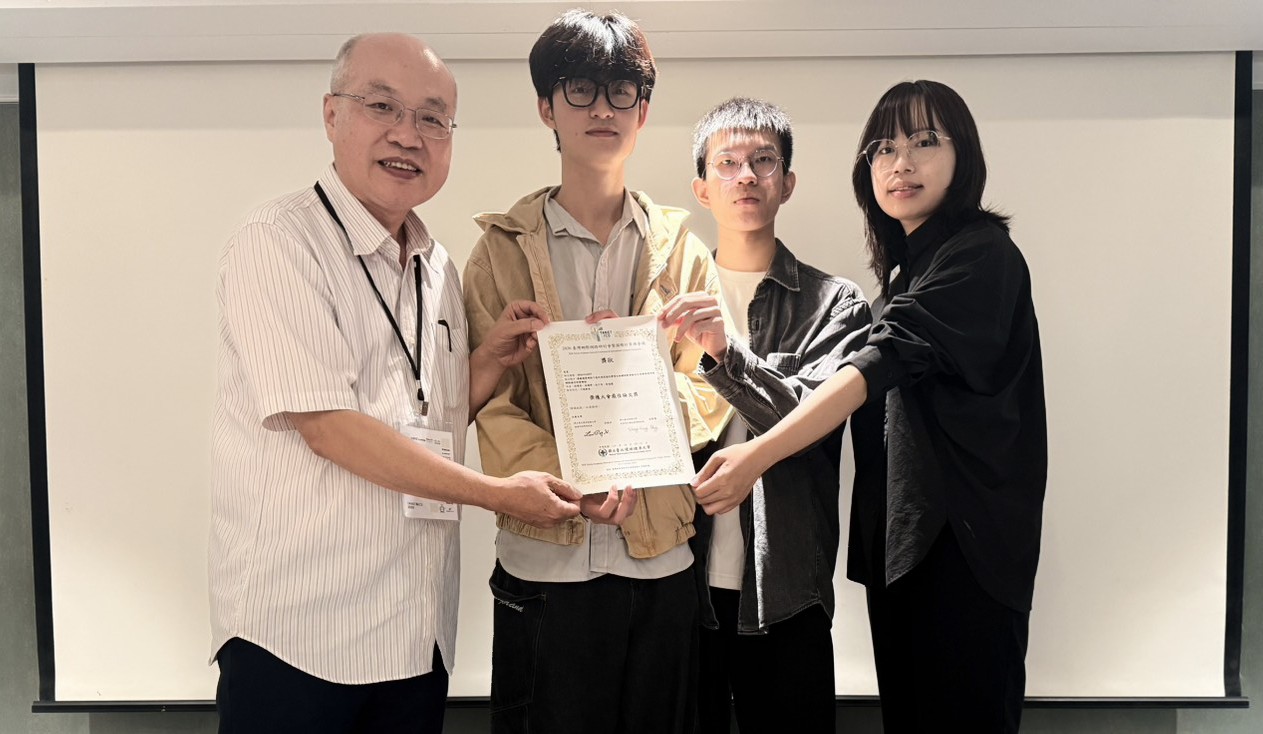
The integration of artificial intelligence and edge computing opened up new possibilities for smart Internet of Things (IoT) applications. A research team from the Department of Computer Science and Engineering at Yuan Ze University received the Best Paper Award at the 2026 Taiwan Academic Network Conference (TANET 2026) for developing an intelligent deployment mechanism based on deep reinforcement learning. The research improved computing resource allocation and service performance in IoT environments, highlighting YZU’s research capabilities in artificial intelligence, intelligent networks, and edge computing.
The award-winning paper, titled “A Deep Reinforcement Learning-Based Collaborative Deployment Mechanism for IoT Device Digital Twins and Deep Neural Networks in Edge Computing Networks,” was conducted under the guidance of Associate Professor Yi-Huai Hsu from YZU’s Department of Computer Science and Engineering and jointly completed by Chuan-En Chang, Chuan-Feng Yu, and Chien-Jung Shen. The study focused on resource allocation for IoT devices in edge computing environments and integrated Digital Twin technology, deep neural networks (DNNs), and deep reinforcement learning (DRL) to develop an intelligent solution that balanced computational efficiency with quality of service.
The research team noted that as smart IoT applications became increasingly widespread, large numbers of connected devices required real-time data processing and analysis, making the efficient allocation of limited edge computing resources an increasingly important challenge. Using deep reinforcement learning, the proposed mechanism dynamically adjusted the deployment of digital twins and deep neural networks. While meeting service latency constraints, the approach sought to balance data timeliness with AI inference accuracy, offering a new direction for resource management in future intelligent networks and IoT systems.
Yi-Huai Hsu said the award not only recognized the research team’s efforts but also demonstrated the students’ ability to apply their professional knowledge to analyze and solve complex technical problems. Hsu noted that academic research was not simply about building professional knowledge, but more importantly about developing independent thinking, innovative exploration, and practical problem-solving skills. By participating in academic conferences, students were able to exchange ideas with researchers from different fields, broaden their research perspectives, and transform what they had learned in the classroom into tangible research outcomes.
The Taiwan Academic Network Conference (TANET) served as an important academic exchange platform in Taiwan for information and networking technologies, bringing together experts and researchers from universities, research institutions, and industry to share the latest developments in network communications and information technology. By receiving the Best Paper Award at TANET 2026, YZU’s Department of Computer Science and Engineering demonstrated the research strengths of its faculty and students in AI and edge computing while underscoring the University’s continued commitment to innovative research and the cultivation of interdisciplinary technology talent.