 EN-US
EN-US  ZH
ZH 
Artificial intelligence opened new possibilities for laser vision correction. Yuan Ze University and Far Eastern Memorial Hospital collaborated on a smart healthcare study that applied AI-based deep learning to identify key features in laser vision correction images. The research stood out at the 44th Congress of the European Society of Cataract and Refractive Surgeons (ESCRS) in London, where it received the Best Poster Prize in the refractive category, highlighting Taiwan’s innovative capabilities in integrating healthcare and artificial intelligence.
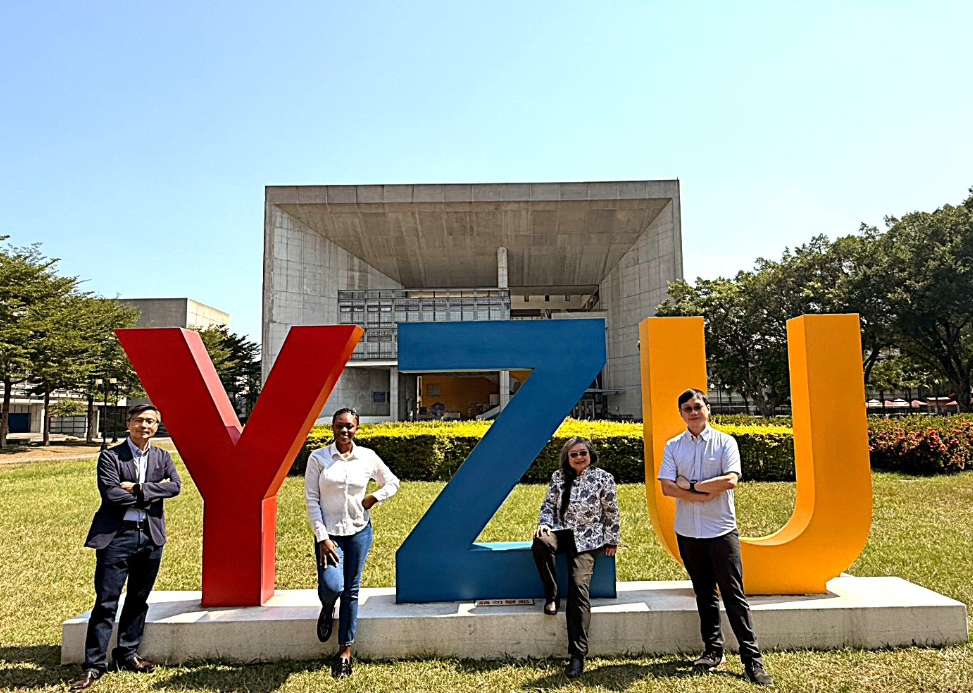
The award-winning research was led by Distinguished Professor Tun-Wen Chen, Dean of Yuan Ze University’s College of Electrical and Communication Engineering. The research team also included Dr. Ling-Chin Mai, Director of the Refractive Surgery Division in the Department of Ophthalmology at Far Eastern Memorial Hospital and a doctoral candidate at Yuan Ze University’s College of Electrical and Communication Engineering; Professor Ting-Yin Chien, Chair of Yuan Ze University’s Department of Computer Science and Engineering; and Nonduduzo Sphesihle Mdlovu, a master’s student in the College of Electrical and Communication Engineering. Dr. Mai represented the team in presenting the research in the United Kingdom.
The study focused on laser vision correction and applied AI-based deep learning to automatically identify Opaque Bubble Layer (OBL) and Black Spots in images captured during keratorefractive lenticule extraction (KLEx). These two imaging features could affect surgical procedures and postoperative visual quality and had previously been assessed primarily through physicians’ clinical experience. By applying AI-based image analysis, the research team transformed clinical observations into objective, quantifiable imaging data, providing a new technological approach to improving the efficiency and consistency of surgical image interpretation.
According to the research team, the technology could potentially be applied to ophthalmic surgical image interpretation, surgical quality assessment, and clinical education as an assistive tool for physicians. With further algorithm optimization and clinical validation, it could potentially be extended to real-time intraoperative image analysis and surgical risk assessment, helping physicians access critical information during procedures and advancing ophthalmic surgery toward greater precision and intelligence. Further validation would be required before these potential applications could be implemented clinically.
The study originated from real-world clinical needs and combined Far Eastern Memorial Hospital’s ophthalmic expertise with Yuan Ze University’s research strengths in artificial intelligence, electrical engineering, and computer science and engineering. By transforming challenges in clinical image interpretation into an AI research topic, the project demonstrated the innovative potential of interdisciplinary collaboration between medicine and engineering.
Dr. Chia-Kang Wang, Director of the Department of Ophthalmology at Far Eastern Memorial Hospital, said that the ESCRS Annual Congress was an important international academic conference in ophthalmology, bringing together experts from around the world to exchange the latest research findings in cataract and refractive surgery. He noted that Far Eastern Memorial Hospital and Yuan Ze University, both affiliated with the Far Eastern Group, had collaborated to apply artificial intelligence to laser vision correction. With Dr. Mai representing the research team, the project received the Best Poster Prize in the refractive category. The award not only recognized the two institutions’ research capabilities in integrating medicine and engineering but also brought greater international attention to Taiwan’s achievements in smart healthcare.
Distinguished Professor Tun-Wen Chen, Dean of Yuan Ze University’s College of Electrical and Communication Engineering, said that the award represented an important achievement in deepening interdisciplinary collaboration between medicine and engineering and laid a foundation for the future development of intelligent surgical assistance systems. He added that the University would continue to integrate clinical needs with its AI research capabilities, expand the application of artificial intelligence in ophthalmic diagnosis, surgical image analysis, and clinical decision support, and cultivate professionals equipped with medical knowledge, AI expertise, and innovative thinking through interdisciplinary collaboration. These efforts would help advance research outcomes toward clinical application while enhancing the international visibility and competitiveness of Taiwan’s smart healthcare sector.