 EN-US
EN-US  ZH
ZH 
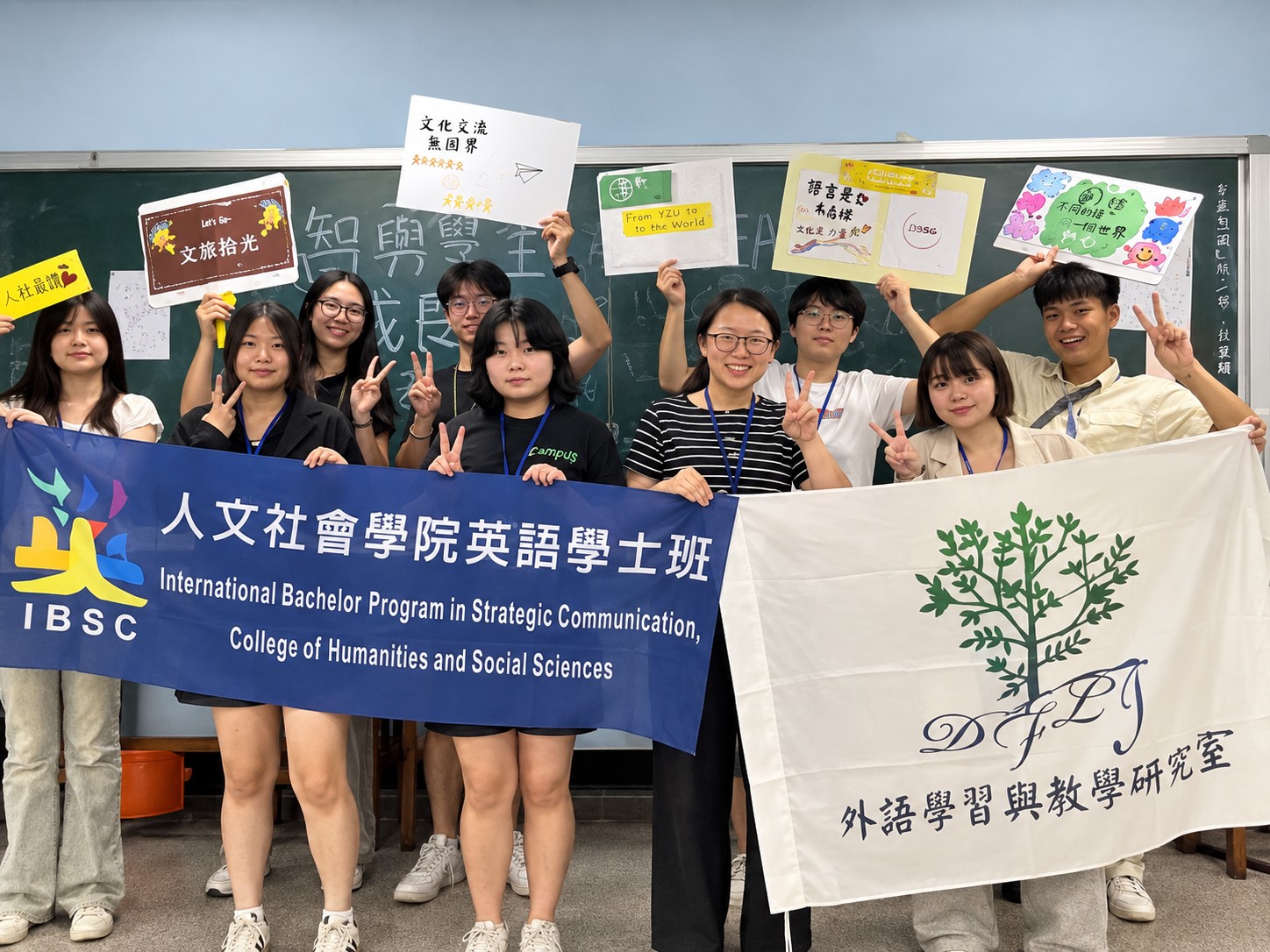
Students from Yuan Ze University demonstrated the power of youth engagement by bringing their knowledge and expertise to rural schools. Led by Li-Chen Kuo, a student of the International Bachelor Program in Strategic Communication under the College of Humanities and Social Sciences at Yuan Ze University, and Wei-Jung Chien from Wenzao Ursuline University of Languages, the PLEA Rural Education Team traveled to Liulin Elementary School in Shuishang Township, Chiayi County, during the summer break.
From August 25 to 27, the team carried out a three-day educational service program. Comprising seven high school students and two university students, the team integrated foreign language instruction with youth-designed learning activities, using games, challenge stations, role-playing exercises, and drama performances to help children explore knowledge and experience the joy of learning through active participation.
The camp embodied the spirit of inter-university and interdisciplinary collaboration. It combined the language-teaching expertise of the International Bachelor Program in Strategic Communication at Yuan Ze University and Wenzao Ursuline University of Languages with Chinese literature and history courses independently designed by participating high school students. By transforming traditional classroom content into engaging interactive activities, the team encouraged children to learn through play and hands-on experiences. The approach not only made learning more accessible and enjoyable but also provided youth volunteers with opportunities to apply their academic knowledge in meaningful educational service.
Li-Chen Kuo and Wei-Jung Chien explained that the English curriculum was developed according to the principle of “respecting professional expertise while maintaining a genuine commitment to students.” Before the camp began, the team carefully prepared teaching materials based on the children's learning levels. Vocabulary lessons that would normally rely on repetitive memorization were redesigned into matching games, quiz competitions, and movement-based activities, enabling students to strengthen their vocabulary skills naturally through repeated interaction and practice.
“We hoped not only to teach knowledge but also to consider learning from the children's perspective and make it enjoyable,” said Li-Chen Kuo. She noted that when learning extended beyond simply listening to lectures and instead encouraged active participation and hands-on exploration, children were more likely to develop interest, confidence, and a sense of achievement. For the youth volunteers, observing children's reactions and adjusting teaching strategies accordingly also became a valuable learning experience that could not be gained from textbooks alone.
According to the PLEA Rural Education Team, the value of educational service in rural communities goes beyond bringing learning resources to schools. More importantly, it seeks to inspire children through companionship, interaction, and meaningful exchange, helping them discover the enjoyment of learning and a wider world beyond the classroom. Throughout the project, high school and university students worked together on teaching material preparation, curriculum design, classroom instruction, and activity facilitation. The experience also strengthened their communication, adaptability, teamwork, and problem-solving skills.
Although the service program lasted only three days, it created a meaningful exchange of knowledge and companionship between the children and the volunteers. The children explored new ideas through games and activities, while the volunteers rediscovered the significance of education and mentorship through the students' enthusiasm and smiles. Looking ahead, the team hopes to continue connecting university students, high school students, and professionals from diverse fields to bring more innovative and engaging learning resources to rural communities and help narrow educational disparities between urban and rural areas.
Yuan Ze University has consistently encouraged students to combine academic learning with social engagement and to respond to societal needs through proactive action. By participating in rural education service, these students transformed their foreign-language expertise into creative teaching practices while fulfilling their social responsibilities as university students. Their efforts reflected the initiative, interdisciplinary collaboration, and social commitment that characterize Yuan Ze University students.