 EN-US
EN-US  ZH
ZH 
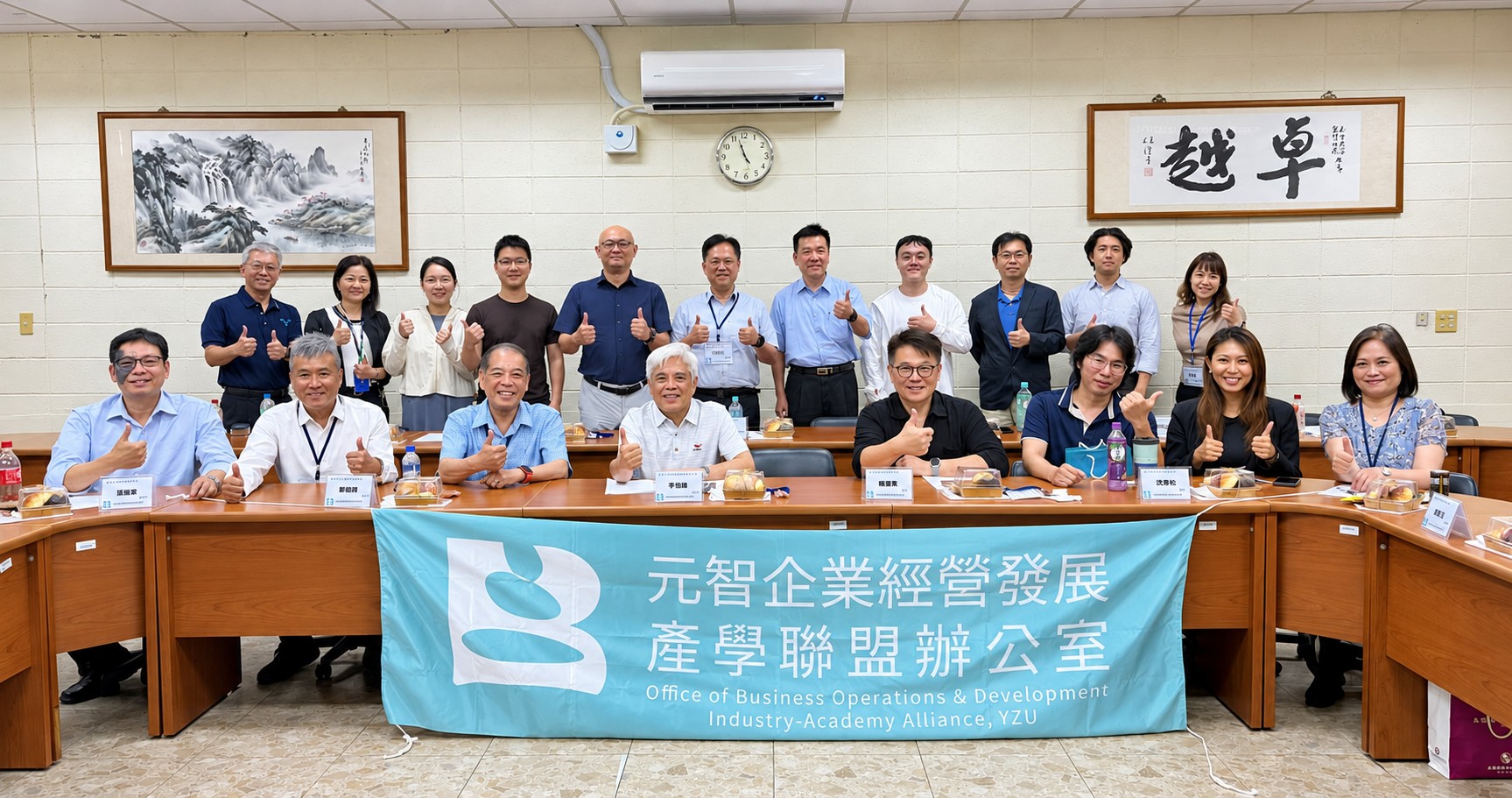
As generative artificial intelligence continued to evolve rapidly, enterprises’ expectations of AI gradually shifted from text generation and information retrieval toward AI Agents capable of understanding corporate data, connecting systems, and executing tasks. The Industry-Academia Alliance for Business Management Development at Yuan Ze University hosted a seminar and demonstration titled “Applications of Agentic AI in Business Operations and Management” on September 18.
The event was moderated by Po-Chien Lee, Executive Director of the Industry-Academia Alliance for Business Management Development, and featured a practical demonstration by Ching-Sung Shen, Director of the Data Systems Consulting Department at Data Systems Consulting Co., Ltd., followed by a panel discussion with Chen-Chia Chang, Director.
Po-Chien Lee stated that corporate AI applications had gradually evolved from the question-and-answer functions of large language models to AI workflows and AI Agents. By integrating data from multiple sources, AI could obtain information, understand assigned tasks, break them down into actionable steps, access designated databases based on authorization levels, and select appropriate tools to conduct analysis, make assessments, and provide feedback.
For example, when evaluating market competitors, AI could assess potential impacts, examine internal production capacity, and assist enterprises in analyzing how decisions such as plant expansion, mergers and acquisitions, or other management strategies might affect business operations and financial performance. As a result, AI had gradually evolved from simply providing answers into an intelligent collaborative partner within business workflows.
During the event, practical business scenarios were presented to demonstrate the application of AI Agents. Enterprises could provide existing forms, documents, and datasets and then communicate their requirements using natural language familiar to general users. AI could analyze content, organize information, and carry out preliminary tasks before human personnel reviewed and verified the results, creating a workflow characterized by “AI execution with human oversight.”
Using MPBox as a demonstration example, speakers showed how corporate data, knowledge bases, and operational workflows could be integrated into a unified platform. Repetitive tasks governed by clearly defined rules could be handled by AI, while mechanisms for human review, access control, and source traceability remained in place to ensure reliability and accountability.
During discussions with alliance members, company representatives raised a wide range of practical management questions. Topics included what types of data an ERP system should provide, what kinds of outputs AI could generate, how existing corporate expertise and technical knowledge could be transformed into AI-accessible knowledge bases, and how engineering drawings, core technologies, financial management data, Product Lifecycle Management (PLM) systems, and other existing platforms could be integrated with AI.
The speakers explained that through API keys and API integration, AI could connect to ERP systems and other internal enterprise platforms according to authorization settings. After obtaining real-time operational data, AI could perform analysis and generate responses based on current information.
Cybersecurity, professional ethics, and AI governance also emerged as key concerns among participants. The seminar highlighted several deployment options that enterprises could adopt according to data sensitivity and management requirements. These included cloud-based environments paired with cloud AI models, cloud environments integrated with open-source models, and fully on-premises deployments in which both data and AI models were maintained within the organization.
To address potential AI hallucinations, the speakers explained that enterprises could improve response accuracy and consistency through contextual engineering, corporate knowledge bases, conversation records, and error-correction logs. Participants further asked whether AI Agents could establish systematic monitoring mechanisms, such as continuously tracking production capacity-to-working-hour ratios and automatically initiating contingency plans when values exceeded predefined thresholds.
The speakers responded that organizations could configure monitoring conditions, operational procedures, and accuracy requirements according to specific business needs. Under authorized conditions, AI Agents could not only answer questions but also proactively monitor anomalies, initiate subsequent workflows, and notify relevant personnel when necessary.
Po-Chien Lee noted that the development of AI Agents had created opportunities for enterprises to connect previously fragmented data, systems, knowledge, and workflows more effectively. With appropriate authorization and governance mechanisms in place, AI could help organizations improve efficiency in information management, analysis, execution, and decision-making.
He added that the Industry-Academia Alliance for Business Management Development at Yuan Ze University would continue serving as a platform for collaboration between academia and industry. Through thematic forums, practical case studies, and member exchanges, the alliance would introduce emerging management concepts and technological innovations, helping businesses transform new technologies into practical, manageable, and value-generating management tools.