 EN-US
EN-US  ZH
ZH 
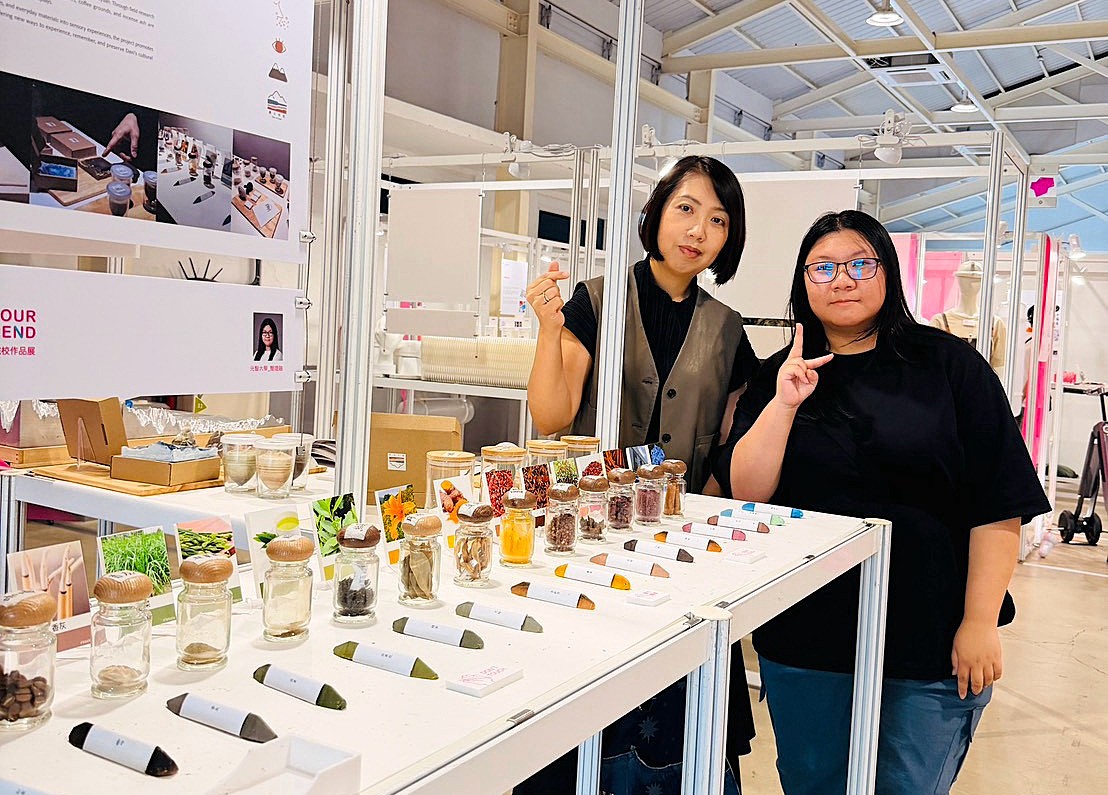
“Youth Threads” exhibition in the B2 section at Chung Yuan Cultural and Creative Park bringing together works by senior high school, vocational high school, and university students in Taoyuan, along with entries from the Taoyuan Design Award and outcomes of the ADA ISDW 2026 international student design workshop involving Taiwan, Japan, and South Korea. Chieh-Jung Chien, a graduate of Yuan Ze University’s Department of Art and Design and currently a first-year master’s student, had her graduation project, “Colors of Daxi,” selected for exhibition at Warehouse No. 14 of Chung Yuan Cultural and Creative Park. The work demonstrated the young designer’s in-depth observation of local culture and innovative approach to design practice.
“Colors of Daxi” took Chien’s hometown of Daxi as its creative starting point. Through field exploration, cultural research, and material experimentation, she explored colors shaped by the interplay of the natural environment, local industries, and memories of everyday life. She transformed local materials and everyday by-products, including tea leaves, coffee grounds, wood shavings, and incense ash from temples, into creative media such as crayons and candles. In doing so, she gave discarded materials new life and allowed local culture to be perceived anew through sight, smell, and touch.
Associate Professor Wan-Wen Huang, Chien’s advisor, said, “Chieh-Jung is from Daxi and has developed keen observations of her hometown’s water quality, air, and natural landscape. She used local colors, scents, and organic materials, while drawing on the preservative symbolism of wax to retain the scents, colors, and personal memories of Daxi, creating a design experiment that engaged multiple senses.”
Huang noted that the work went through more than a year of refinement, from the initial proposal, repeated discussions, material testing, and production revisions to the graduation review, graduation exhibition, and finally the Taiwan Design Expo. “Seeing a student’s work reach a larger exhibition platform and allowing more people to learn about her creative concept made me feel deeply gratified and honored as her advisor.”
Chieh-Jung Chien shared that participating in the Taiwan Design Expo had been an invaluable experience. It not only gave her work a larger exhibition platform but also provided opportunities to engage with young creators from different fields. By observing the diverse perspectives and approaches of designers of her generation, she broadened her understanding of design and was prompted to reconsider how design could build deeper connections with society and the public.
Notably, during the early stage of the exhibition, Chien initially allowed visitors to interact directly with her work and received responses from the public. However, after considering exhibition management and the preservation of the work, the presentation was ultimately changed to a static display. The experience gave her a deeper understanding of the different needs and expectations of creators, curators, and audiences. It also prompted her to consider how to strike a balance among creative concepts, public display, and interactive experiences. She believed that an exhibition was not merely a presentation of works but also an important process of communication between creators and audiences.
Huang also noted that the exhibition featured other notable proposals, including “Neili Zine” and designs inspired by the decorative patterns of Daxi Old Street archways. Each project originated from observations of local communities and transformed them into designs with distinct cultural identities. The selection of “Colors of Daxi” not only recognized the creative abilities of a young designer but also reflected the educational achievements of Yuan Ze University’s Department of Art and Design, which had long emphasized local culture, sustainable materials, and practice-based education. Through these efforts, design served as an important medium connecting memories of place with contemporary life.