 EN-US
EN-US  ZH
ZH 
In today’s highly competitive society, where pressure continues to rise, and mental well-being has become a growing concern, the question of how to find inner peace and rebuild personal values has become an important issue in higher education and the humanities.
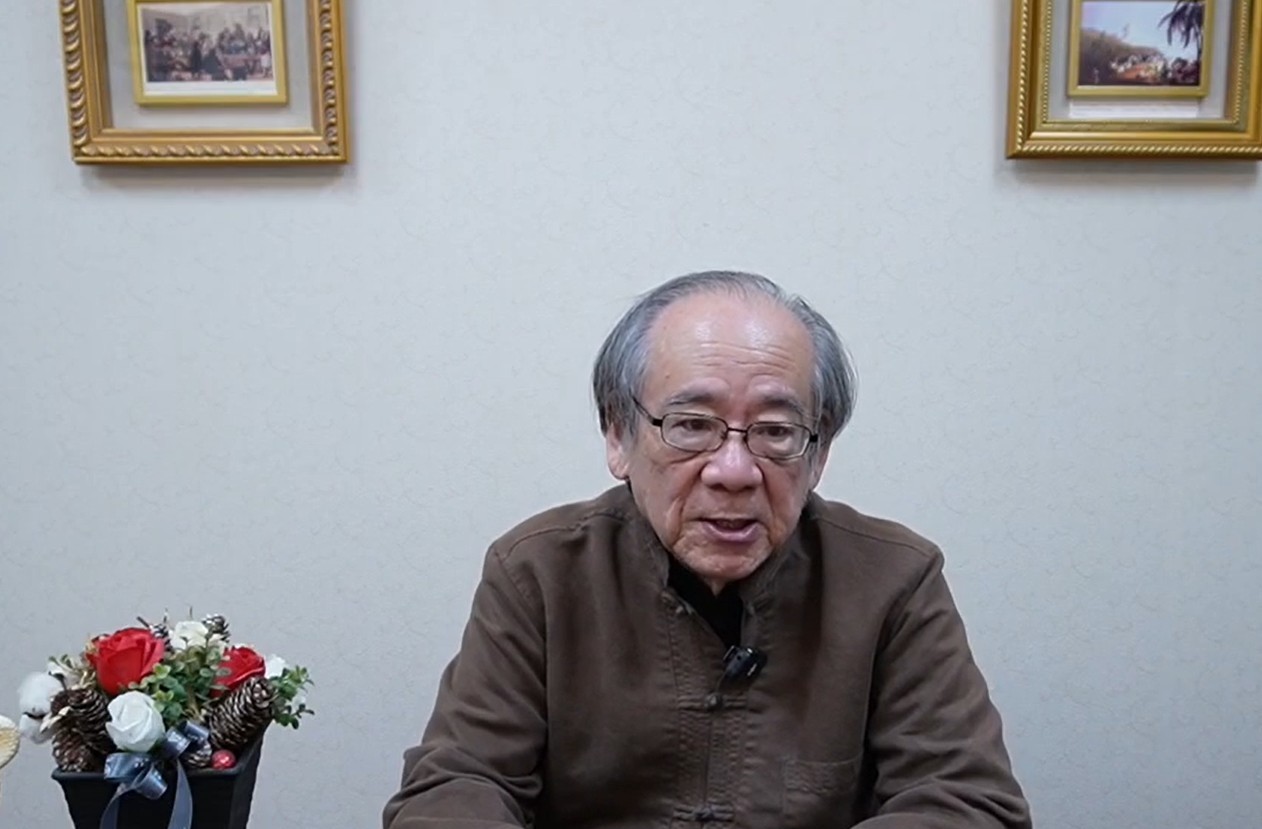
The School of Lifelong Education at Yuan Ze University, together with the Han-Ru Cultural and Educational Foundation and the Hua-Ru Youth Care Foundation, jointly held the Han-Ru Academy “Yuan Ze Classical Culture Lecture Series,” offering a set of online lectures rooted in everyday life. Centered on the philosophy of “bringing classics into daily use and revitalizing thought,” the series guided the public in rediscovering classical wisdom through real-life experience.
This lecture invited Professor Li-Wen Wang of Yuan Ze University to speak on “Wang Yangming’s Philosophy,” presenting an in-depth analysis of the core values of Wang Yangming’s thought and its contemporary relevance—especially for university students. Professor Wang approached the topic from the intersection of Confucian and Daoist philosophy, leading attendees to understand how Wang Yangming’s teachings could be practiced and applied in modern life.
Professor Wang explained that Wang Yangming (1472–1529), a Ming dynasty philosopher, underwent exile, military service, and political turbulence throughout his life, with his intellectual maturity achieved during his difficult years in Longchang, Guizhou. Core concepts of Yangming philosophy, such as “the mind is principle,” “unity of knowledge and action,” and “the extension of innate knowledge of the good,” challenged Neo-Confucianism, which placed moral principle externally in things. Instead, Yangming philosophy placed the root of morality within the human heart–mind, bringing Confucian moral cultivation back to daily life and concrete action. It emphasized that everyone could actualize morality through the innate conscience they already possessed.
Drawing from the recorded dialogues in The Record of Teaching and Learning between Wang Yangming and his disciples—Ai Xu, Cheng Lu, Kan Xue, and Sheng-Zeng Huang—Professor Wang further explained that Yangming’s cultivation was not merely theoretical discourse, but was deeply concerned with whether one’s desire to do good was sincere. Concepts such as “single-minded focus,” “refinement and concentration,” and “nothing exists outside the mind” all pointed toward introspection, inner focus, and self-examination. Frequent references to “cinnabar ()” in Wang Yangming’s poetry and records of his long-term meditation demonstrated his inner cultivation—highly aligned with Daoist practices of tranquil concentration and nourishing the spirit, revealing a state of “clarity within stillness.”
Integrating his many years of experience in Daoist internal alchemy practice, Professor Wang noted that the formation of Yangming philosophy was not the result of a sudden intellectual awakening. Instead, in the historical context of the integration of Confucianism, Daoism, and Buddhism, Wang Yangming achieved Confucian self-awareness through Daoist inner cultivation. In form, his practice adopted Daoist introspection and meditative stillness; in content, it remained grounded in Confucian ethics and moral action. Ultimately, Wang successfully transformed “Daoist cultivation of the mind” into “Confucian extension of innate knowledge,” marking a breakthrough in the development of mind philosophy.
From a contemporary perspective, Professor Wang believed that Wang Yangming’s philosophy and Daoist meditation held particular relevance for university students today. Yangming philosophy helped individuals build stable inner values, moral clarity, and the ability to put knowledge into action; Daoist meditation, through breathing regulation and stillness, helped reduce anxiety, enhance concentration, and promote emotional steadiness and physical–mental balance. When practiced together—with “the mind is principle” as foundation and meditative tranquility as method—these approaches offered highly pressured youth a pathway toward inner peace, right action, calmness of body, and harmony of energy.
Professor Wang concluded by emphasizing that Wang Yangming’s enlightenment was not only a milestone in the history of Confucianism but also a realization of mind cultivation achieved through Daoist internal alchemy within a context of philosophical integration. His approach—developing moral awareness from within and unifying body and mind—continued to offer profound life guidance for the modern world.
Yuan Ze University continued to promote the “e.yzu Online Learning Platform,” offering a rich selection of courses open to the public. Participants were welcome to log in and learn. For inquiries, the public could contact the official LINE service @yzu_learn or call (03) 463-8800 ext. 2490 (School of Lifelong Education).