 EN-US
EN-US  ZH
ZH 
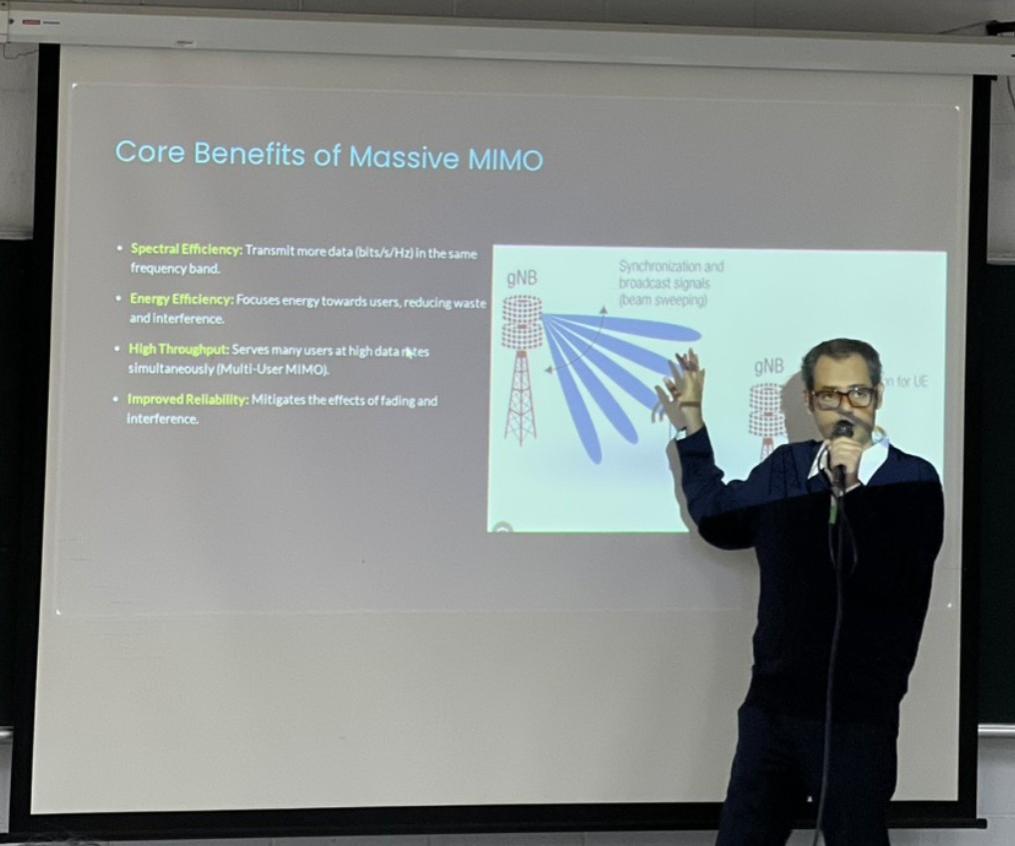
The research team led by Dr. Arnob Paul, Assistant Professor in the Department of Computer Science and Engineering at Yuan Ze University, had its latest paper accepted and published by the IEEE Journal on Selected Areas in Communications (IEEE JSAC), drawing strong attention from both academia and the tech industry.
IEEE JSAC was widely recognized as one of the world’s most influential flagship journals in the fields of communications and networking, often revealing key future technological trends; papers published in the journal frequently indicated research directions that would later evolve into real-world applications.
This newly accepted study listed Arnob Paul as the first author and was co-authored with Keshav Singh, Professor at National Sun Yat-sen University. The research focused on one of the core challenges in smart city development: how networked transportation in the 6G era could become safer and faster while simultaneously ensuring higher privacy protection.
Arnob Paul pointed out that the research had a direct and practical impact on the general public. In the near future, vehicles, traffic lights, roadside sensors, and municipal networks would continue to communicate with each other to prevent accidents, reduce traffic congestion, and accelerate emergency response. However, such highly interconnected systems require real-time processing of massive personal location data.
Dr. Arnob Paul’s research proposed that “intelligent” decision-making should not rely on aggregating everyone’s raw data into one large centralized server. Instead, the study advocated that next-generation networks should adopt privacy-aware learning models that enable devices to learn while preserving privacy. This approach allowed vehicles and infrastructure to collaboratively enhance the performance of safety algorithms, while keeping sensitive information closer to where it was generated for processing and storage.
The paper also addressed another technological bottleneck: in real-world conditions, coordinating millions of rapidly moving devices in real time involved extremely high computational complexity. Paul’s team explored quantum-inspired techniques for managing prediction, security, and resource allocation. As future autonomous-driving and navigation systems would need to remain reliable under millisecond-level environmental changes, these advanced methodologies were expected to become essential.
Publication in IEEE JSAC—a globally leading journal—was regarded as a significant honor, typically reserved for high-impact research contributions. As the flagship journal of the IEEE Communications Society, IEEE JSAC served as a major reference within the international research community. Its Journal Impact Factor was 17.2, and its CiteScore was 33.6, placing it among the top-tier journals in communications engineering. Papers published in IEEE JSAC frequently shaped future research directions and influenced the development of global technology standards.
In addition to his research efforts, Dr. Arnob Paul actively introduced cutting-edge technology into university education. He announced that he would offer the course “Introduction to Quantum Computing” in the second semester of Academic Year 114, allowing students to engage early with core knowledge related to future communications and cybersecurity fields.