 EN-US
EN-US  ZH
ZH 
As generative AI rapidly transformed design education, how to help students make good use of AI rather than become dependent on it has become an important issue for educators worldwide. In recent years, Yuan Ze University has actively promoted instructional innovation through “Design × AI,” integrating generative AI, digital fabrication, and design thinking into its curriculum while extending its mature teaching model overseas.
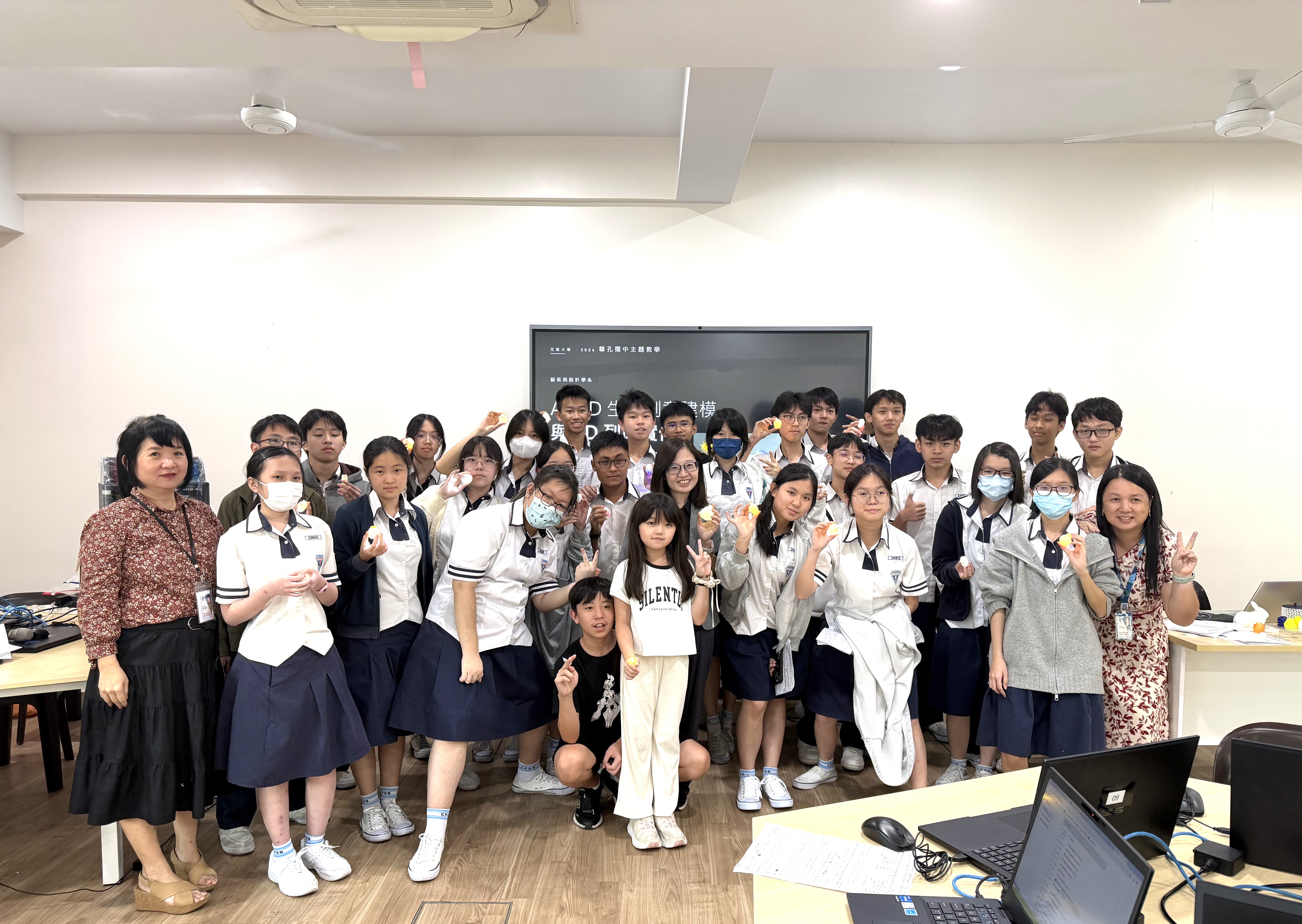
Professor Chu-Ching Lin, Chair of the Department of Art and Design, College of Humanities and Social Sciences, Yuan Ze University, was invited by Confucian Private Secondary School in Kuala Lumpur, Malaysia, to lead its annual thematic workshop from July 20 to 22. Entitled “AI × Creative Design: From Imagination to Reality – AI-Generated 3D Modeling and 3D Printing Practice,” the program guided 74 senior high school art students through a complete design process, from AI-assisted ideation to tangible creation.
The three-day workshop was attended by 74 students from the Grade 12 Art Program and the Grade 10 and Grade 11 Art and Design Programs. The curriculum covered AI-driven creative ideation, generative image design, AI-assisted 3D modeling, 3D printing practice, and final project presentations. Every participant completed a personalized 3D-printed lamp and a marketing poster, achieving a 100% completion rate.
In addition, Grade 10 and Grade 11 students were introduced to AI-assisted programming for the first time. Using p5.js together with generative AI, students collaborated with AI through natural-language prompts to develop programs and successfully created 51 interactive game projects. This became the most popular component of the workshop. One student commented, “Creating a rhythm game was great. I will continue making one after returning home.” The feedback demonstrated that AI not only lowered the barrier to programming but also stimulated students’ interest in continuous creation.
Professor Chu-Ching Lin explained that the core philosophy of the workshop was “AI collaboration, not AI substitution.” While AI could assist with repetitive tasks, the true value of creative work still came from the creator’s ideas, aesthetic judgment, and decision-making. Therefore, students were required to participate throughout the entire process of ideation, revision, and decision-making rather than simply accept AI-generated results.
She noted that the curriculum had been developed from Yuan Ze University’s years of experience in promoting AI design education. Course content had been adjusted daily based on student feedback, demonstrating the effectiveness of agile teaching practices. More importantly, the workshop had transformed students’ perceptions of AI. One participant who had previously rejected AI shared after the workshop that AI-generated content had once seemed insufficiently accurate, leading to reluctance in using it. After completing the program, the student realized that “It was not that AI was ineffective; it was that I had not yet learned how to use AI effectively.” The student further recognized that understanding AI could accelerate creative workflows while preserving more space for critical thinking.
The exchange program also included a professional development session for educators entitled “Art and Design Education in the AI Era.” The session shared teaching strategies and practical experiences for integrating generative AI into classrooms, further strengthening educational exchange between Taiwan and Malaysia.
Yuan Ze University and Confucian Private Secondary School had signed a Memorandum of Understanding (MOU) two years earlier. The workshop demonstrated the achievements of their collaboration and showed that Yuan Ze University’s AI design education model had already developed the capacity for international promotion. As we advance, Yuan Ze University will continue to strengthen partnerships with Chinese independent high schools in Southeast Asia and international design institutions, advancing Taiwan’s AI design education on the global stage and cultivating internationally competitive talent equipped with both design thinking and AI application skills.