 EN-US
EN-US  ZH
ZH 
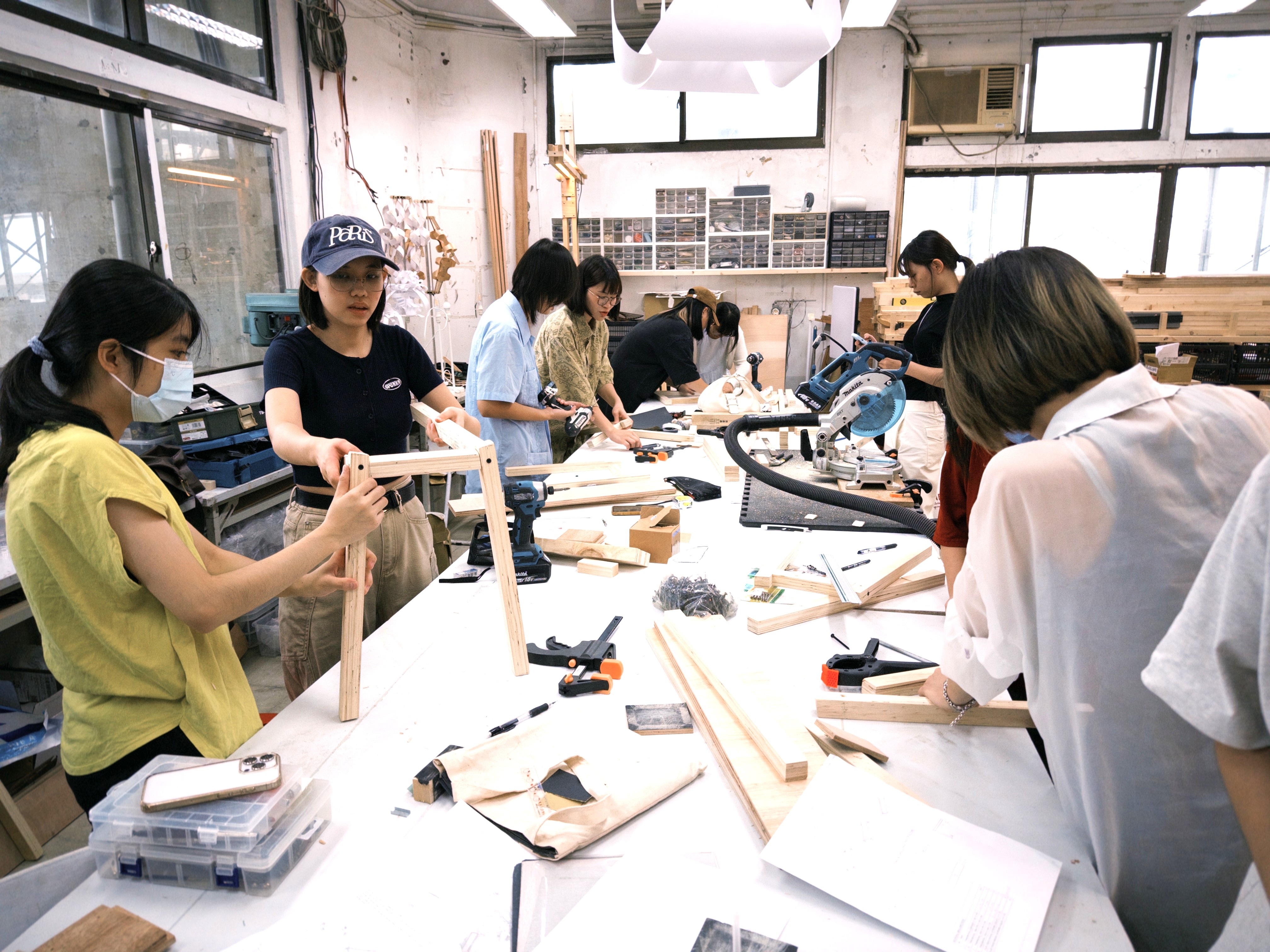
Design was not only about creating aesthetics but also about responding to real-life needs. The course “Introduction to Structure and Form” offered by the Department of Art and Design, College of Humanities and Social Sciences, Yuan Ze University, integrated the Ministry of Education’s Teaching Practice Research Program and the concept of University Social Responsibility (USR). In collaboration with the Jiayi Social Welfare Foundation, the course brought design education into local communities and focused on improving the living environments of underprivileged families, enabling students to understand the connection between design and society through real-world cases.
Centered on the concept of “starting from real needs,” the course guided students to work with five families from different backgrounds. Through interviews, environmental observations, and needs assessments, students gained insights into users’ daily habits and spatial challenges before proposing improvement plans based on their expertise in structure and form design. With feedback from foundation representatives and industry professionals, students continually refined their proposals and eventually selected two households for actual renovation projects.
One case involved an elderly veteran who had maintained his long-established lifestyle for many years, with much of the furniture and equipment in his home having become outdated. Based on his daily needs, students transformed an old door panel into a ventilation window that improved both lighting and ventilation. They also restored second-hand furniture and reinforced aging door frames, allowing existing objects to regain functionality while preserving the resident’s familiar living memories.
Another case involved a resident with mobility limitations caused by diabetes who had long faced problems such as household water leakage and inconvenient living conditions. Students improved water leakage issues in the primary activity areas through simple structural solutions and reorganized the lighting and spatial layout to enhance residential safety and everyday convenience.
A student, surnamed Lu, stated that after entering the residential sites, the team realized that renovation work involved far more than physical space improvement. It required consideration of family members’ needs, living habits, and practical constraints. Although the implementation phase had originally been scheduled to conclude during the semester, the complexity of on-site demands led to continued work beyond the course period. After the course ended, five students voluntarily devoted their summer vacation to the renovation projects, returning to the sites weekly to discuss construction details. With support from the Jiayi Social Welfare Foundation, including access to woodworking facilities, transportation assistance, and social welfare service expertise, the students completed home improvements for both families.
“Students initially wanted to reorganize and redesign entire spaces. However, after entering the homes, they began asking why objects were placed in particular locations and why people’s lives had developed in certain ways,” said Ming-Hung Wu, Assistant Professor of the Department of Art and Design, College of Humanities and Social Sciences, Yuan Ze University. He explained that the true value of design was not simply to change an environment but first to understand its users and then determine where professional expertise could make a meaningful difference.
Ming-Hung Wu further noted that design education should cultivate not only creativity and technical skills but also the ability to identify problems, understand needs, and develop solutions. The greatest achievement of the course was not merely the completion of two renovation projects but the opportunity for students to experience the role of design in society and recognize that design could serve as a powerful force for improving lives. Moving forward, the Department of Art and Design at Yuan Ze University would continue integrating local resources and social issues into its curriculum, promoting the combination of design education and social practice while cultivating design professionals with professional expertise and social awareness.