 EN-US
EN-US  ZH
ZH 
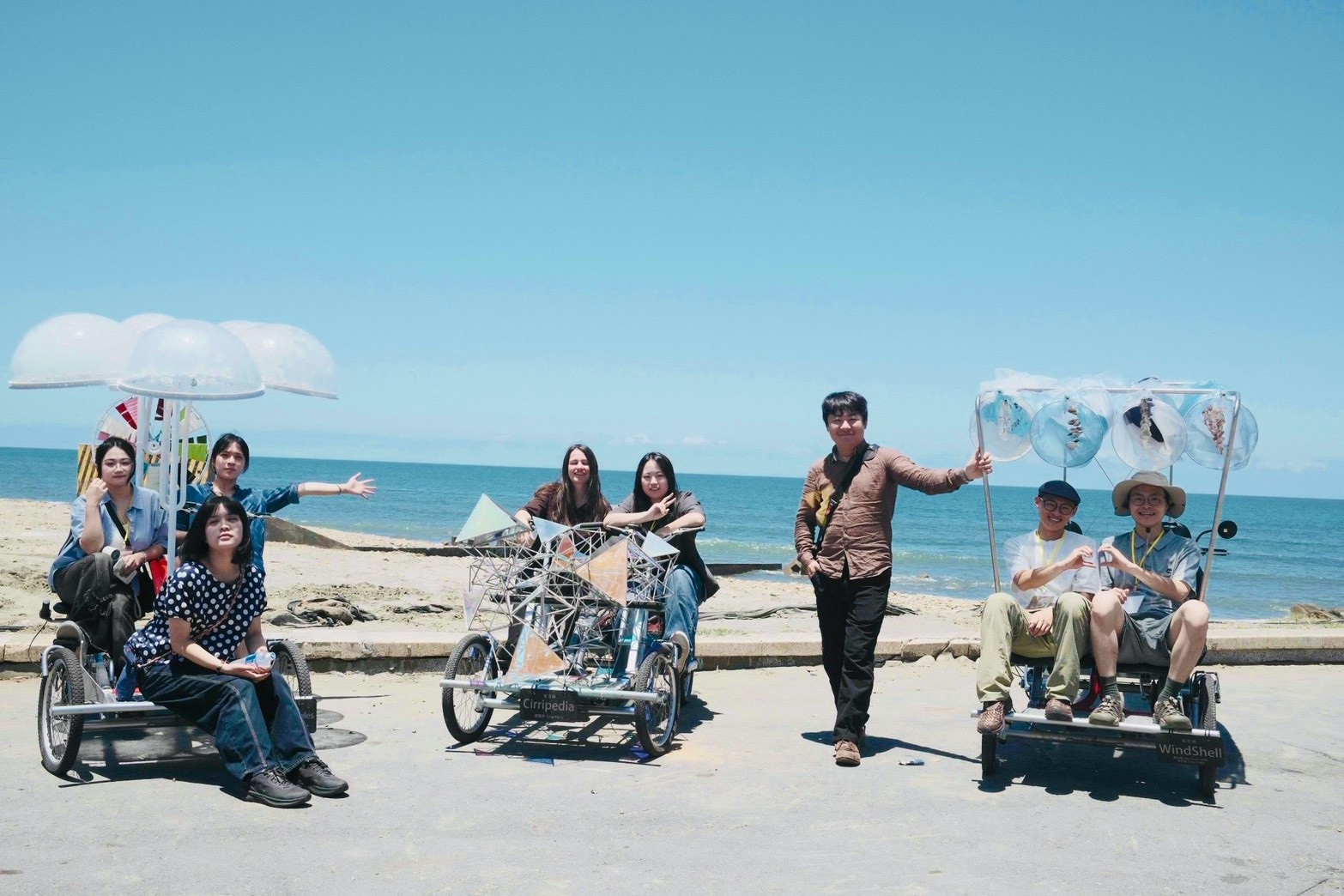
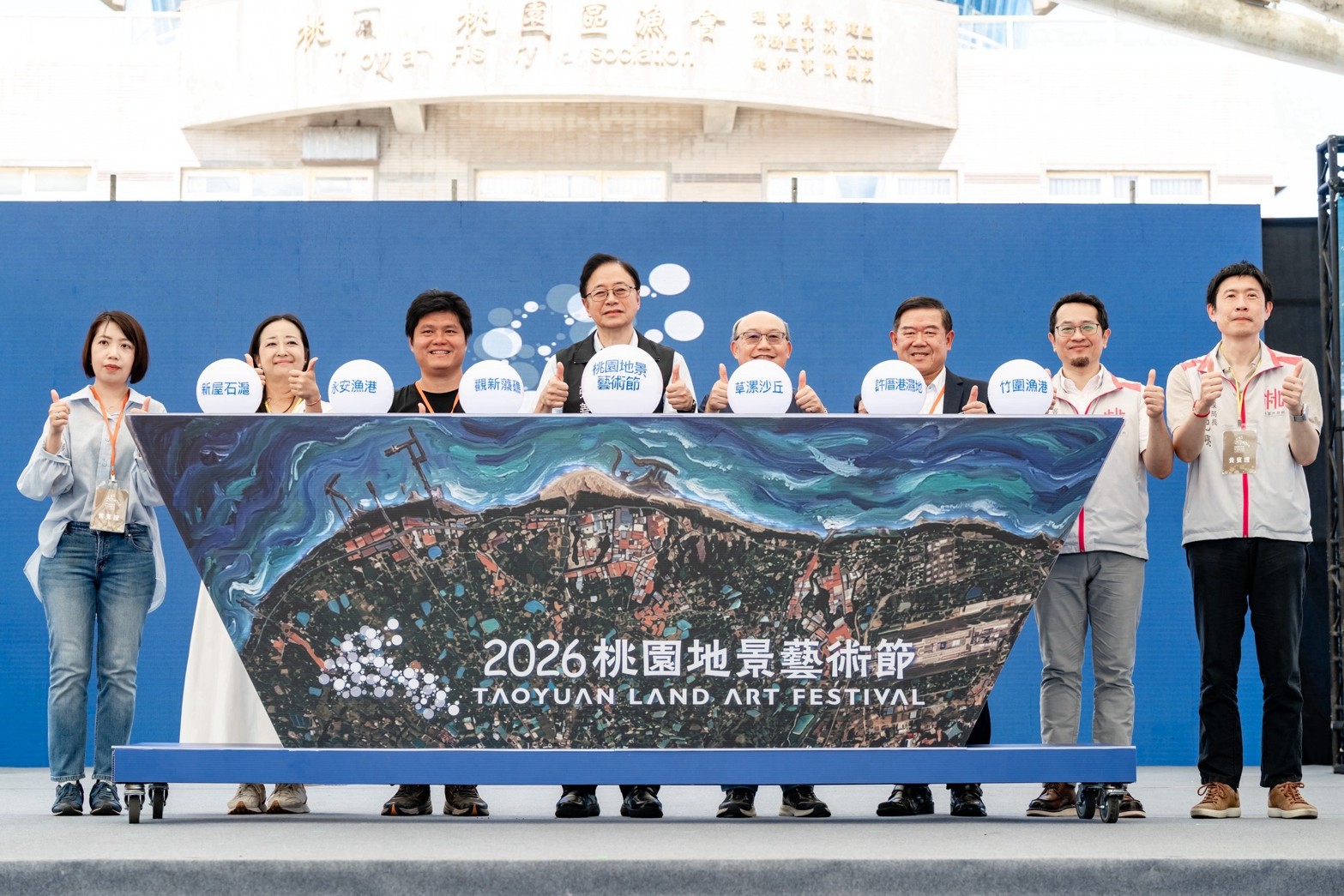
The 2026 Taoyuan Land Art Festival, themed “Pearl Coast,” was held from July 4 to August 30 at Zhuwei Fishing Harbor, Yong’an Fishing Harbor, and four ecological exhibition areas featuring wetlands, dunes, algal reefs, and stone weirs. Through artistic creation, the festival connected the rich natural ecology and cultural landscapes of the Taoyuan coastline. Faculty members and students from the Department of Art and Design, College of Humanities and Social Sciences, Yuan Ze University, participated extensively in curation, artistic creation, and interdisciplinary collaboration, demonstrating the practical achievements of integrating public art, local culture, and environmental sustainability into art and design education.
Since its establishment in 2013, the Taoyuan Land Art Festival has become one of Taoyuan’s most representative arts and cultural events. This year, Associate Professor Wan-Wen Huang of the Department of Art and Design served as a Co-curator, while Assistant Professor Jason Chiu of the Department of Art and Design served as Curator of the Guanyin Algal Reef and Xinwu Stone Weir exhibition areas. He curated seven domestic and international artworks that connected coastal ecology, local culture, and artistic creation, highlighting the department’s emphasis on curatorial thinking, interdisciplinary collaboration, and public participation.
In addition to his curatorial work, Jason Chiu collaborated with Margot Guillemot, an instructor in the International Bachelor Program in Strategic Communication, College of Humanities and Social Sciences, to create Rebirth: The Light Gatherer. The artwork was inspired by the silhouettes of beach-cleaning volunteers and was constructed using weather-resistant and environmentally friendly materials. It paid tribute to volunteers who had long protected the coastline and symbolized how repeated beach-cleaning efforts accumulated the power to transform the environment. Jason Chiu explained that the artwork deliberately avoided the use of plastic and other environmentally harmful materials. Through art, he hoped to encourage the public to reconsider the possibility of harmonious coexistence between humanity and nature and to promote marine conservation as a continuously practiced public value.
Under the guidance of faculty members, students from the Department of Art and Design also collaborated with Pacific Cycles to launch the “Co-Moving Landscape Project.” Using three four-wheeled cooperative bicycles as creative platforms, they completed three mobile landscape installations: WindShell, Moving Bubbles, and Manzuhao. The project transformed artworks from static displays into mobile and participatory public experiences, demonstrating innovative approaches to integrating design into local spaces.
WindShell was created by Chih-Chuan Teng and Tsung-Yi Wu. The installation incorporated shells, pebbles, water pipes, buoys, and recycled materials. Through the collision and resonance of different materials, it transformed the sounds of waves and wind into a unique soundscape. Moving Bubbles was jointly created by Yen-Yi Lee, Shih-Yuan Sung, and Shih-Ya Sung.
Inspired by the waves of the Pearl Coast, the artwork combined recycled bicycle wheels and transparent materials, presenting the flowing imagery of sea foam through movement and changing light effects. Manzuhao was created by Chia-Yin Lee and drew inspiration from barnacles. The work incorporated geometric structures and mirrored stainless steel surfaces to reflect the coastal landscape and tidal scenery, expressing the vitality of marine life and an imaginative vision of coexistence between humans and the ocean.
Chia-Yin Lee noted that she had personally participated in every stage of the project, from concept development and design proposals to welding and fabrication. The experience not only enabled her to gain hands-on experience in public art creation but also deepened her understanding of the importance of art in responding to local environments.
Wan-Wen Huang stated that the Department of Art and Design had long emphasized “learning by doing” and interdisciplinary practice. Faculty members and students were encouraged to step beyond the classroom and accumulate experience in curation, design, material applications, and industry-academia collaboration through real-world projects. Participation in this year’s Taoyuan Land Art Festival extended classroom learning into public spaces and demonstrated the achievements of integrating local culture, environmental sustainability, and public participation into art and design education. The project also brought youthful and innovative artistic energy to Taoyuan’s Pearl Coast.