 EN-US
EN-US  ZH
ZH 
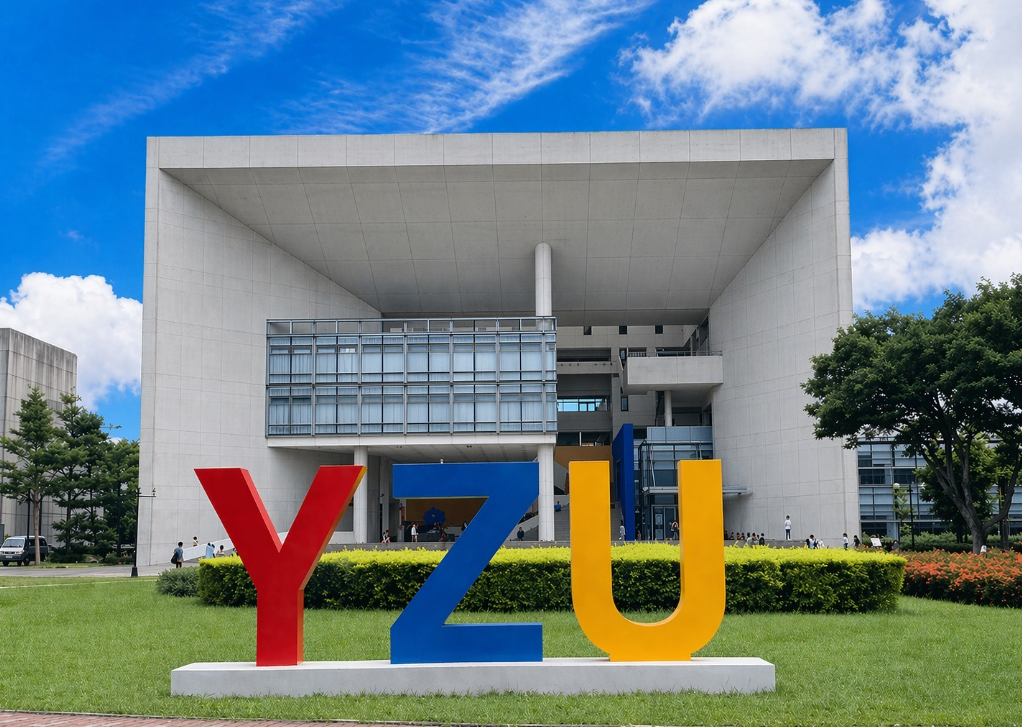
Times Higher Education (THE) announced the THE Asia University Rankings 2026 on the evening of April 23. Yuan Ze University was ranked 176th in Asia, placing it among the top 200 universities across the continent.
With its solid teaching quality, strong research capacity and academic impact, high level of internationalization, and robust industry collaboration, Yuan Ze University demonstrated the international competitiveness of a private university.
President Ching-Jong Liao stated that rankings were not merely numerical results but concrete outcomes reflecting the University’s long-term educational direction and sustained investment. In recent years, Yuan Ze University had focused on the core strategy of “AI × Semiconductors × Interdisciplinarity × Bilingual Education,” comprehensively advancing transformations in teaching and research. By creating a flexible, student-centered learning environment, the University was committed to cultivating key talents equipped for the future.
Amid the rapid development of AI technologies, Yuan Ze University had already established the Artificial Intelligence Cross-domain Innovation Application Center in 2020 with the support of the Far Eastern Group and built a high-performance computing platform, becoming one of NVIDIA’s partner universities in Taiwan. More recently, the University collaborated with the Taiwan Artificial Intelligence School (AIA) to establish a regional AI talent certification center, further strengthening its AI talent development ecosystem.
Building on this foundation and in response to the wave of generative AI, Yuan Ze University announced that beginning in the 2026 academic year, “AI Programming Languages and Logical Thinking” would be introduced as a required freshman course university-wide, positioning the University as one of Taiwan’s benchmark institutions in AI literacy education. Unlike single-department-oriented approaches, Yuan Ze adopted an intercollegiate integration model, enabling students from engineering, management, humanities and social sciences, and design disciplines to deeply integrate AI tools with their professional applications and cultivate the ability to collaborate effectively with AI.
President Liao further noted that in semiconductor talent cultivation, Yuan Ze University had maintained long-term collaboration with Taiwan Semiconductor Manufacturing Company (TSMC) to jointly promote multiple semiconductor professional programs and connect academic training with internship and employment opportunities. This arrangement allowed students aspiring to enter the semiconductor industry to smoothly align their learning pathways with career development. In addition, the University launched the construction of a Semiconductor Technology Building this year, integrating teaching laboratories, research facilities, and industry–academia collaboration spaces, while simultaneously establishing a university-level Semiconductor Research Center focusing on advanced processes, materials analysis, and AI-enabled manufacturing applications.
To respond to diverse student aspirations and evolving industry demands, Yuan Ze University also announced the launch of the Interdisciplinary Bachelor’s Degree Program starting from the 2026 academic year. The program offered a highly flexible mechanism for cross-disciplinary course selection and degree design. President Liao explained that the program covered four key areas—Artificial Intelligence, Semiconductors, Innovation and Entrepreneurship, and Sustainable Development. Students could apply to transfer into the program beginning in the second semester of their freshman year, free from the constraints of their originally admitted departments. With the support of academic advisors, students were able to integrate courses independently, design personalized learning pathways, and achieve an optimal balance between disciplinary depth and interdisciplinary breadth. Upon fulfilling graduation requirements, students were awarded a Bachelor’s Degree in Interdisciplinary Studies, with their specialization noted on the diploma.
In terms of internationalization, Yuan Ze University has promoted bilingual education for over two decades. International students currently come from more than 50 countries, accounting for over 10% of the student population, while full-time international faculty members comprise approximately 14% of the teaching staff. Through English-taught bachelor’s programs and English-Medium Instruction (EMI) courses across colleges, combined with overseas study and internship opportunities, the University enabled domestic and international students to learn together naturally on campus, cultivating cross-cultural communication skills and global mobility.
Yuan Ze University stated that being ranked among the top 200 universities in the THE Asia University Rankings not only symbolized international recognition of its educational quality but also affirmed that the education its students received had reached standards comparable to leading universities in Asia. Looking ahead, the University would continue to place student learning choices at the core, deepen education in key fields such as AI, semiconductors, and sustainability, and cultivate interdisciplinary talents equipped with professional expertise, global competence, and practical skills—empowering students to start from Yuan Ze, connect with the world, and embrace the future.