 EN-US
EN-US  ZH
ZH 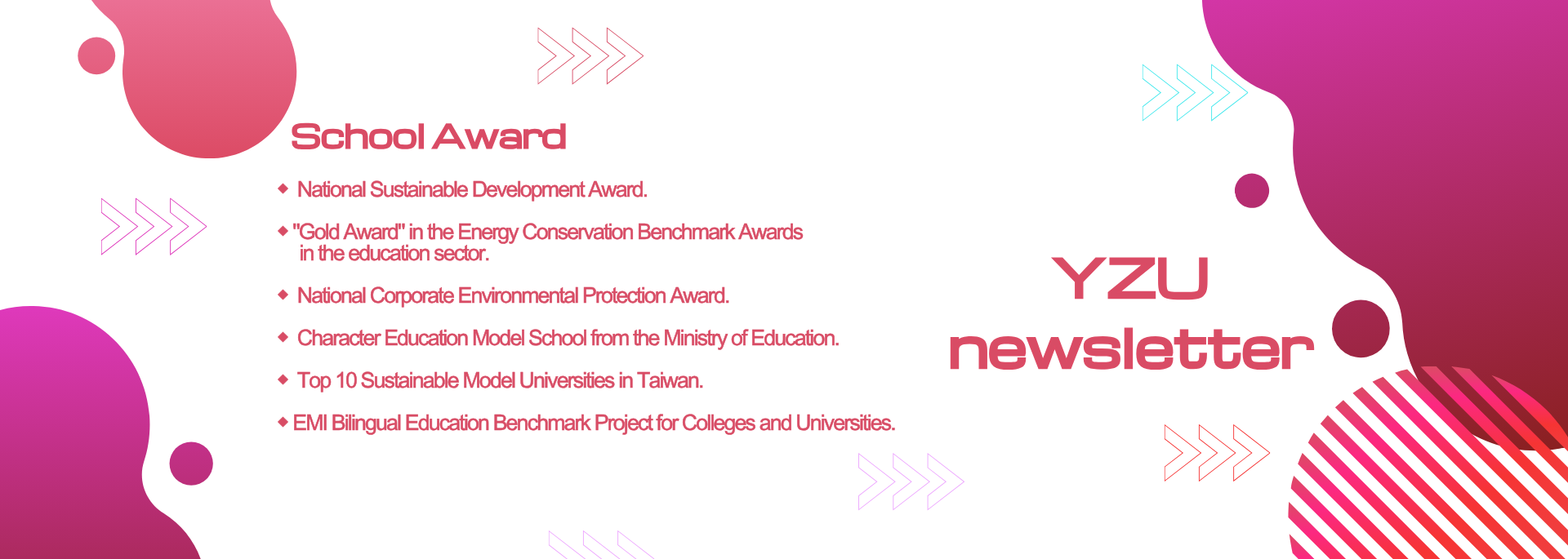
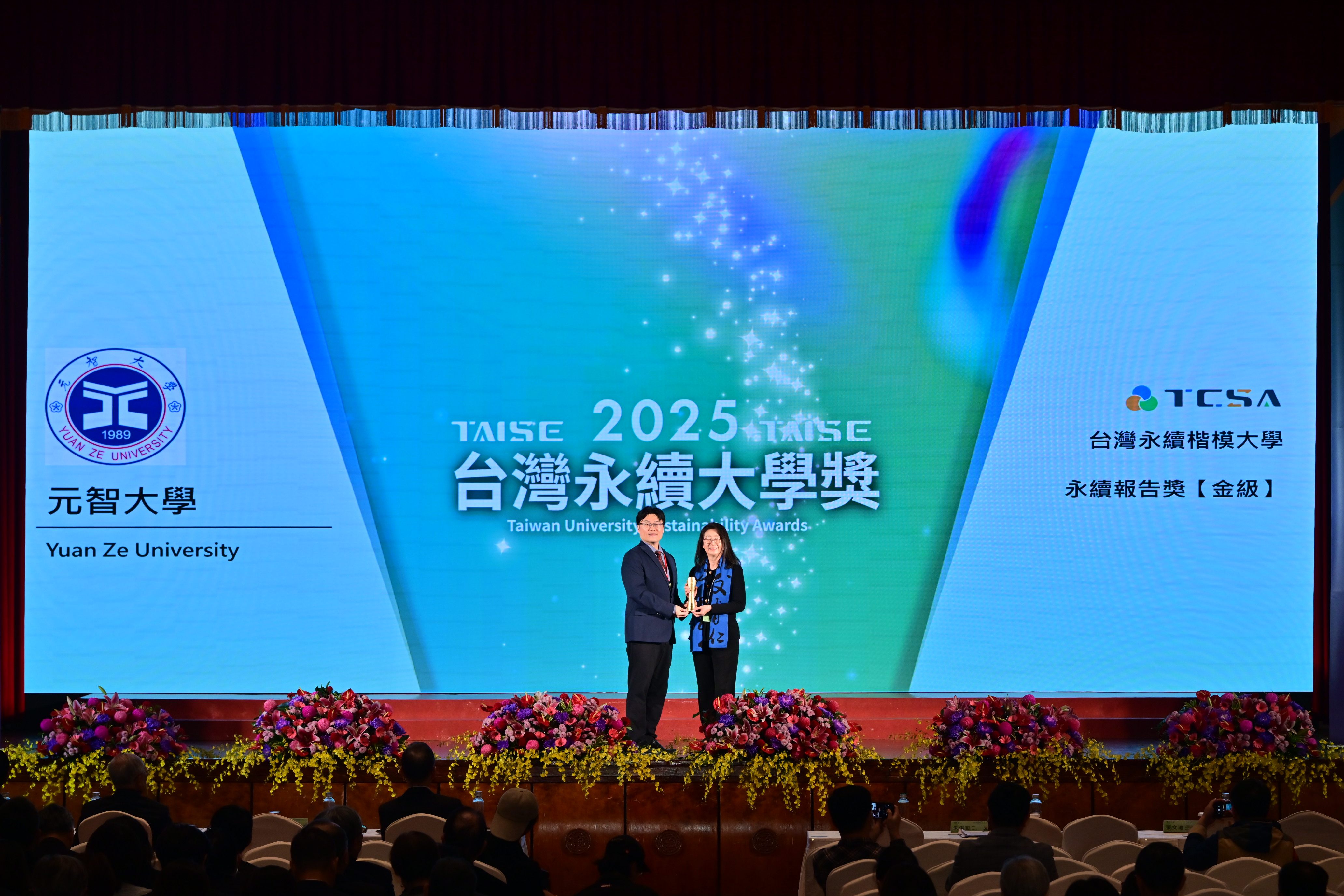
In response to the global momentum of sustainable development and the United Nations Sustainable Development Goals (SDGs), Yuan Ze University had long adopted institutionalized governance as the foundation of its sustainability strategy.
By deeply integrating sustainability principles into university governance, teaching innovation, and social engagement, the University gradually established a sustainable development model that was learnable, practicable, and replicable. Through this approach, Yuan Ze University not only cultivated professionals equipped with sustainability literacy but also demonstrated the critical role of higher education in addressing social and environmental challenges.
Yuan Ze University clearly positioned sustainable development as a core direction of institutional governance. Through university-level governance structures and cross-unit collaboration mechanisms, administrative and academic resources were integrated to ensure that sustainability was no longer treated as a standalone project or short-term initiative, but rather internalized as a fundamental component of daily university operations. By means of strategic planning, resource allocation, and performance evaluation, the University ensured the steady advancement of sustainability goals, forming a governance system characterized by long‑term continuity and resilience, and laying a solid foundation for a sustainable campus.
In talent cultivation, Yuan Ze University emphasized “learnable sustainability practices” by systematically embedding the SDGs into general education, professional curricula, and interdisciplinary learning. Through scenario‑based teaching, practice‑oriented courses, and cross‑disciplinary collaboration, students engaged with real social and environmental issues and applied their professional knowledge to propose solutions. This approach fostered key competencies such as systems thinking, problem‑solving, communication and collaboration, and social responsibility, enabling sustainability to move beyond conceptual understanding and be transformed into concrete action.
At the same time, Yuan Ze University actively promoted University Social Responsibility (USR) initiatives, connecting local communities, industries, and public sectors to translate academic knowledge into tangible social impact. Through participation in community‑based actions and interdisciplinary collaboration, faculty members and students engaged in co‑learning and co‑creation with stakeholders. These efforts not only addressed local needs but also deepened students’ understanding of public issues, realizing the integration of learning and practice and creating a virtuous cycle of sustainability between the campus and society.
The University’s long‑term commitment to sustainability also resulted in significant recognition in national sustainability assessments and social responsibility awards. In its first participation in the Taiwan Sustainable University Awards, Yuan Ze University received the Top 10 Sustainable Model Universities Award, along with the Silver Level Sustainability Report Award, demonstrating its comprehensive performance in governance, educational quality, social responsibility, and environmental sustainability. In addition, the University had consistently ranked among the leading private universities in the CommonWealth Magazine USR University Citizenship Survey. Multiple USR projects had also received honors such as the Taiwan Sustainable Action Award and the Global Views Monthly USR University Social Responsibility Award, highlighting the University’s substantive achievements in sustainability talent cultivation and social engagement.
About sustainable campus development and environmental governance, Yuan Ze University has made sustained investments in energy conservation, carbon reduction, and smart campus development. The University continued to advance energy management, greenhouse gas inventories, and the application of renewable energy, while transforming the campus environment into a living learning laboratory. Through these initiatives, students were able to experience sustainability governance in their daily lives. These concrete actions not only effectively reduced environmental impact but also embedded sustainability as a shared lifestyle and practice among faculty and students.
Overall, Yuan Ze University has progressively shaped a sustainable development pathway grounded in institutionalized governance and integrated with teaching innovation, research capacity, and social engagement. Sustainability was no longer treated as a slogan, but as an educational practice that could be understood, learned, and continuously passed on. Looking ahead, Yuan Ze University would continue to strengthen the linkage between sustainability governance and talent cultivation, working alongside faculty members, students, and societal partners to expand the impact of sustainable action and contribute key momentum toward a sustainable future for higher education.