 EN-US
EN-US  ZH
ZH 
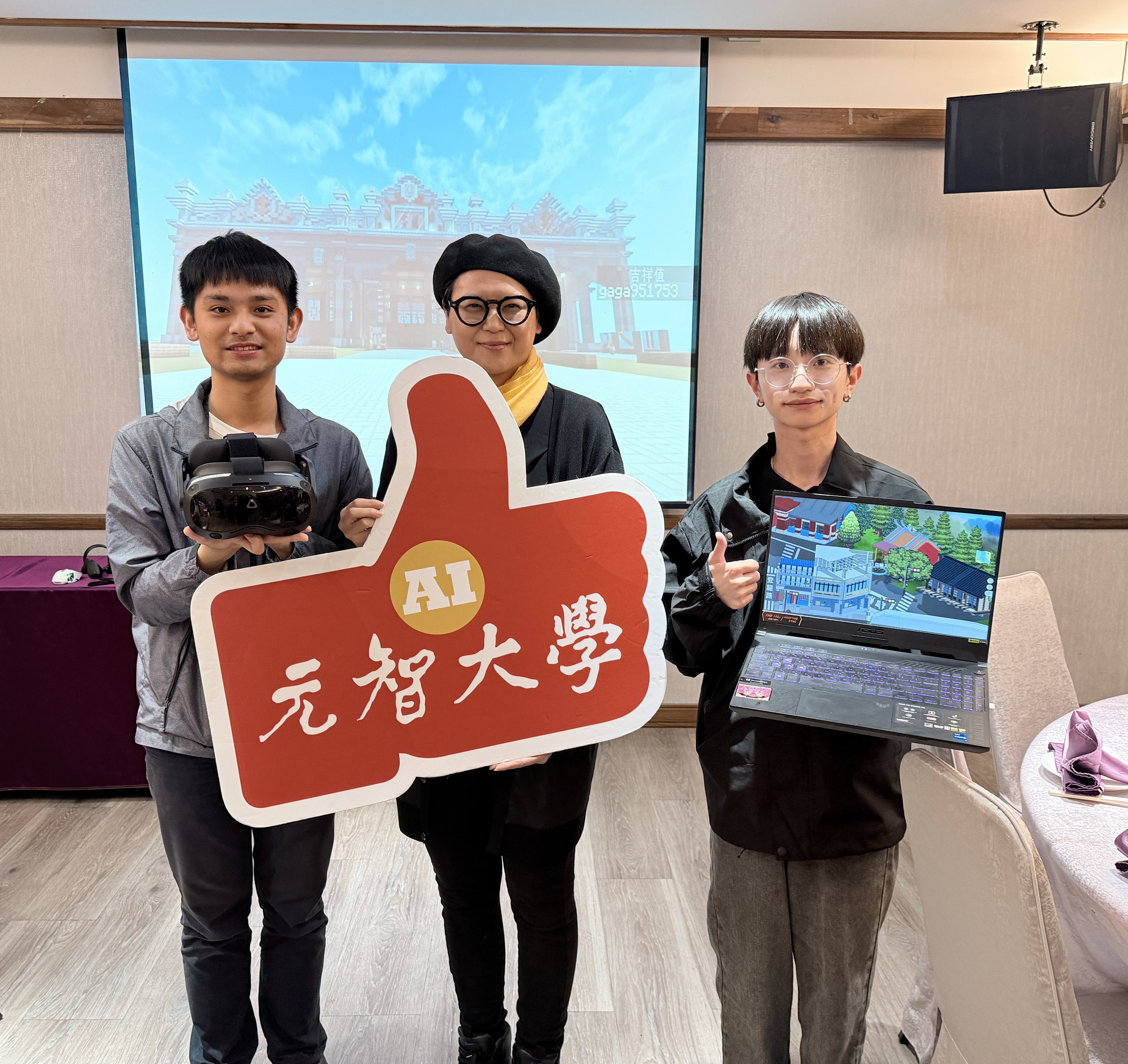
Yuan Ze University, through its interdisciplinary teaching practices promoting cultural preservation and educational integration, collaborates with special education students and local groups. Using game design and virtual reality (VR) technology, they transform local culture into innovative learning environments, injecting a fresh perspective into the cultural interpretation of Daxi, Taoyuan.
Led by Professor Chia-Hui Lo of the Department of Art and Design, the team selected the representative Daxi Old Street as the core of their cultural translation project. The old street, home to century-old shops and Baroque-style buildings, is an important historical landmark. Using local industries and development stories as a blueprint, the team designed a task-oriented exploration game. Participants gradually understand the historical context and architectural features of the area through puzzle-solving, role-playing, and clue collection, transforming cultural learning from static reading into an active, immersive experience.
In addition to the VR game, VR content was also created based on the Lanshi, a municipally designated historical building. The team used Minecraft to model and reconstruct the space, recreating the courtyard layout and living atmosphere. Wearing headsets, participants enter the virtual scene of the old house, discovering the beauty of traditional architecture through a game-like puzzle-solving approach.
Lo Chia-hui stated that to ensure the content aligns with historical facts and local needs, the team also invited the Daxi Tourism Association and historical building managers to participate in testing and consultation, providing historical perspectives and site suggestions. Future plans include public experiential activities to allow residents and tourists to rediscover local culture through technology, promoting the revitalization of cultural assets and tourism innovation.
Lo Chia-hui pointed out that the most distinctive feature of this project is the collaborative model of co-creation between university students and special education students. The course uses mixed-group teaching, with special education students responsible for scene drawing and design, while university students assist in integrating these into game mechanics and interactive programs, transforming creativity into actionable digital results. She emphasized that the co-creation process not only cultivates students' professional skills but also allows the younger generation to learn to understand differences and build empathy through collaboration, demonstrating the value of education in promoting social participation and inclusion.
The university stated that its faculty also continues to deepen collaboration with special education students through diverse teaching methods. For example, in the field of applied foreign language design, robot-assisted English and Japanese language learning courses were incorporated to enhance the language learning motivation of special education students. Faculty and students from the Department of Information and Communication collaborated with the Down Syndrome Foundation to create works that used design to advocate for public welfare, allowing students to integrate their professional knowledge with social concern through practical participation in social issues, cultivating a sense of responsibility and public participation skills.
Furthermore, students went into the community to care for elderly people living alone through volunteer services, experiencing the value of empathy and giving in real-life situations, and putting social responsibility education into practice. In the future, the university will continue to connect with community and public welfare resources to expand the depth and breadth of students' participation in social issues, making the university an important partner in promoting local inclusion and sustainable development, concretely demonstrating the university's action in practicing University Social Responsibility (USR).