 EN-US
EN-US  ZH
ZH 
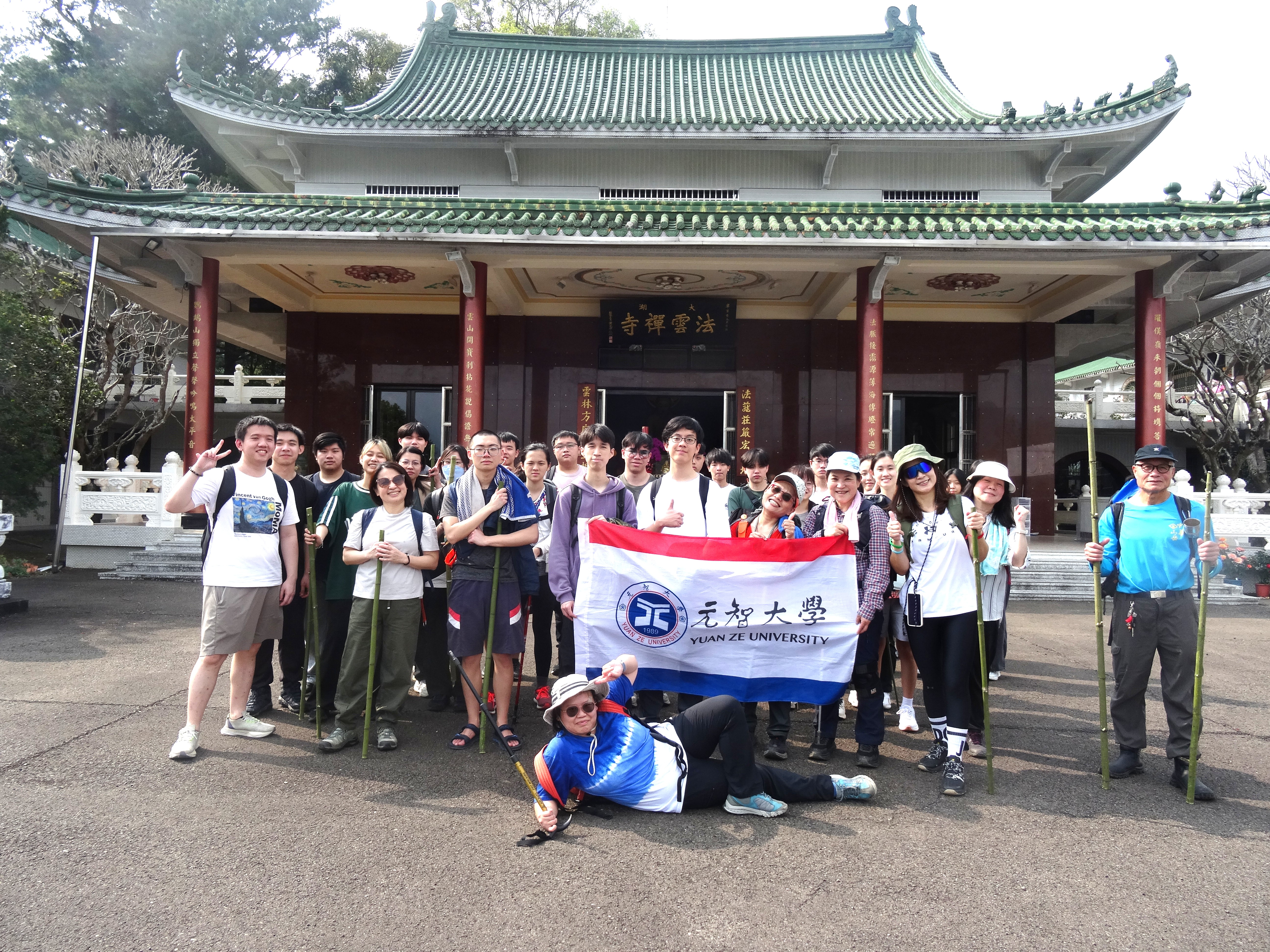
The College of General Studies, Yuan Ze University, held an off-campus teaching activity on March 28. The event specially invited professional guide Chao-Nung Chan to lead faculty and students on the “Raknus Selu Trail Journey—Exploring the Chuyun Historic Trail.” Through on-site exploration, participants gained deeper insights into Taiwan’s natural ecology as well as its industrial and cultural history.
The Raknus Selu Trail is a national-level greenway in Taiwan, stretching from Longtan in Taoyuan in the north to Dongshi in Taichung in the south. The route connects abundant natural resources and historical heritage, bearing witness to the early development of the tea, camphor, and petroleum industries. The focus of this trip, the Chuyun Historic Trail (also known as the Fayun Temple Historic Trail), is located at the junction of Gongguan, Shitan, and Dahu in Miaoli County. Historically, it served as an important passage for early settlers traveling between Chuhuangkeng and Dahu, and it also represented a significant historical site in the development of Taiwan’s petroleum industry.
On the day of the activity, the group set out from the Taiwan Oil Field Exhibition Hall. Although the itinerary was slightly delayed due to traffic congestion, faculty and students made good use of the time to tour the exhibition hall. The museum preserved comprehensive records of oil exploration and extraction, and through artifact displays and interactive facilities, students developed a more concrete understanding of Taiwan’s energy development history, with many expressing a strong sense of impact and reflection.
In the afternoon, the group officially began the hike, passing the Chuhuangkeng City God Temple before entering the Chuyun Historic Trail. The steep terrain posed a challenge for some students. Chao-Nung Chan demonstrated his professional guiding experience by crafting bamboo hiking staffs on site for students to use, effectively enhancing safety and stability during the hike. Along the way, he provided timely explanations of the trail’s facilities and historical background, and guided the group around fallen trees and other obstacles, enabling students to appreciate the cultural value of the historic trail through hands-on experience.
When the group rested at a mid-point platform, Chan prepared drinks and snacks to help participants replenish their energy and ease fatigue. During the descent, the group passed the Dahu Land Reclamation Memorial Monument before arriving at Fayun Chan Temple, where they happened to receive blessed candies shared by the temple, allowing students to feel the warmth and blessings of religious culture at the end of the journey.
As the group crossed the Fayun Temple suspension bridge, a gentle breeze carried the fragrance of strawberries, bringing the trip to a close. Participating students stated that the journey along the Chuyun Historic Trail was not only a physical challenge, but also a deeply meaningful cultural learning experience. From petroleum industry heritage sites and historic trail history to natural landscapes and religious culture, every aspect left a lasting impression.
The College of General Studies, Yuan Ze University, noted that it would continue to plan experiential courses integrating local culture and the natural environment in the future. By encouraging students to step outside the classroom, the university aimed to help them explore Taiwan’s land and history from diverse perspectives and further enrich their learning experiences.