 EN-US
EN-US  ZH
ZH 
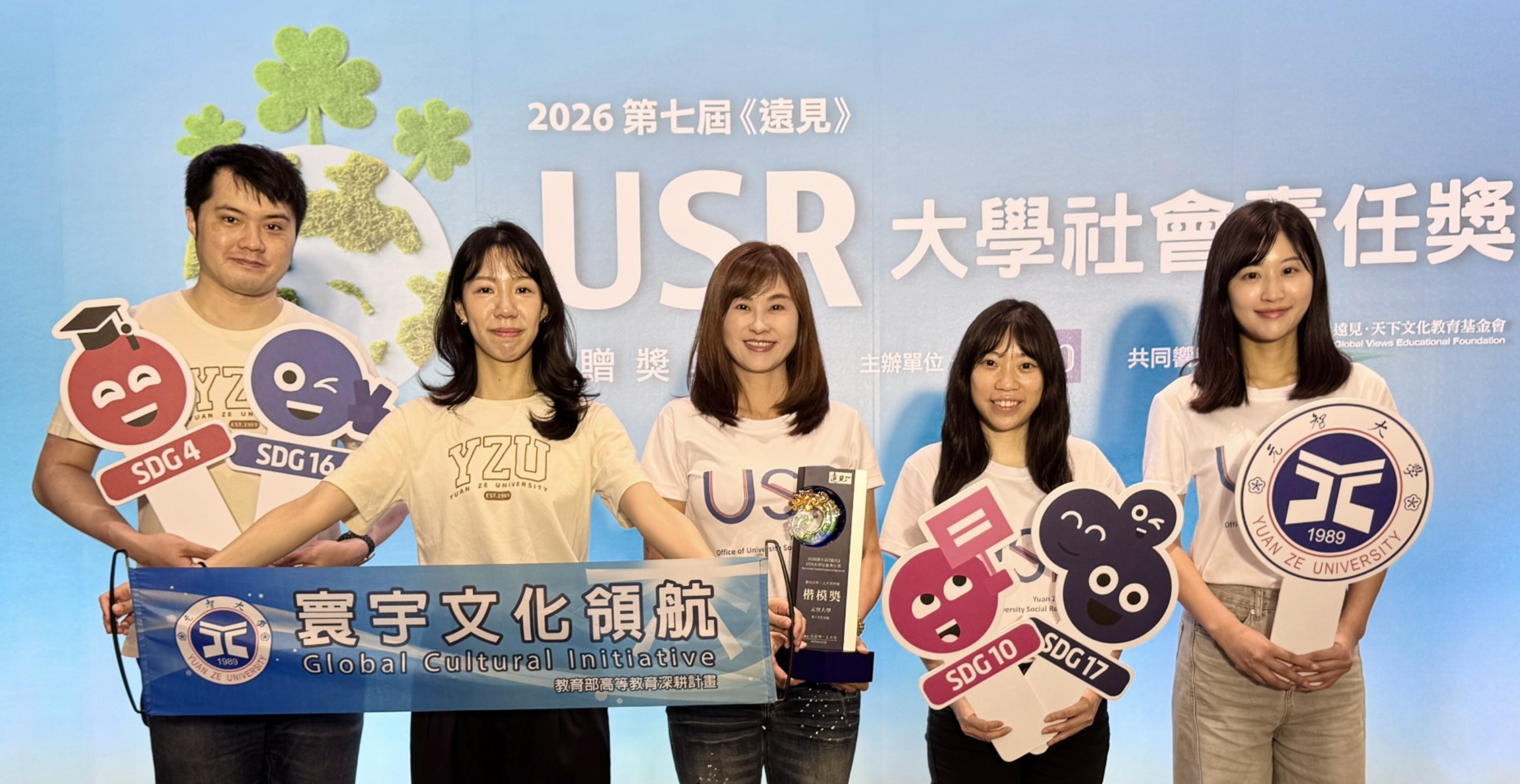
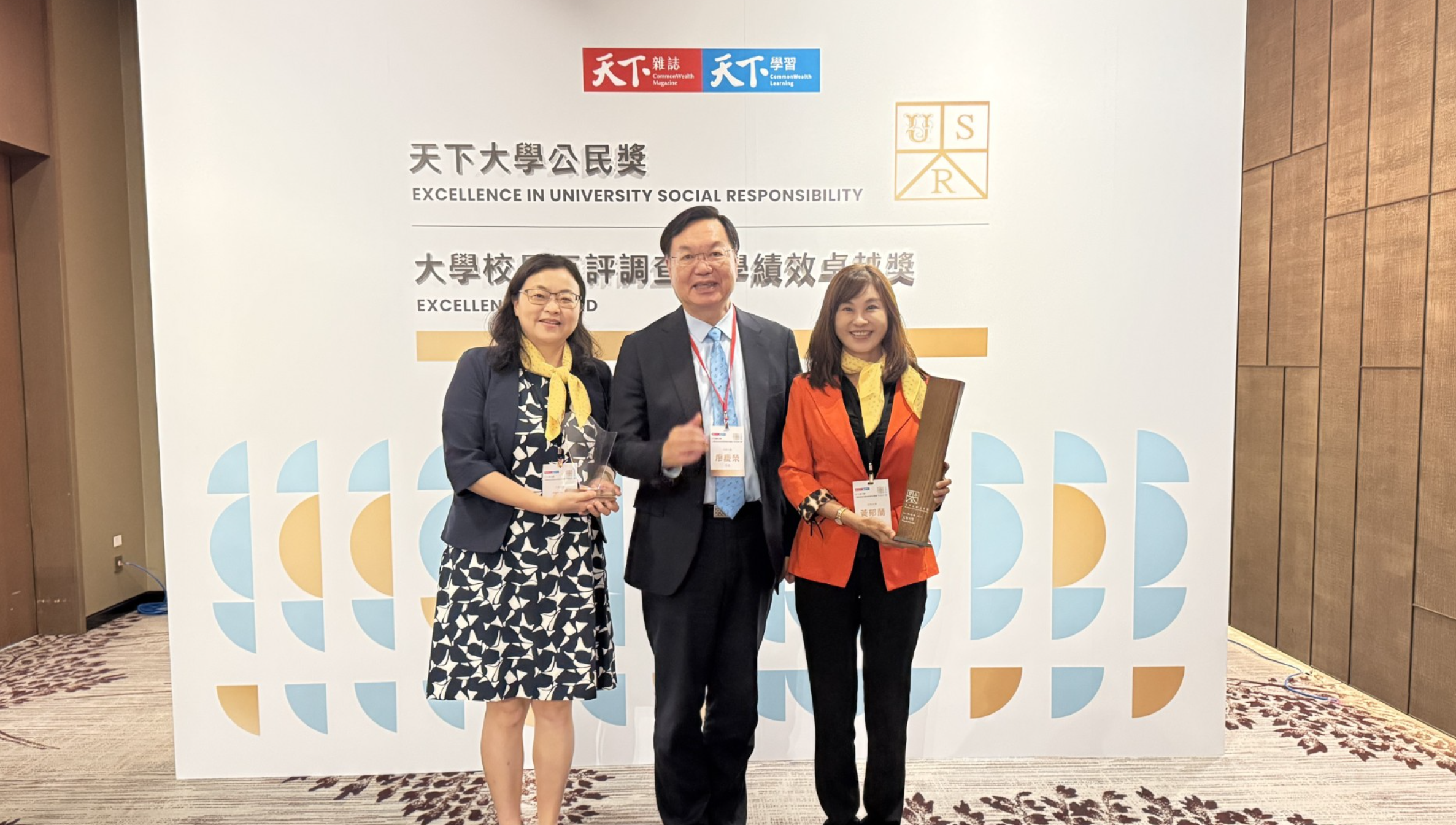
As the Ministry of Education continued to promote the fourth phase of the University Social Responsibility (USR) Practice Program, Yuan Ze University’s Global Cultural Initiative achieved another milestone by receiving the 2026 7th CommonWealth USR Talent Co-Learning Role Model Award.
A total of 222 projects were submitted in this round, with 1,121 projects accumulated over the years, and an overall award rate of only 29.7 percent. Standing out among numerous outstanding initiatives, the Global Cultural Initiative demonstrated its strong capacity and long-term commitment to cultivating cross-cultural talent and fulfilling social responsibility.
The project principal investigator, Yu-Lan Huang, stated that the core spirit of the Global Cultural Initiative lay in leveraging the diverse cultural perspectives of nearly one thousand international students at Yuan Ze University and channeling higher education resources into rural education. The program aspired to enable children in remote areas to “see the world,” experience the passion of international students studying in Taiwan, and engage with the richness of multiculturalism in the classroom. Beyond nurturing students’ sense of social responsibility, the initiative also created opportunities for greater educational equity at the local level. This award not only affirmed the team’s years of dedication, but also served as a driving force for the continued promotion of cross-cultural co-learning.
The review panel highly recognized the initiative’s innovative model and social impact. The judges noted that Yuan Ze University effectively transformed its pool of nearly one thousand international students into educational resources for rural elementary schools, promoting international and bilingual education. The initiative featured a rigorous structure comprising six sub-projects, with training institutionalized in the form of micro-programs. Participating students were not only volunteers, but also curriculum designers. The initiative generated a Social Return on Investment (SROI) of 3.07, and successfully established partnerships with multiple foreign embassies in Taiwan, elevating local education to the level of citizen diplomacy. By addressing the shortage of teaching resources in rural areas while strengthening international students’ identification with Taiwan, the Global Cultural Initiative became a highly scalable, win–win model of cross-cultural co-learning.
Since 2020, the Global Cultural Initiative had received funding from the Ministry of Education’s USR initiative and gradually evolved from an incubation-stage project into a deep-engagement initiative. Over the years, it trained more than one thousand international cultural ambassadors and domestic student mentors, organized over 1,500 activities, and served nearly 20,000 students in rural primary and secondary schools as well as elderly community members. Through a wide range of initiatives—including camps, arts courses, and digital learning companionship—the program helped rural children build confidence and broaden their global perspectives, while enabling senior citizens to rediscover a sense of achievement and life value through lifelong learning.
Yu-Lan Huang noted that the honor carried the growth and transformation of children in remote areas, and embodied the years of quiet dedication by faculty and student teams. As a result, university social responsibility was no longer merely an abstract concept, but a set of concrete actions rooted in local communities. Looking ahead, the Global Cultural Initiative would continue to connect with broader resources, allowing the warmth that transcended language and culture to expand further, accompany rural communities toward a wider world, and open a new chapter of culturally co-prosperous education at the local level.