 EN-US
EN-US  ZH
ZH 
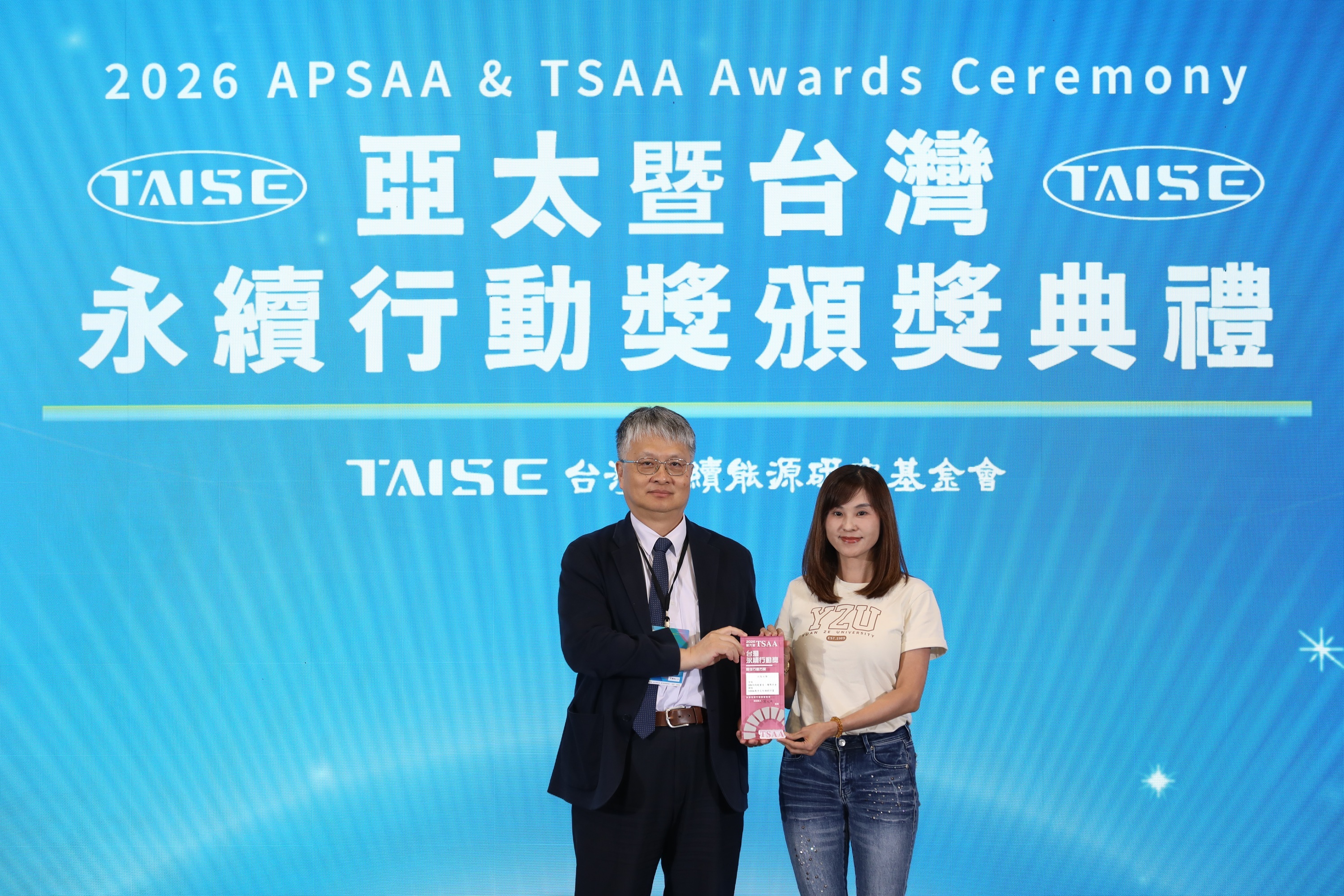
From rescuing endangered aquatic plants to bringing global cultures into rural classrooms, faculty members and students at Yuan Ze University applied their expertise to address real social needs. At the 6th Taiwan Sustainability Action Awards (TSAA) 2026, the project “Reviving Extinction: The Germplasm Ark” received a Gold Award, while the Global Cultural Initiative received a Bronze Award. One project focused on ecological conservation, while the other promoted educational inclusion. Together, they demonstrated how Yuan Ze University transformed classroom learning into meaningful social practice.
Huai-Chieh Chen, a faculty member of the College of Management, led the project “Take One Course, Save One Species,” engaging 121 students in 45 teams. Working alongside local ecological farms in Taoyuan and interdisciplinary teams across the University, the students established a “Germplasm Ark” conservation site on campus. Rather than learning management solely in the classroom, students actively participated in conservation efforts and successfully restored 33 species of endangered aquatic plants in Taiwan. These included Taoyuan Pogostemon yatabeanus, a species extinct in the wild; wild rice, which had become regionally extinct; as well as numerous critically endangered and endangered species. The initiative transformed the campus into a living Germplasm Ark for rare aquatic plants.
Huai-Chieh Chen explained that students participated in every stage of the project, from species identification and conservation planning to on-site problem-solving and public outreach. A team from the Department of Chemical Engineering and Materials Science introduced a real-time water quality monitoring system that utilized seven key water quality indicators to evaluate conservation conditions. To help the public better understand these rare plant species, students created 45 AI-generated guided-tour videos and installed QR code information displays. They also collected 1,950 biodiversity protection pledges from family members, friends, and community residents. What began as a single course evolved into a restoration initiative that extended beyond the classroom, across the campus, and into local communities.
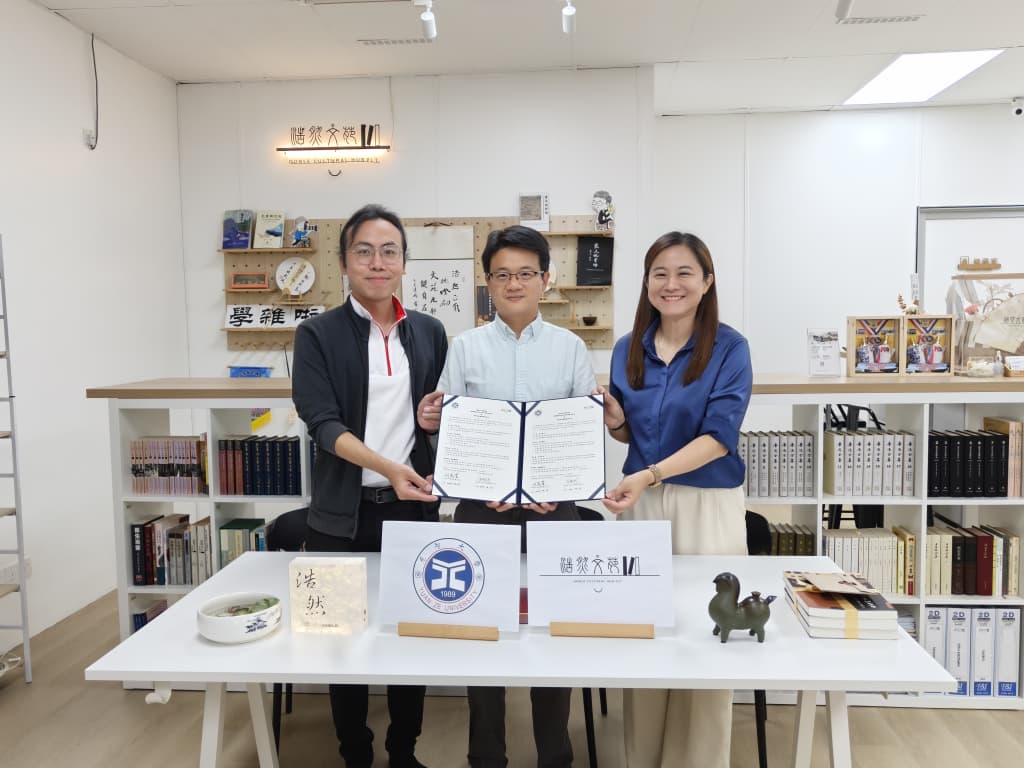
Yu-Lan Huang, Director of the Chinese Language Center, led the Global Cultural Initiative under the theme of “Co-Creation, Shared Learning, and Collective Well-Being.” The project developed six major subprograms: Leadership Training, Cultural Outreach, Elite Teacher Development, Digital Learning Companionship, Art Castle, and English Learning for All Ages. By connecting international students, domestic students, partner schools, local communities, nursing care institutions, the Department of Education, Taoyuan City Government, and international partners, the team brought the University’s rich international resources beyond the campus and into communities requiring educational support.
Yu-Lan Huang noted that more than 800 international students at Yuan Ze University had become one of the project’s most distinctive strengths. In 2025, the team organized 338 cultural outreach programs and seven bilingual challenge events, attracting more than 9,600 elementary and secondary school participants. The Digital Learning Companionship Program trained 136 university mentors who supported 480 underserved students through a total of 3,600 hours of online English learning. Meanwhile, the Elite Teacher Development Program had trained 61 bilingual teachers and assisted numerous schools in developing bilingual education programs. The team also independently developed 15 volumes of the Global Wings English picture book series, transforming cultural stories from around the world into localized teaching materials that were engaging for students and practical for educators.
Yu-Lan Huang added that the initiative had extended its services to students with special needs, children with rare diseases, and older adults. The project had also established partnerships with several foreign representative offices in Taiwan. What began as a single activity gradually expanded into a network encompassing 18 schools, communities, and nursing care institutions. Through this process, university students learned through service, while bilingual education, special education support, lifelong learning, and international exchange became increasingly interconnected, forming an expanding educational support network.
Yuan Ze University stated that University Social Responsibility (USR) was not merely a collection of individual projects but a practical approach that connected academic expertise with societal needs. In 2025, the University offered 68 courses related to social engagement, covering topics such as education, culture, health, and environmental sustainability. Moving forward, Yuan Ze University would continue integrating faculty expertise, student learning, and community needs while deepening interdisciplinary collaboration. By encouraging more courses to extend beyond the classroom, the University aimed to transform academic knowledge into concrete actions that addressed real-world challenges.