 EN-US
EN-US  ZH
ZH 
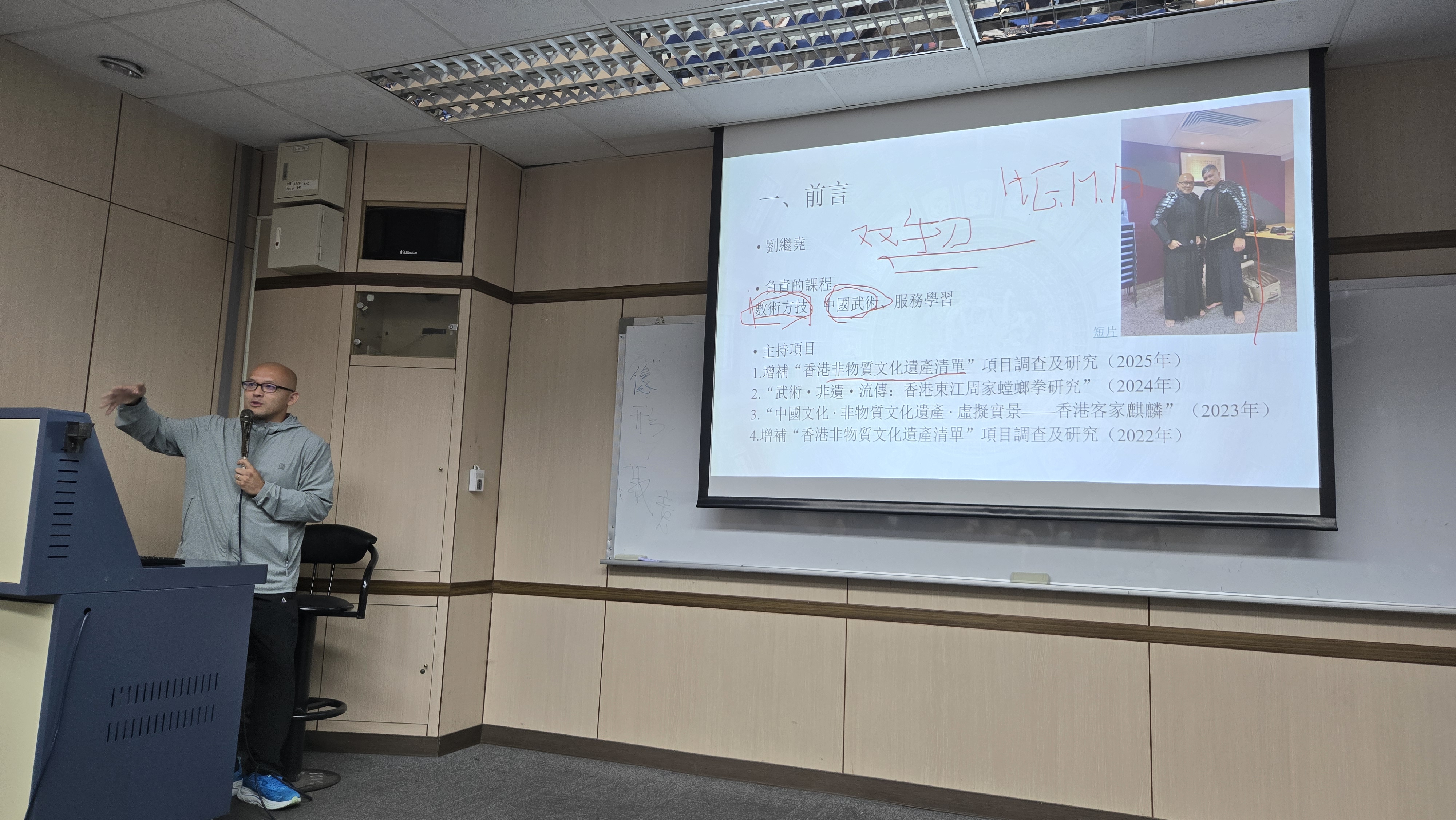
To promote diverse learning and practical self-defense skills, the General Education Center at Yuan Ze University invited professional Wing Chun instructor Yung-Cheng Chen to deliver a lecture on May 30. Hosted by Feng-Ying Hu of the General Education Center, the session guided faculty members and students to gain an in-depth understanding of the spirit and practical applications of Wing Chun through both theoretical instruction and hands-on experience.
At the beginning of the session, Yung-Cheng Chen introduced the origins, historical development, and transmission of Wing Chun, explaining how this traditional martial art had gained international recognition through the influence of kung fu films. He emphasized that Wing Chun was not merely a set of offensive techniques, but a comprehensive system developed through repeated practice and real combat training. It trained practitioners to shift from defense to offense in appropriate situations, achieving both self-protection and the protection of others. The lecture also focused on the core concept of Wing Chun—“simultaneous defense and counterattack”—highlighting that one must not only defend against attacks but also seize opportunities to counter during the defensive process.
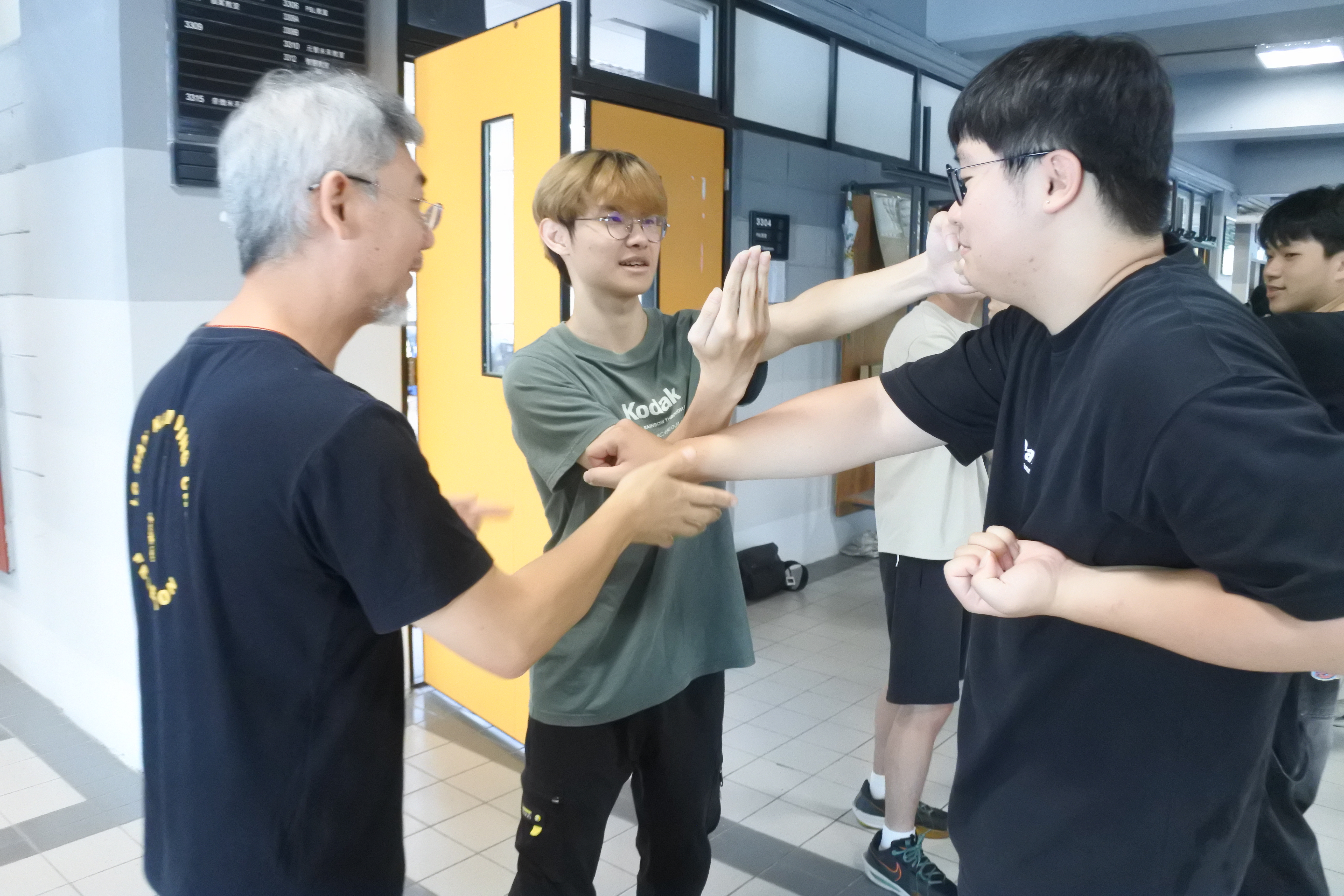
To help students understand the technical characteristics of Wing Chun, Chen further introduced fundamental hand techniques and related theories, and provided a detailed explanation of “Chi Sau” (sticky hands), an essential training method in Wing Chun. He noted that Chi Sau training relied on the body’s tactile sensitivity to perceive the direction and changes of an opponent’s force. Through continuous and systematic practice, these techniques could gradually be internalized into muscle memory, cultivating the ability to respond instinctively.
Following the theoretical session, the class moved outdoors for practical exercises. Students were divided into pairs for sparring practice, with the instructor demonstrating movements and offering step-by-step guidance. Whether practicing basic self-defense techniques or developing sensitivity to force and its application, students demonstrated high levels of engagement. The instructor also provided individual feedback to those who were unfamiliar with the movements or needed posture adjustments, ensuring that students mastered the correct techniques and key principles.
At the conclusion of the lecture, Chen not only shared martial arts techniques but also conveyed the philosophy of life embedded in Wing Chun. Under the theme of the “Three Principles of Wing Chun,” he encouraged students to face life’s challenges and changes with an open mind. He concluded by sharing three guiding principles: “Never stop learning,” “Do not challenge those with lower skill levels, as it holds no meaning,” and “Never be intimidated by others—we are all human.”