 EN-US
EN-US  ZH
ZH 
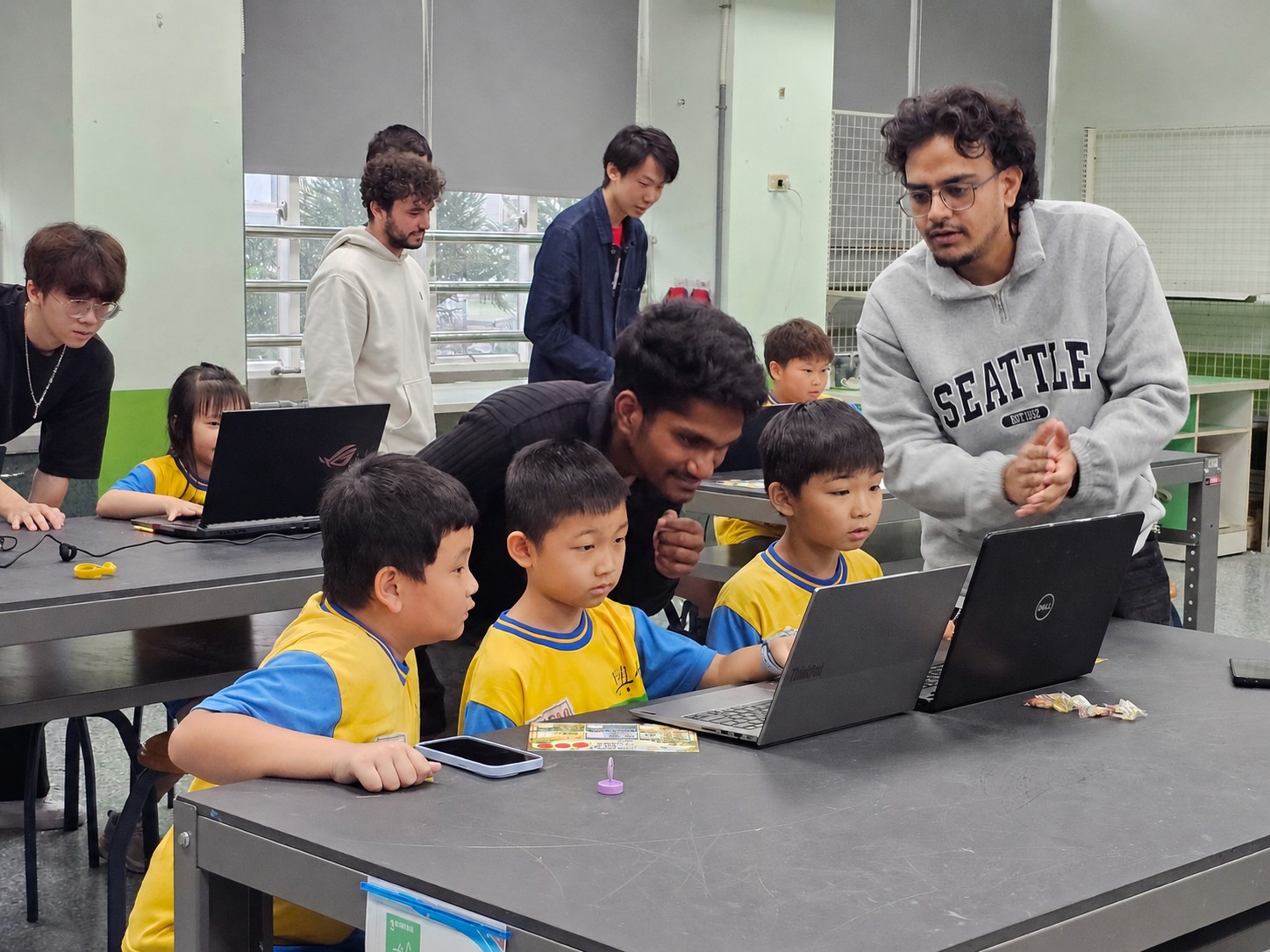
To apply what they had learned in class to local community service, students from the Department of Computer Science and Engineering at Yuan Ze University recently visited Xingren Elementary School and organized an interactive checkpoint activity centered on the United Nations Sustainable Development Goals (SDGs).
Through motion-sensing games developed by the students themselves, they guided elementary school children to learn about environmental protection and sustainable development concepts while participating in the games. The event also created a valuable opportunity for cross-cultural and multilingual exchange.
The activity showcased the outcomes of the “Interactive Video Game Design” course in the Department of Computer Science and Engineering and was supervised by Professor Yi-Cheng Huang. Domestic and international students worked together in mixed teams, applying information technology and creative design to develop a variety of interactive games that were both entertaining and educational. They then brought these projects into the elementary school setting, allowing young students to experience the games firsthand.
The activities were designed around SDG-related themes. Through game-based challenges, participants sorted waste through physical movement, became forest animals defending their habitats from waste monsters, and collected clean water droplets to purify cities. These activities transformed abstract concepts such as marine conservation, responsible consumption, and climate action into engaging and easy-to-understand missions, helping children naturally develop awareness of environmental protection while having fun.
To encourage participation, the organizing team also introduced a reward system in which students could collect stamps after completing checkpoints and exchange them for snacks. This incentive attracted enthusiastic participation from the children. The atmosphere at the event was lively, with students moving energetically from one checkpoint to another. In addition to enjoying the games, they also learned valuable knowledge about sustainable development through the interactive experience.
Beyond the gaming activities, cross-cultural interaction became one of the highlights of the event. When meeting international students from different countries, the children of Xingren Elementary School demonstrated great curiosity and confidence. Many actively communicated in English with the international university students, overcoming language barriers and enhancing mutual understanding. Teachers from Xingren Elementary School noted that the children displayed a high level of engagement and enthusiasm for learning throughout the event. Even students who were usually shy showed the courage to express themselves, contributing to an energetic and vibrant learning environment.
Professor Yi-Cheng Huang stated that the event not only demonstrated the students’ ability to transform classroom projects into educational resources for the community but also allowed them to deepen their experience in cross-cultural collaboration and social engagement through hands-on service. By combining information technology with education and sustainability issues, the project extended learning beyond the classroom, established a meaningful bridge of communication between the university and local schools, and fulfilled the university’s social responsibility.