 EN-US
EN-US  ZH
ZH 
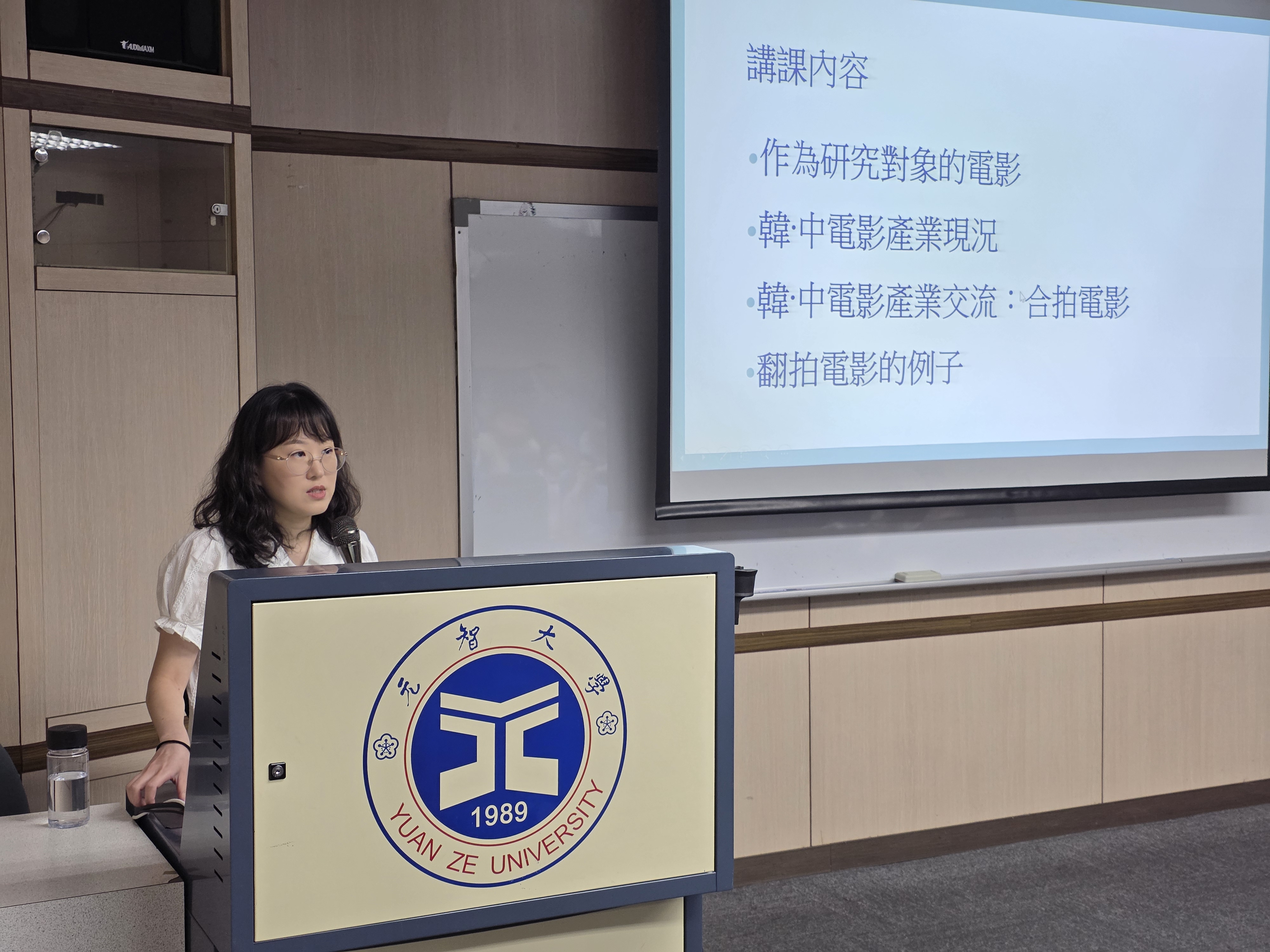
Amid the wave of globalization, film and television works have continuously crossed national boundaries and been reinterpreted and recreated within different cultural contexts. On May 26, the Department of Chinese Linguistics and Literature at Yuan Ze University invited Do-Kyung Kwon, Professor of the Department of Chinese at Pusan National University, to deliver a lecture titled “How Were Stories Translated in the Age of Globalization? Cultural Translation and Representation through Film Remakes.”
The lecture presented research achievements in Korean–Chinese film and cultural exchange as well as cross-cultural studies, guiding faculty and students to explore the deeper implications of cultural transmission and value transformation through the phenomenon of film remakes.
Professor Do-Kyung Kwon had previously served as Director of the Department of Chinese at Pusan National University. He had long been engaged in Korean–Chinese cultural exchange, cross-cultural communication, and film and television culture research, and was currently undertaking a one-year research visit at the Department of Chinese Linguistics and Literature at Yuan Ze University. During the lecture, Professor Kwon used film remake cases from Korea, China, and Taiwan as entry points, analyzing character construction, narrative strategies, and value representations across different cultural contexts. He explained how film and television works were translated and reconstructed to meet local cultural expectations during transnational circulation.
Through comparative analyses of well-known films such as Veteran and Hear Me, Professor Kwon pointed out that films were not only important products of the entertainment industry, but also carriers of social culture, historical background, and collective values. When stories crossed borders, adjustments to character settings, plot arrangements, and cultural symbols were often necessary to resonate with diverse audiences. The engaging analysis sparked lively discussion among faculty and students and deepened students’ understanding of cultural exchange in the age of globalization.
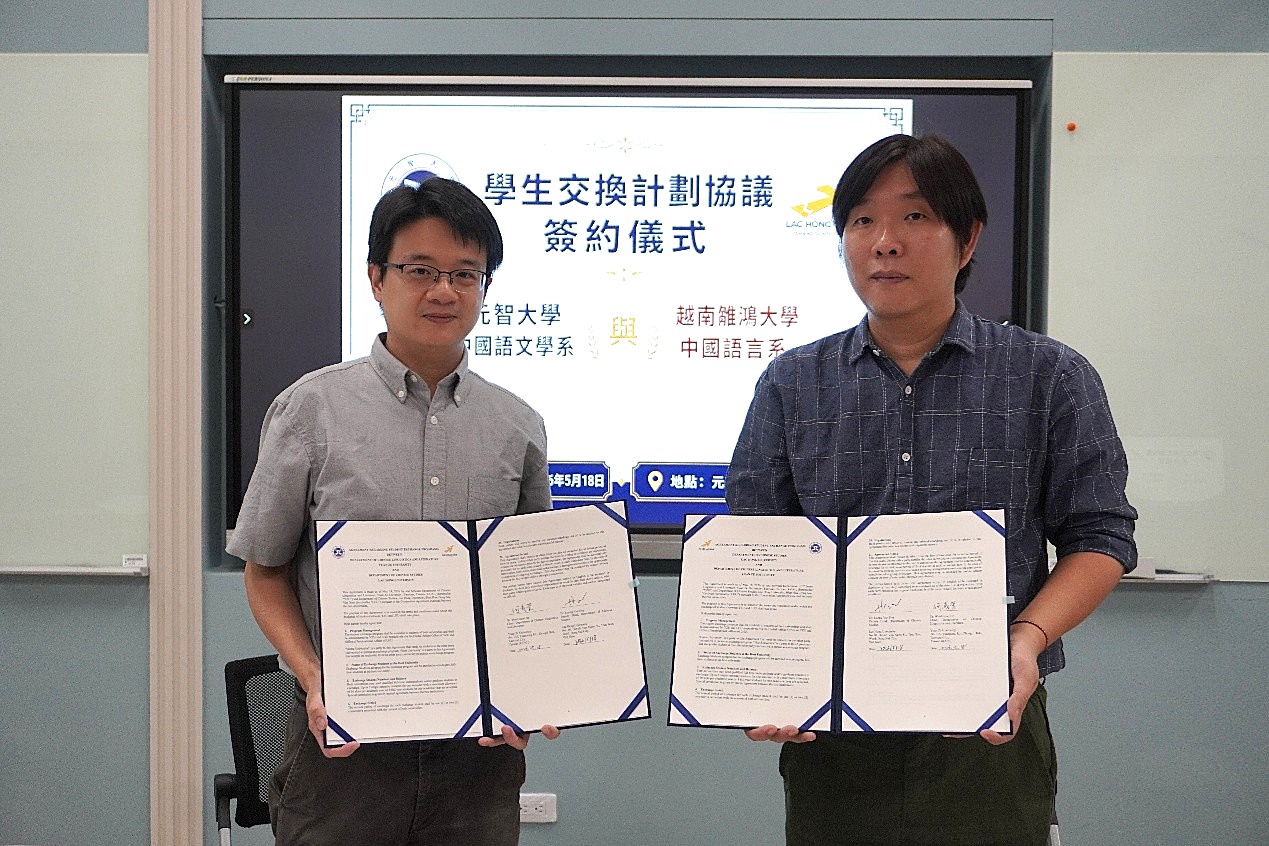
This lecture also demonstrated the achievements of the Department of Chinese Linguistics and Literature at Yuan Ze University in actively promoting international exchange. In recent years, the department had established a close partnership with the Department of Chinese at Pusan National University. The two parties formally signed a sister-department cooperation agreement in 2025 and completed an agreement for a student exchange program, with the first cohort of exchange students scheduled to be launched in 2026. Through diverse collaboration models—including faculty mobility, special-topic lectures, student exchanges, and joint research—the two universities had continued to strengthen academic exchange and talent cultivation.
In addition to Pusan National University, the department had actively expanded its international collaboration network in recent years, establishing partnerships with institutions such as The Hong Kong Polytechnic University, City University of Hong Kong, and several overseas universities. These collaborations provided students with opportunities to participate in international forums, overseas study programs, and exchange learning, fostering cross-cultural communication skills and a global perspective.
The Department of Chinese Linguistics and Literature at Yuan Ze University stated that, in response to the rapid development of artificial intelligence and globalization, it had continued to promote the development direction of “Humanities × Technology × Internationalization.” By integrating literary, cultural, and intellectual training with AI applications, digital humanities, and cross-cultural communication competencies, the department had helped students build interdisciplinary competitiveness between tradition and innovation.
The university noted that Professor Do-Kyung Kwon’s visit not only strengthened the partnership between Yuan Ze University and Pusan National University, but also provided students with the opportunity to directly engage with the research achievements and perspectives of an international scholar. In the future, the Department of Chinese Linguistics and Literature would continue to expand its international collaboration network, create more diverse transnational learning platforms, and cultivate a new generation of talents equipped with humanistic literacy, global perspectives, and cross-cultural competencies.