 EN-US
EN-US  ZH
ZH 
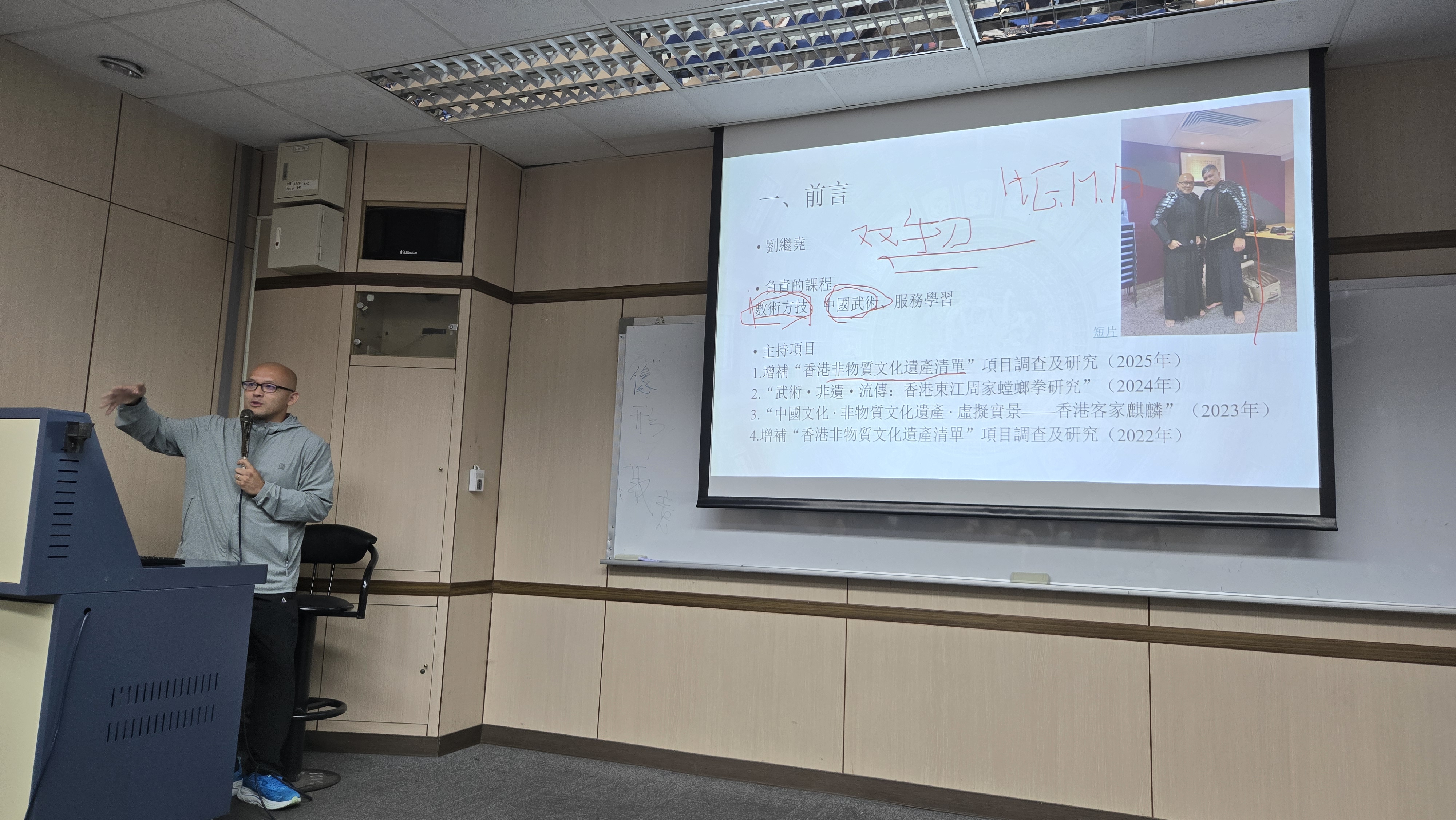
When Chinese martial arts were mentioned, most people associated them with chivalrous figures in novels or kung fu scenes in films. However, in contemporary humanities research, martial arts were not only a form of skill, but also an important lens for observing cultural inheritance, social transformation, and transregional exchange.
The Department of Chinese Linguistics and Literature at Yuan Ze University recently invited Chi-Yiu Lau, Professor of the Department of Chinese History and Culture at The Hong Kong Polytechnic University, to deliver a lecture titled “Application and Exploration of Martial Arts Heritage: Zhou Family Praying Mantis Boxing of Dongjiang.” The lecture guided faculty and students to explore diverse dimensions of cultural research through the lens of martial arts.
Professor Chi-Yiu Lau had long been engaged in the study of martial arts cultural history and intangible cultural heritage, and had also practiced martial arts for many years. He was a scholar who combined academic research with practical experience in martial arts culture. In the lecture, he took the Hong Kong intangible cultural heritage project “Zhou Family Praying Mantis Boxing of Dongjiang” as an example, introducing its application and registration process as well as its cultural value, while sharing findings from years of fieldwork research.
Professor Lau pointed out that Zhou Family Praying Mantis Boxing of Dongjiang originated in Hakka communities and gradually spread from Guangdong to Hong Kong along with population migration, and further disseminated to regions such as Australia, Switzerland, and Taiwan. Due to differences in social environments and cultural contexts, practitioners in various regions had developed diverse teaching approaches and interpretive models, demonstrating the adaptability and innovation of culture in the process of transmission. He emphasized that cultural heritage was not a static historical memory preserved in isolation, but a cultural phenomenon continuously practiced, transformed, and reinterpreted.
In addition to academic sharing, Professor Lau personally demonstrated the fundamental movements and physical techniques of Zhou Family Praying Mantis Boxing, integrating perspectives from modern sports science to explain how traditional martial arts enhanced core stability and coordination through physical training. The vivid demonstrations and accessible explanations enabled faculty and students to understand martial arts from multiple perspectives, including history, culture, the body, and science, and to appreciate the rich possibilities of interdisciplinary development in the humanities.
The Department of Chinese Linguistics and Literature at Yuan Ze University stated that, in response to a rapidly changing social environment, it had continuously promoted interdisciplinary and internationalized teaching. In addition to deepening studies in literature, language, and culture, the department actively integrated digital technology, cultural and creative industries, and international exchange, guiding students to understand contemporary social and cultural phenomena from diverse perspectives. This lecture demonstrated the broad vision of Chinese studies in connecting historical, social, and global cultural issues through martial arts cultural research.
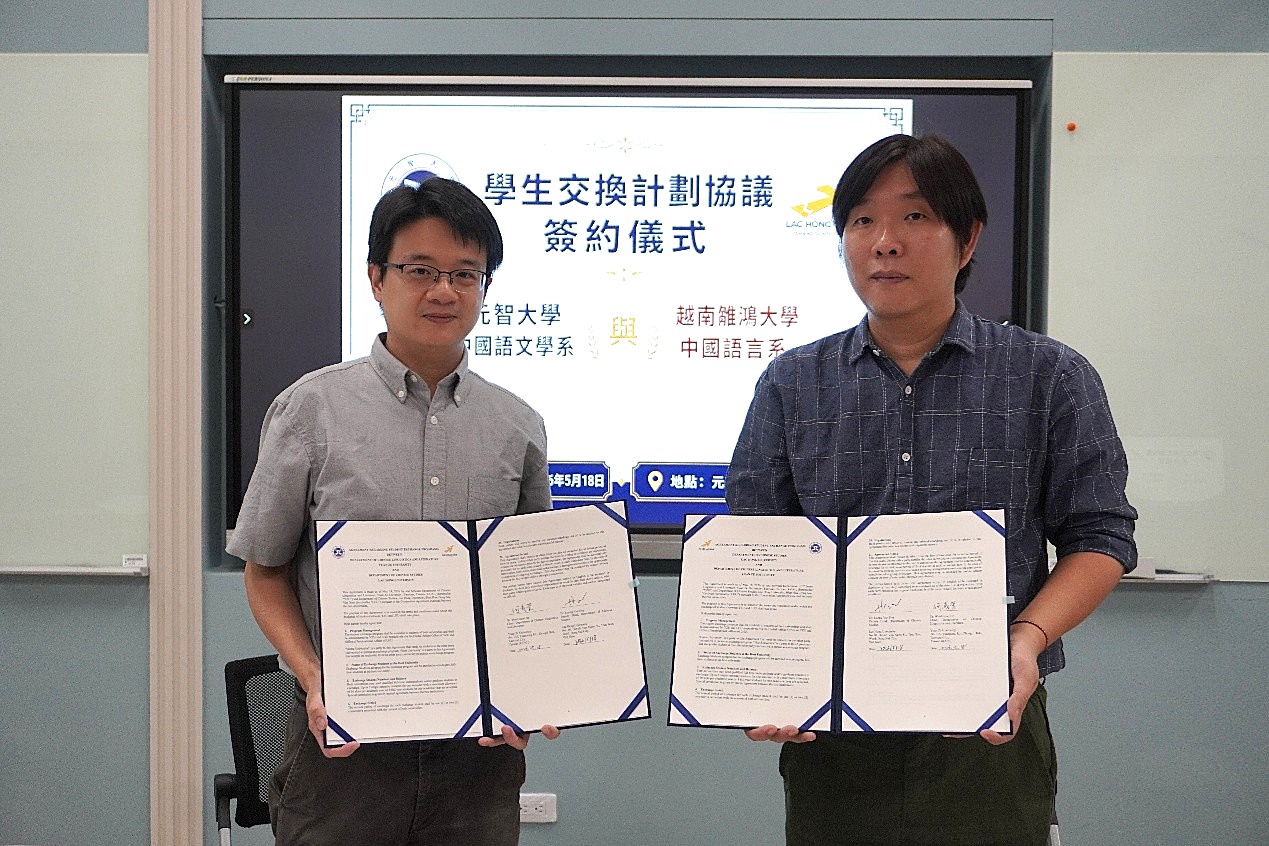
It was noteworthy that the Department of Chinese History and Culture at The Hong Kong Polytechnic University, where Professor Chi-Yiu Lau taught, had maintained close academic exchanges with the Department of Chinese Linguistics and Literature at Yuan Ze University in recent years. Since 2024, the two departments had jointly organized the “PolyU & YZU Chinese Culture Forum,” continuously promoting faculty exchange, student paper presentations, and academic collaboration. In May this year, the two departments formally signed a Memorandum of Understanding (MOU), establishing a long-term cooperation mechanism. In the future, both sides will further deepen faculty and student exchanges, collaborative research, and the cultivation of international talent, expanding new opportunities for humanities education and academic cooperation between Taiwan and Hong Kong.