 EN-US
EN-US  ZH
ZH 
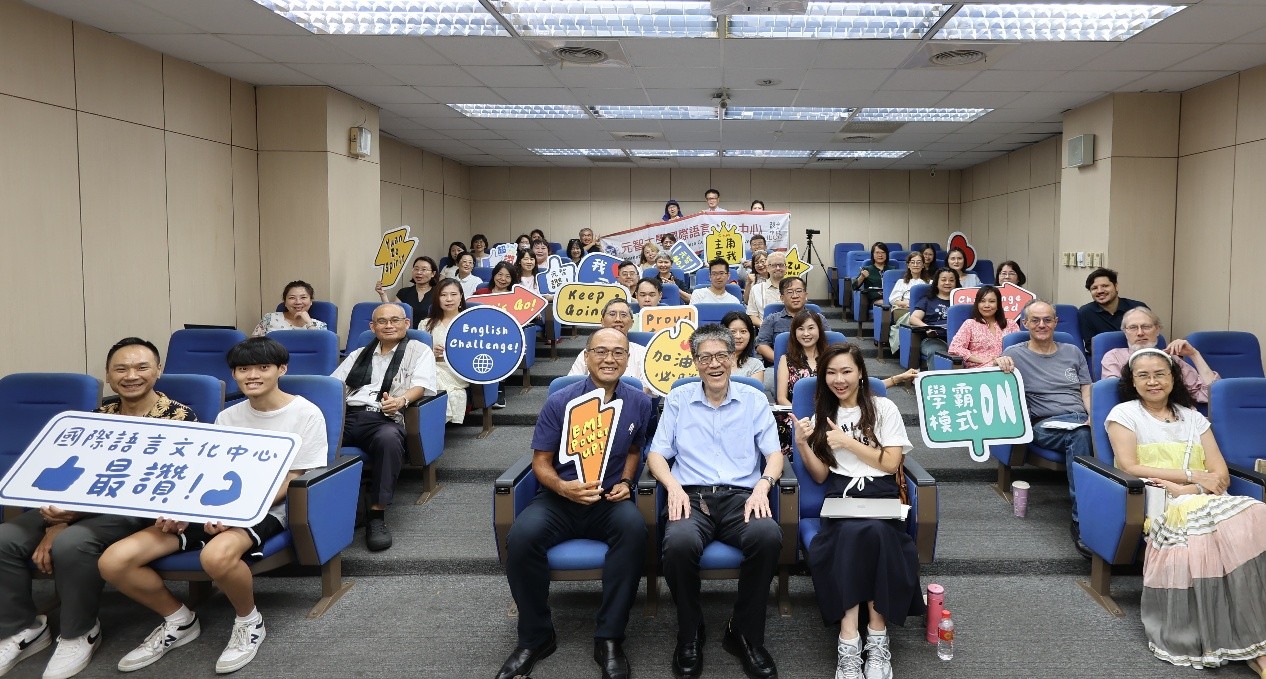
The International Language and Culture Center at Yuan Ze University celebrated its 20th anniversary and held a thanksgiving gathering on June 30. Former and current administrators, full-time and part-time faculty members, alumni, and faculty colleagues gathered to reflect on the Center’s two decades of dedication to language education, the promotion of a bilingual campus, and the advancement of intercultural exchange. The event also looked ahead to the Center’s ongoing mission to deepen internationalized education.
Since its establishment in 2006, the International Language and Culture Center has been responsible for teaching freshman- and sophomore-level English courses as well as second foreign-language courses across the University. In recent years, in response to emerging trends in higher education, the Center had continuously promoted English for Academic Purposes (EAP), English for Specific Purposes (ESP), English as a Medium of Instruction (EMI), and bilingual education, serving as a strong foundation for the University’s efforts to build a bilingual campus.
As Yuan Ze University actively expanded international student recruitment, the proportion of international students on campus surpassed 10 percent, gradually transforming the campus into a multicultural learning environment. In alignment with government policies aimed at retaining international professionals in Taiwan and cultivating global talent, the International Language and Culture Center not only enhanced the international competitiveness of local students but also undertook the important mission of providing Mandarin Chinese education for international students. Through structured Mandarin Chinese courses and cultural immersion activities, the Center helped students overcome language barriers, integrate into local life, and transition into Taiwan’s workforce, serving as an important bridge connecting the campus with the international community.
The 20th-anniversary celebration adopted the theme “Reuniting Through Shared Understanding” and expressed gratitude to the faculty members and administrative teams who had devoted themselves to language education over the years. Chien-Hsing Hsieh, Dean of Academic Affairs, stated that the International Language and Culture Center had played a crucial role in promoting a bilingual campus and supporting national policies for attracting international talent. As the number of international students continued to grow, the Center had evolved beyond a language-learning platform to become a key hub for intercultural exchange, helping cultivate talents equipped with both global perspectives and the ability to adapt locally.
Hsin-Hung Chen, Director of the International Language and Culture Center, noted that the Center’s achievements over the past 20 years had been made possible through the long-term dedication and collective efforts of former directors, full-time and part-time faculty members, and administrative staff. He stated that the Center had consistently upheld a student-centered educational philosophy, supporting students in strengthening their language abilities while helping learners from around the world adapt to life in Taiwan. Looking ahead, the Center would continue enhancing teaching quality, deepening bilingual education and intercultural exchange, and working together to create a more internationally competitive campus environment.
Yuan Ze University stated that, in response to the ongoing trends of globalization and the internationalization of higher education, the International Language and Culture Center would continue serving as an important platform for language education and cultural exchange. Through diversified curricula, bilingual instruction, and Mandarin Chinese education, the Center would continue cultivating talents with intercultural communication competence and global mobility, injecting new momentum into the internationalization of higher education in Taiwan.