
 EN-US
EN-US  ZH
ZH 
Yuan Ze University held the Department of Chinese Linguistics and Literature Class of 2022 Graduation Exhibition, Unusual Daily, on December 3 and 4 at the Glass House in Building 6, alongside the Department of Foreign Languages and Applied Linguistics graduation project presentations.
The two departments showcased more than 30 works in total, spanning literature, linguistics, culture, AI, and VR technology, fully demonstrating YZU’s strong capacity for interdisciplinary integration in humanities education.
The Department of Chinese Linguistics and Literature curated the exhibition under the theme of the intersection between the “unusual” and the “ordinary,” inspired by the concept of “strange everydayness” in Chinese cultural traditions. Drawing from the mythical creatures of the Classic of Mountains and Seas to the emotional worlds in Strange Tales from a Chinese Studio, the exhibition guided visitors to rethink the imaginative dimensions embedded in classical texts. Seven student groups presented their works through multimedia formats, integrating interactive maps, sound art, VR scenes, handmade crafts, and tea culture displays, attracting enthusiastic participation from both on- and off-campus audiences.
Many works demonstrated students’ interdisciplinary creativity. The team FermentSound focused on fermentation culture, recording microscopic sounds such as bubbles and microbial activity to create a “Fermentation Sound Map,” paired with interactive games that made the microbial world more engaging and comprehensible. The project Ghost Banquet Canteen used podcasts and interactive menus to explore food imaginations found in global death and afterlife cultures, revealing the memories and ethical issues behind cultural differences.
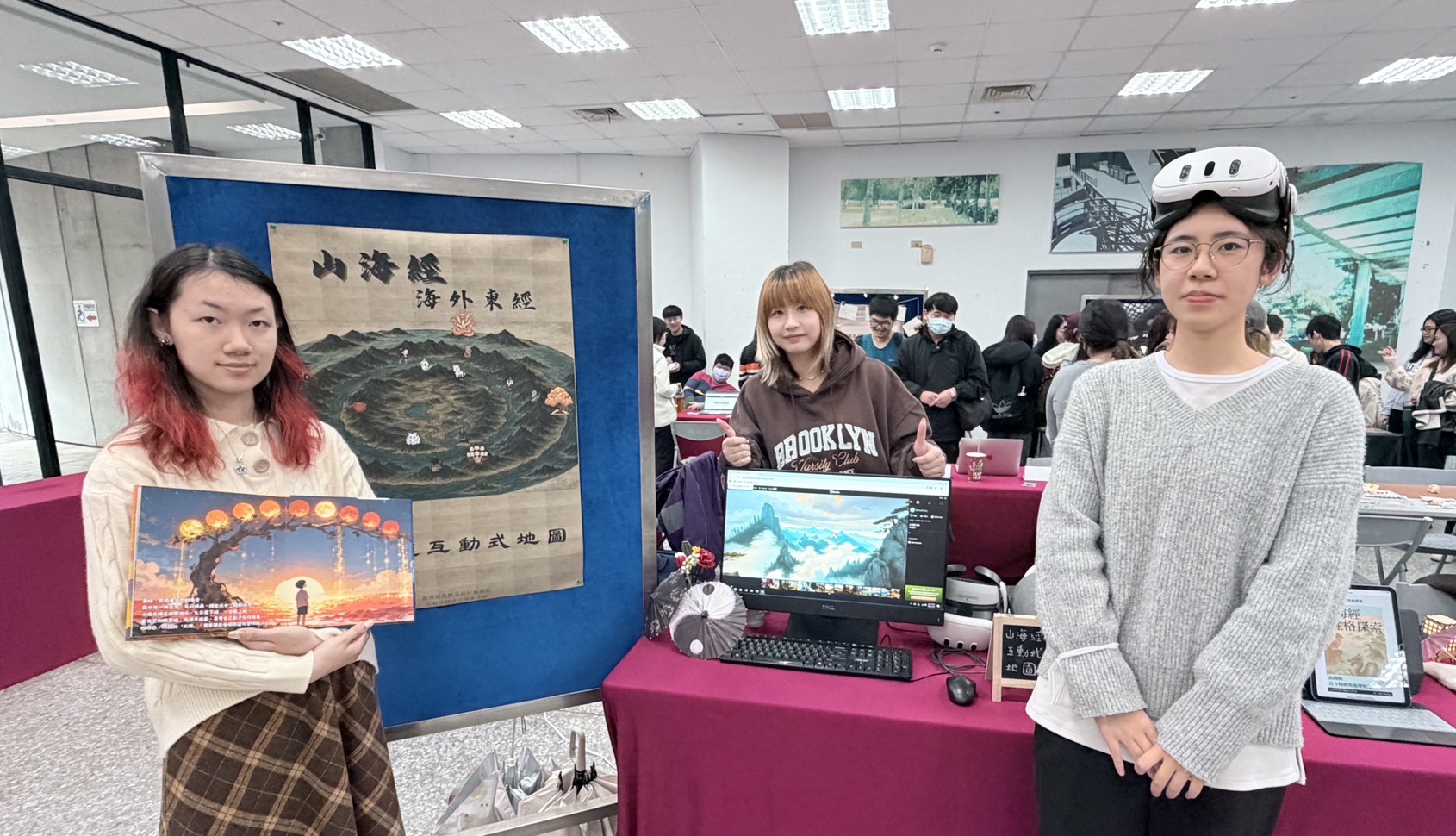
Digital-technology-based works also captured significant attention. The Classic of Mountains and Seas Interactive Map used animation, VR, and picture books to reconstruct scenes from the section “Overseas East,” offering an immersive reinterpretation of classical mythology. Liaozhai Together: Love Beyond Worlds transformed Strange Tales from a Chinese Studio into a transmedia narrative, using picture books, beadcraft, and AI-generated fiction to explore suppressed emotions in classical literature.
In works centered on craftsmanship, Craft Together incorporated traditional crafts such as pottery and paper umbrellas, inviting visitors to understand cultural contexts through hands-on experience. Tea Through the Four Seasons used AI-generated visual shorts and interactive games to depict seasonal imagery in tea culture, illustrating the aesthetic layers of tea in daily life. Another project, YZU Graduation Rituals, drew from campus ghost stories and employed immersive theater and memory-based storytelling to discuss themes of life, adding a creative twist to the exhibition.
The Department of Foreign Languages and Applied Linguistics presented thirty graduation projects covering language technology, cross-cultural studies, bilingual teaching practices, and analyses of AI-related issues, highlighting students’ integrated abilities in linguistic sciences and cultural applications.
In language technology, the project Japanese–Taiwanese Language Classroom Podcast and Website offered multimedia teaching materials in Chinese, Japanese, and English, while the Self-learning Website for Japanese Travel Conversations provided situational learning content to support improvements in spoken Japanese. Cross-cultural projects explored topics such as Taiwanese college students’ acceptance of Japanese instant noodles and food culture differences, as well as the creation of a Comprehensive Guide to Studying in Taiwan website to help Japanese exchange students adapt to local life.
In bilingual teaching practice, students conducted in-depth teaching research in elementary schools, using online platforms and interactive tools to enhance learning motivation. Several projects also included hands-on and cultural activities using Japanese culture as a bridge to enrich instructional content. In works reflecting on technology, students examined the theme “The Boundary Between AI and Human Creativity,” comparing generative AI content with human-made works to prompt discussions on the future of creative industries.
The joint exhibitions from both departments demonstrated Yuan Ze University’s educational achievements in integrating literature, language, and technology. Whether through the Department of Chinese Linguistics and Literature’s literary approaches to interdisciplinary creation or the Department of Foreign Languages and Applied Linguistics’ language- and culture-centered technological applications, the works showcased students’ diverse abilities aligned with contemporary societal needs and established a new model for YZU’s development in cross-disciplinary humanities education.


