 EN-US
EN-US  ZH
ZH 
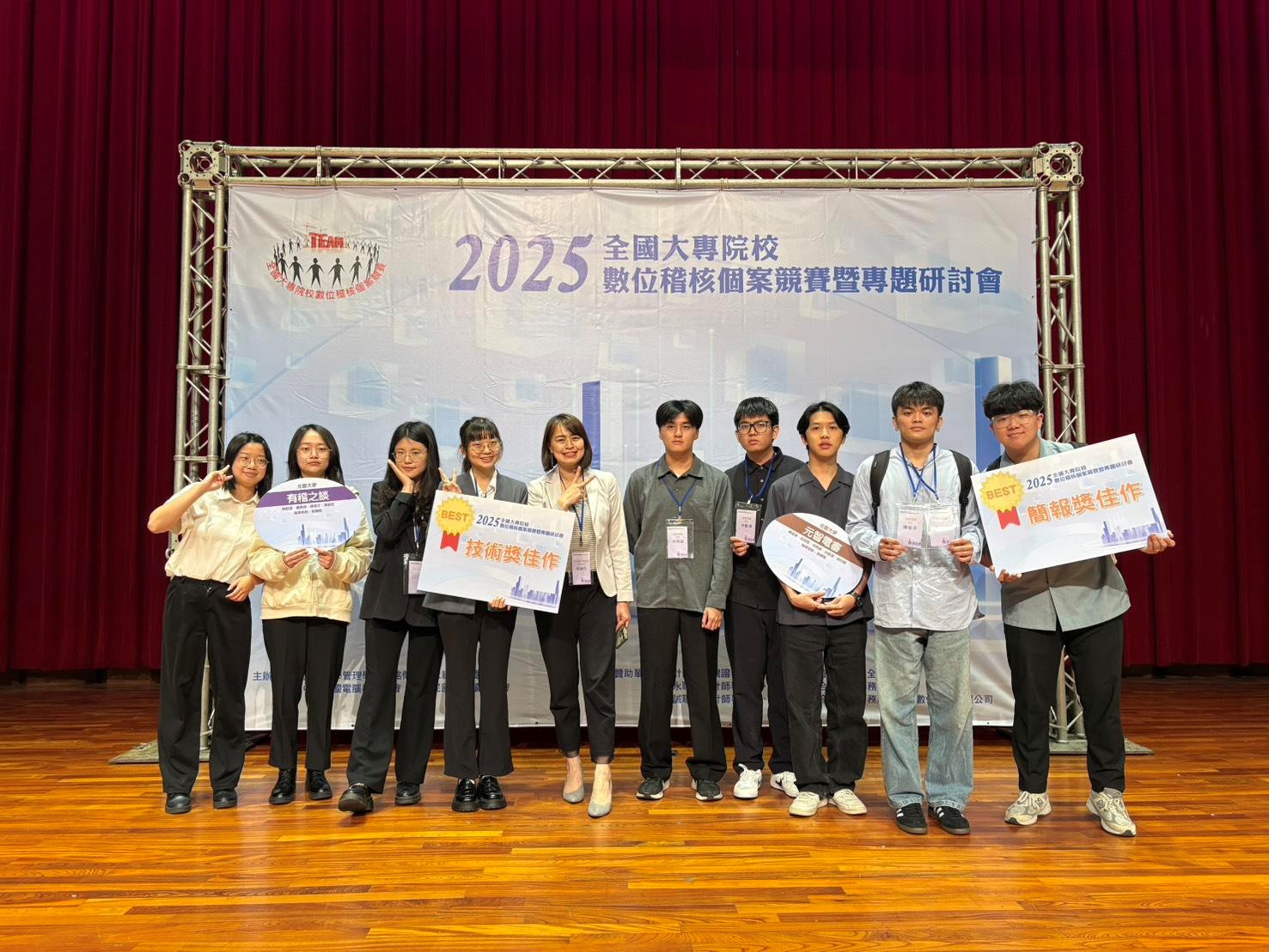
As higher education actively responded to industrial transformation and the growing emphasis on sustainability, Chien-Heng Chang, a faculty member in the Accounting Group of the College of Management at Yuan Ze University, had placed innovative teaching and student-centered care at the core of his educational philosophy.
By continuously reshaping traditional accounting education, he had emerged as a leading example of teaching practice on campus. Chang had received funding from the Ministry of Education’s Teaching Practice Research Program for four consecutive years and had demonstrated substantial achievements in teaching innovation, English-medium instruction, student competition mentoring, and the promotion of sustainability education.
Chang had emphasized that accounting education should not be limited to formulas and financial statements, but should instead focus on cultivating students’ critical thinking, teamwork, and sustainability literacy. To this end, he had incorporated diverse instructional strategies into his courses, including Problem-Based Learning (PBL), Team Games Tournament (TGT), role-playing debates, flipped classrooms, and action research, effectively enhancing students’ learning motivation and classroom engagement. In the course Business Ethics and Professional Ethics in Accounting, for example, he had designed debate-based learning activities integrating the Oregon-style debate format with role-playing, guiding students to examine ethical dilemmas from the perspectives of different stakeholders. The approach had received strong positive feedback from students.
To strengthen practical competencies, Chang had promoted a dual-track teaching model that combined competitions and professional certifications. In the Computer Auditing course, students were allowed to choose between completing a capstone project or participating in the JCCP Computer Auditing Certification examination, or national-level competitions as their learning outcomes, successfully stimulating learning motivation. The teaching outcomes had been clearly demonstrated: not only had students achieved top 5% rankings nationwide, but Chang’s supervised team had also received the Technical Award and an Honorable Mention for Presentation at the 2025 National Digital Auditing Case Competition for Universities, highlighting the effectiveness of aligning coursework with professional practice.
In response to the internationalization of higher education, Chang actively participated in the Ministry of Education’s EMI Bilingual Learning Program by continuously offering English-taught courses and obtaining a Cambridge EMI Teaching Certificate. He had also taken part in the College of Management’s co-teaching initiative, collaborating with faculty from different disciplines to deepen course content and classroom interaction, thereby supporting students’ simultaneous development of professional expertise and language proficiency.
In promoting sustainability education, Chang had translated his educational philosophy into concrete classroom practices. In the course Sustainability and Corporate Governance, he guided students through a variety of learning activities to understand the core concepts of ESG and the SDGs. He had also used the “Marshmallow Challenge” as an ice-breaking activity, allowing students to experience teamwork and creative thinking through hands-on practice and further connect these experiences to the practical implications of sustainable development.
Chang had stated that learning accounting was not merely about memorizing knowledge, but about understanding the underlying logic and its social significance. He had encouraged students to develop critical thinking and sustainability perspectives throughout their learning journey, to step out of their comfort zones, and to embrace challenges. Looking ahead, he had expressed his expectation to further strengthen collaboration with industry partners, transforming teaching outcomes into tangible social impact, and continuously injecting momentum into educational innovation and social sustainability.