 EN-US
EN-US  ZH
ZH 
In response to the rapid growth of the global semiconductor industry and the increasing demand for talent, Yuan Ze University has actively expanded its semiconductor education and research efforts in recent years. By establishing the Semiconductor Research Center and integrating interdisciplinary teaching and research resources across the University, Yuan Ze University has built a comprehensive development framework encompassing talent cultivation, technological research, and industry-academia collaboration.
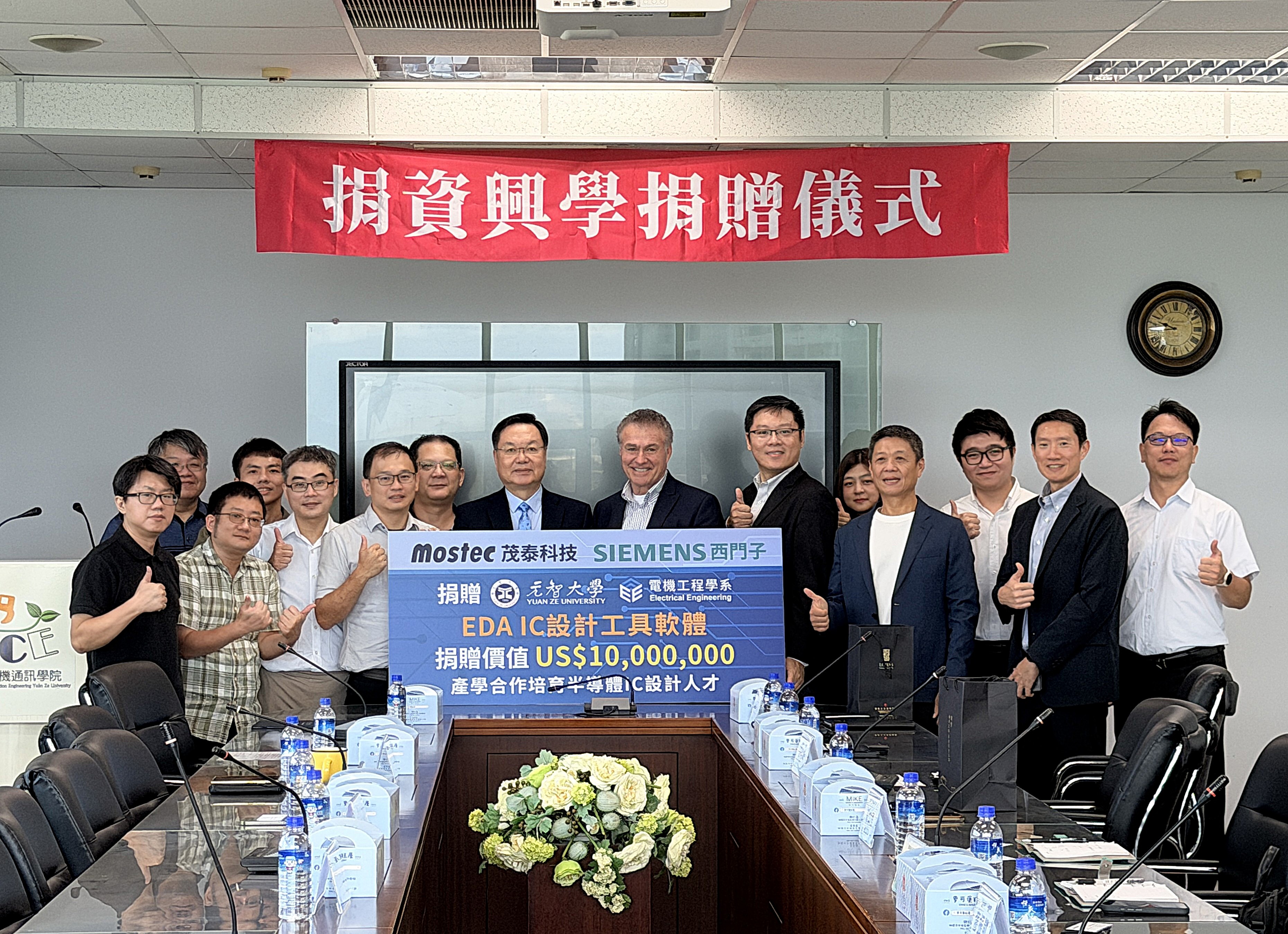
On the morning of July 21, the Department of Electrical Engineering held the “Siemens / Mostec Technology Co., Ltd. EDA Software Donation and Industry-Academia Exchange Event,” introducing world-class Electronic Design Automation (EDA) software resources to strengthen IC design education and research capabilities further and cultivate semiconductor professionals who meet industry needs.
The event was witnessed by Ching-Jong Liao, President of Yuan Ze University. Industry representatives in attendance included Juan Chapa, Sr. Director, Global Partner at Siemens; Shun-Tung Chung, Associate Manager of the Sales Department; Ming-Feng Chuang, Manager; and Feng-Wen Tsai, General Manager of Mostec Technology Co., Ltd. Their participation demonstrated a shared commitment between academia and industry to advancing semiconductor talent development.
With the rapid advancement of Artificial Intelligence (AI), High-Performance Computing (HPC), advanced packaging technologies, and 5G/6G communications, demand for highly skilled semiconductor engineers had continued to rise. Electronic Design Automation (EDA) tools had become essential core technologies for chip design, functional verification, system simulation, and electronic system development. The Siemens EDA software introduced through this donation would be applied to courses and research in IC design, logic verification, and electronic system design within the Department of Electrical Engineering. Through access to industry-standard tools and real-world development workflows during their studies, students would be able to enhance their practical skills and reduce the gap between academic learning and industry practice.
Yuan Ze University had actively invested in semiconductor talent cultivation in recent years. In addition to establishing the Semiconductor Research Center, the University had integrated teaching and research resources from the Department of Electrical Engineering, the College of Informatics, the College of Engineering, and related fields. It had also continued to promote semiconductor-related courses, laboratory facilities, and industry-academia cooperation projects to nurture technological talent with interdisciplinary integration capabilities. Through the introduction of industry resources via university-enterprise partnerships, students had gained closer exposure to the latest semiconductor technologies and enhanced their competitiveness for careers in high-tech industries.
Ching-Jong Liao, President of Yuan Ze University, stated that the semiconductor industry had been one of Taiwan’s most internationally competitive sectors, and talent cultivation had been the key to supporting its sustainable development. Yuan Ze University had long attached great importance to cultivating technological talent. Through advanced technological resources and practical support provided by industry partners, students had been able to stay abreast of industry trends during their studies and develop the professional competencies required to meet future technological challenges.
Representing the College of Electrical and Communication Engineering, Ying-Jen Cheng, Vice Dean, noted that the donation represented not only a software tool but also an important learning platform that enabled students to connect with the international semiconductor industry. Through the introduction of Siemens EDA tools and industry-standard development processes, students could accumulate hands-on experience in chip design and verification, further strengthen their professional capabilities, and enhance Yuan Ze University’s distinctive strengths in semiconductor education.
Mostec Technology Co., Ltd. stated that the company had long been committed to technological talent cultivation and industry-academia cooperation. By helping introduce EDA software resources, it hoped to support the development of higher education through collaboration with universities, cultivate more engineering professionals who met industry demands, and inject new momentum into Taiwan’s semiconductor and electronics industries.
During the event, Yuan Ze University presented a certificate of appreciation to Mostec Technology Co., Ltd. in recognition of its support for talent cultivation and educational development. Representatives from academia and industry also exchanged views on semiconductor industry trends, EDA technology applications, and future directions for collaboration. Discussions covered topics including talent cultivation, technological research and development, internship cooperation, and industry-academia connections.
Yuan Ze University stated that it planned to continue advancing the development of the Semiconductor Research Center by integrating industry resources with academic strengths. The University also planned to further promote semiconductor-related teaching, research, and collaborative projects, establish a comprehensive talent cultivation system, cultivate semiconductor professionals with international competitiveness, and continue contributing innovative momentum to the development of Taiwan’s high-tech industries.