 EN-US
EN-US  ZH
ZH 
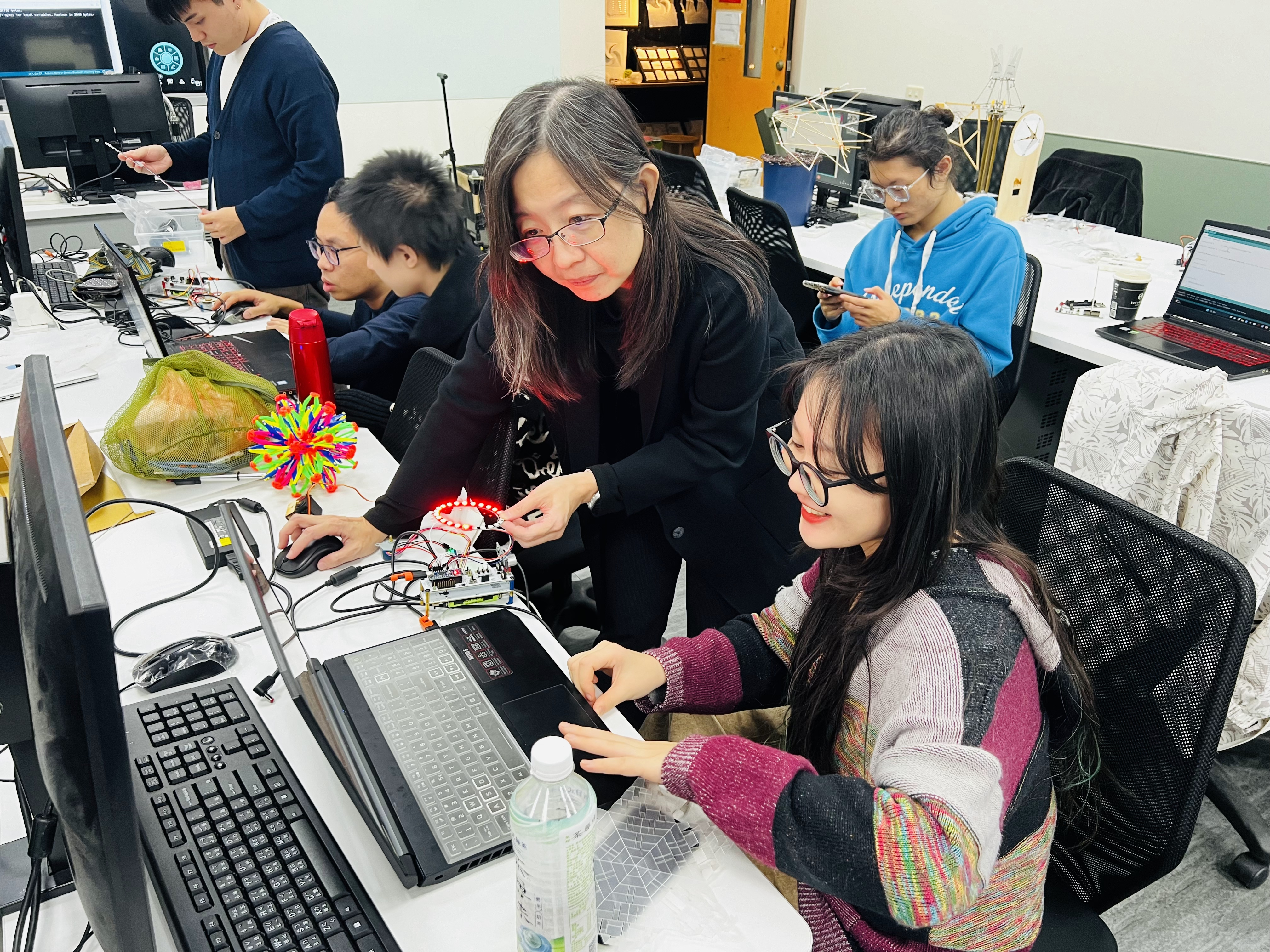
In response to the rapid transformation of creative and design industries driven by artificial intelligence, the Department of Art and Design, Yuan Ze University, announced the introduction of a new “AI Innovation Track” for the 2026 academic year under the Individual Application admission channel.
With an enrollment quota of five students, the track waived the traditional studio skills examination and instead emphasized learning motivation, creative thinking, and interdisciplinary development potential, offering a new admission pathway for students interested in art, design, and AI‑based technological applications.
Professor Chu‑Ching Lin, Director of the Department of Art and Design, Yuan Ze University, explained that the AI Innovation Track centered on the integration of art, design, and AI technologies to cultivate future talents who combine aesthetic sensibility, creative expression, and digital technology application. Upon enrollment, students were required to complete a specially designed “AI Interactive Design and Computational Creation Module,” through which they systematically developed AI‑oriented creative design thinking and hands‑on digital creation skills starting from their first year.
In terms of curriculum planning, students began by building foundational competencies. Through first‑year courses in AI‑based digital humanities applications, they established fundamentals in interactive imagery, creative programming, and AI‑driven creative applications. Depending on their creative directions, students then progressed to learning generative imaging, parametric design, and digital fabrication. By the third year, coursework integrated interactive technology installations and capstone projects, enabling students to apply AI, design, spatial concepts, imagery, and sensor‑based interaction in real, creative, and practical projects. The program aimed to cultivate not merely users of AI tools, but future creative professionals capable of leading AI‑driven creation and integrating design thinking with technological applications.
Professor Lin noted that the AI Innovation Track was particularly well-suited for students interested in artistic creation, digital content, interactive technologies, generative AI, and interdisciplinary innovation. Even students without a traditional studio‑exam background could find clear developmental pathways, as long as they demonstrated a passion for creativity, design, and technological applications. Graduates were expected to pursue careers in fields such as creative design, digital content production, technological art, interactive media, and AI‑based creative applications.