 EN-US
EN-US  ZH
ZH 
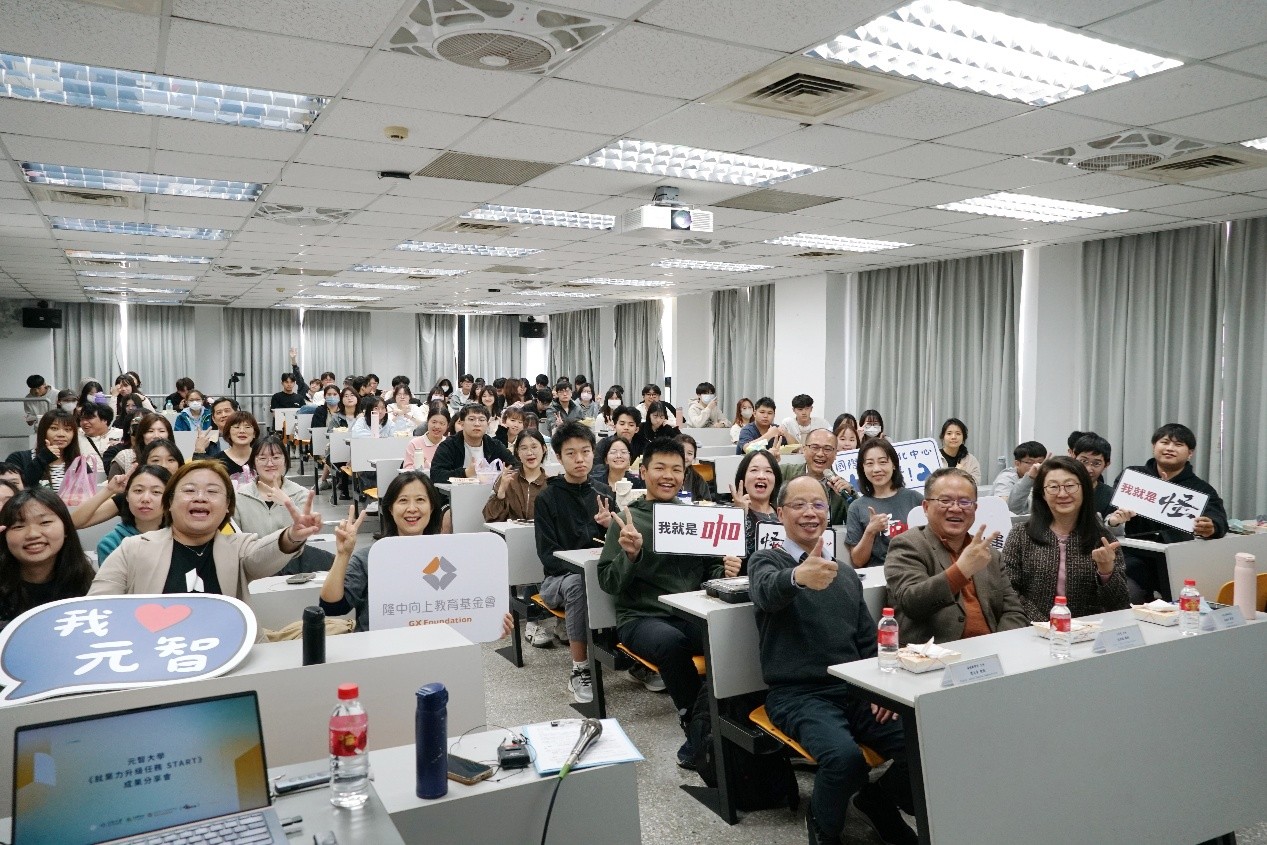
Facing what was described as the longest winter break in history, many chose leisure and travel, while others transformed the extended break into a learning opportunity. Yuan Ze University seized this moment by launching an intensive learning initiative led by the International Language and Culture Center, in collaboration with the online learning platform Hahow for Campus and the “Guai‑Ka Project” of the Long‑Zhong Upward Education Foundation.
Together, they introduced the self‑directed learning competition “Employability Upgrade Mission: START,” which sparked a strong wave of learning engagement across campus within just seven weeks.
According to the organizers, the initiative attracted 291 faculty members, staff, and students, who collectively completed more than 2,300 online courses, accumulating a total of 6,655 learning hours. The impressive figures reflected a high level of motivation and momentum for self‑directed learning.
At the final presentation event, industry experts shared insights on talent competitiveness in the AI era. Yu‑Tsung Kao, Operations Director of Hahow, noted that amid rapid AI development, humans needed to strengthen differentiated learning capabilities. Within the PACER framework for information classification, he emphasized that analogical thinking and conceptual understanding would become key advantages that were difficult to replace. Te‑Hui Wang, Consultant of the Long‑Zhong Upward Education Foundation, highlighted that curiosity remained an indispensable core competency for facing the future.
The competition also broke away from the traditional campus model of student‑only learning. Notably, 32 percent of participants were professional and technical staff members, demonstrating a trend toward cross‑generational co‑learning. Hsin‑Hung Chen, Director of the International Language and Culture Center, led by example by completing 111 courses during the program, accumulating 26,928 minutes of learning time. He remarked that only when faculty and staff personally engaged in learning could they truly guide students to understand the importance of lifelong learning.
Faculty and staff learning outcomes were also reflected in practical applications. Kuo‑Chun Tseng from the Department of Electrical Engineering shared that after completing courses in AI and data analysis, the real challenge lay not in technical operations, but in clarifying the core of a problem. Ya‑Hsin Yu from the College of Management noted that making use of fragmented time for learning not only enhanced self‑growth but also allowed faculty members to maintain shared curiosity about the world alongside students.
Students demonstrated strong self‑discipline and interdisciplinary learning capacity as well. Wan‑Ting Hsieh from the Department of Electrical Engineering explored German, Korean, and personal finance courses, developing sound financial literacy. Yu‑Chun Liao from the Department of Information Management revisited courses through different learning approaches, successfully breaking through existing frameworks and gaining new learning perspectives. Hsiang‑Ning Liu from the Department of Chemical Engineering and Materials Science applied digital tools to build a personal reading database and deepened understanding through inquiry‑based learning. Pei‑Chi Wang from the Department of Information Management drew insights from a chess course on strategic planning and risk assessment, extending these concepts to workplace thinking.
The initiative also incorporated the documentary “Guai‑Ka Project,” guiding participants to reflect on social issues and cultivate diversity awareness and empathy. The organizers emphasized that beyond technology and efficiency, humanistic concern remained a critical competency for the future workplace.
Director Hsin‑Hung Chen concluded that the one‑and‑a‑half‑month winter learning program demonstrated how well‑designed gamified mechanisms could effectively activate self‑directed learning across campus. He stressed that what faculty members and students gained was not merely certificates of course completion, but foundational thinking skills for addressing real‑world challenges, along with key competencies directly applicable to the future workplace.